
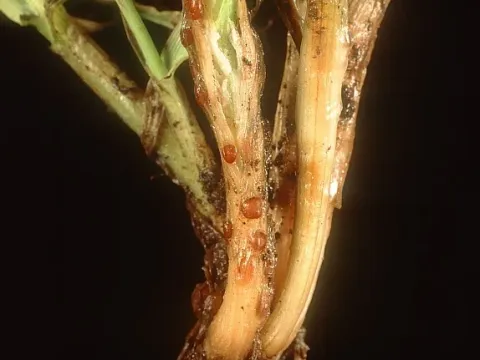
Typhula blight
Typhulaceae
The causative agents of Typhula blight are basidiomycetous fungi belonging to the genus Typhula, primarily Typhula incarnata and Typhula ishikariensis. These are obligate parasites that persist in the soil as sclerotia, which are dense mycelial structures capable of surviving for several years.
What the section contains
Typhula blight
The disease is classified as a specific form of snow mold. The fungus exhibits maximum activity during the winter dormancy period of crops, exploiting the weakened immune system of plants at low temperatures to colonize their tissues.
The biology of the pathogen is closely tied to the presence of plant debris. Infection initiates when healthy tissues come into contact with contaminated soil or previous crop residues, where the fungus accumulates its primary inoculum.
The sclerotial stage plays a crucial role in the pathogen's life cycle. After germination triggered by specific temperature conditions, the fungus forms mycelium that spreads rapidly under the snow cover.
The disease development is characterized by the breakdown of host plant cell walls due to the secretion of specific enzymes by the fungus. This leads to the softening of tissues and subsequent plant death in the early spring.
The first signs of the disease become visible immediately after the snow melts. In affected areas of winter cereal fields, a characteristic growth resembling white, grayish, or pinkish cottony felt appears on the plants.
Leaves of affected plants lose their turgor, become water-soaked, and eventually take on a dirty gray appearance. In cases of severe infection, total necrosis of the leaf blades and the tillering node occurs, making recovery impossible.
A diagnostic feature is the formation of small, hard, dark brown or black sclerotia on the surface of necrotic tissues. Their presence allows for the easy differentiation of Typhula blight from other types of snow mold.
Infected patches on the field often appear as spots of varying sizes where the plants look wilted and moldy. Over time, these areas may show thinning of the stand, resulting in noticeable gaps.
The root system is also damaged; tillering nodes decay, and tissues become dark and pulpy. If the plant manages to survive, its development is significantly retarded, and productive tillering is drastically reduced.
Favorable conditions for epiphytotic development include a long, snowy winter with soil temperatures in the tillering node zone near 0...+2°C. A thick snow cover provides a "thermal" effect, protecting the fungus from freezing and creating an optimal environment for mycelial growth.
High humidity in the air and soil during late autumn and early winter triggers premature germination of sclerotia. The fungus is particularly aggressive in years when snow falls on unfrozen soil, promoting active infection.
Dense crops sown too early are at the highest risk. Excessive biomass growth in autumn creates conditions for high humidity in the root zone, which facilitates the spread of the pathogen.
Failure to follow crop rotation, where winter crops return to the same field more frequently than every 2-3 years, leads to the accumulation of high levels of inoculum in the soil. Sclerotia maintain viability in the topsoil for an extended period.
Acidic soil conditions and excessive nitrogen fertilization before winter dormancy reduce plant resistance, making them more susceptible to fungal infestation during the winter growth period.
The economic impact of Typhula blight is driven by the partial or total destruction of winter cereal crops, necessitating spring reseeding. This leads to significant financial losses due to costs for seeds and repeated field operations.
Even if plants survive, the disease significantly reduces yield. Affected plants form weak heads with fewer grains and lower overall quality indices.
The infection slows down the pace of spring regrowth. Sick plants invest significant resources into tissue repair, which negatively impacts their resilience against other diseases and pests throughout the growing season.
The patchy spread of Typhula blight complicates field management and leads to uneven crop maturation. This creates logistical difficulties during harvesting.
For large-scale agricultural enterprises, an epidemic of Typhula blight can result in yield losses ranging from 15 to 50% in favorable years for the fungus, making disease protection a critical element of agronomy.
The primary preventive measure is strict adherence to crop rotation, avoiding monocultures of winter cereals. The best predecessors are crops that are resistant or less susceptible to Typhula pathogens.
Quality soil tillage is important to ensure deep burial of crop residues that harbor sclerotia. Fragmentation and rapid decomposition of residues significantly reduce the background infection levels in the field.
Optimizing sowing dates helps prevent excessive autumn growth. Excessive biomass creates a favorable microclimate for fungal growth under the snow, so adhering to regional planting guidelines is essential.
The chemical control method includes mandatory seed treatment with systemic fungicides. Furthermore, the application of fungicides in late autumn is recommended when conditions favor snow mold development to protect crops during winter.
Using winter-hardy and field-resistant varieties is a fundamental way to minimize risks. It is also necessary to avoid excessive nitrogen fertilization in the autumn, which decreases the physiological resistance of the plants.