
Description
Symptoms
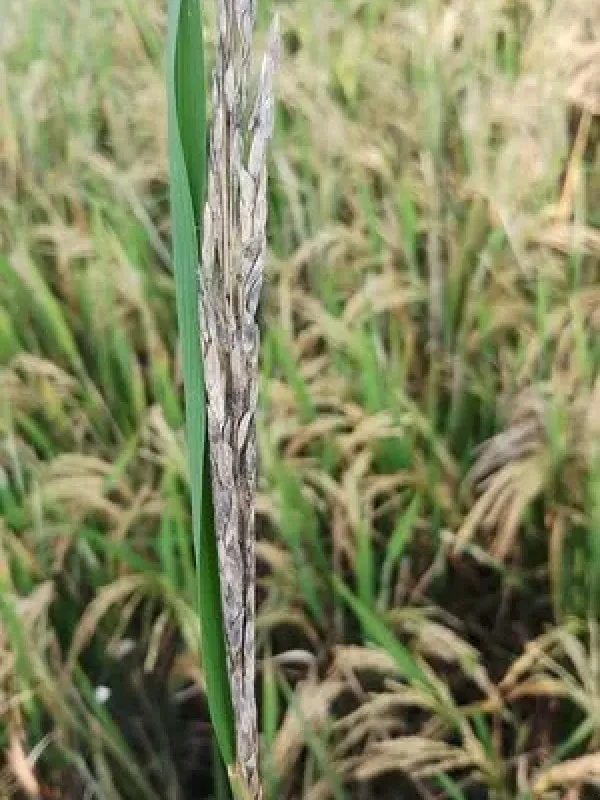
The most characteristic symptom is the development of a white or light-grey powdery layer over the emerging rice panicle.
Panicles often become deformed or remain trapped within the leaf sheath, preventing normal grain development.
Affected plants often show a bushy appearance due to an increase in tillering and stunted growth of the main stem.
The fungus replaces the healthy floral tissues with its own mycelial growth, effectively sterilizing the affected spikelets.
In advanced stages, the infected plant may look pale and exhibit premature senescence compared to healthy plants in the field.
Pathogen
The causative agent of the disease is the fungus Balansia oryzae, formerly known in mycological literature as Ephelis oryzae.
This pathogen belongs to the family Clavicipitaceae and is known to cause systemic infections in rice and several wild grass species.
The fungus develops a dense mycelial mat called a stroma that envelops the floral parts of the rice plant during development.
Reproduction occurs through conidia, which are disseminated by wind, splashing rain, and through infected seed material.
The pathogen is highly specialized and relies on the physiological resources of the host plant to complete its complex life cycle.
Conditions for development
High relative humidity and moderate temperatures are the primary environmental drivers for the development of Udbatta disease.
Prolonged rainfall periods during the booting and heading stages provide the necessary moisture for fungal spore germination.
Poorly drained fields with stagnant water create a humid microclimate that significantly increases the incidence of the infection.
Warm, cloudy weather is particularly conducive to the rapid spread of conidia from infected plants to neighboring healthy ones.
Fields with a history of the disease where crop residues are left on the soil surface are at a much higher risk of outbreak.
Why it matters
The disease causes total grain loss in infected plants because the fungal infection prevents the formation of any viable seeds.
Significant economic loss occurs when large areas of the crop are infected, reducing the overall yield per hectare significantly.
The quality of rice straw from infected fields is degraded, rendering it unsuitable for feed or industrial purposes.
Chronic infection in fields can lead to long-term soil contamination if agricultural practices do not prioritize pathogen removal.
Weakened plants are often more susceptible to secondary infections by other pests, complicating the management of the crop.
Protection
Utilizing certified, disease-free seed is the most effective primary strategy for preventing the introduction of the pathogen.
Crop rotation with non-host species is essential to break the survival cycle of Balansia oryzae in the soil.
Proper field sanitation, including the removal of infected plant residues and weeds, helps lower the initial inoculum levels.
Fungicide applications during the early stages of plant growth can effectively suppress the development of the fungal mycelium.
- Deep plowing to bury infested crop debris.
- Monitoring and removing diseased plants at early heading.
- Selecting resistant or tolerant rice varieties.
Pathogens and affected parts
Affects crops · 1
Discussion
No discussions yet — be the first.