
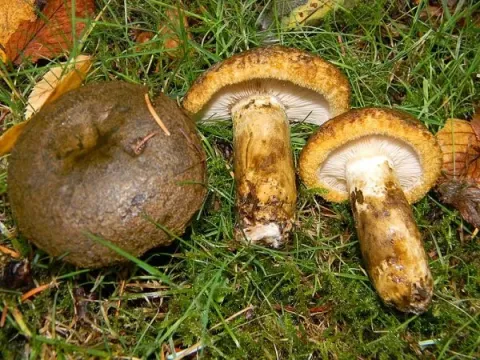
Ugly milk-cap
Lactarius turpis
The Ugly milk-cap (Lactarius turpis) is a mushroom, not a plant disease. Its physical appearance is characterized by a dark olive-brown, funnel-shaped cap.
What the section contains
Ugly milk-cap
The cap surface is velvety or hairy, often collecting debris, which distinguishes it as a macroscopic fungal fruiting body.
There are no lesions, rusts, or wilting symptoms on plants associated with the presence of this fungus in the environment.
Plants in the vicinity of this fungus typically show normal physiological growth patterns without any signs of stress.
The mycelium resides in the soil interface, interacting with roots in a symbiotic, non-pathogenic manner.
This organism is strictly a mycorrhizal fungus and does not function as a plant pathogen.
It forms a mutualistic relationship with forest trees, such as birches and spruces, which is beneficial rather than harmful.
The fungus lacks the pathogenic mechanisms required to invade plant tissues or cause systemic disease in agricultural crops.
Its biological cycle is tied to the nutrient exchange with root systems, placing it in the category of beneficial symbionts.
Mistaking this fungus for a disease pathogen ignores its essential role in maintaining soil health and tree vigor.
Lactarius turpis thrives in moist, acidic forest soils where it can establish connections with host trees.
Fruiting bodies are produced when temperature and humidity levels in the soil are optimal for the subterranean mycelium.
The fungus requires the presence of established trees to complete its life cycle through mycorrhizal associations.
It is predominantly found in coniferous or mixed forests where organic matter accumulates in the topsoil.
Environmental conditions that favor forest tree growth are generally the same conditions required for this fungus.
The Ugly milk-cap presents zero harm to crops, as it does not inhabit agricultural environments lacking its host trees.
It does not produce any toxins or enzymes capable of degrading living crop tissues or affecting crop yield.
There is no competitive pressure between this fungus and common agricultural crops for space or nutrients.
Its ecological niche is confined to wild forest ecosystems, making it irrelevant to plant protection strategies.
No agricultural damage has ever been attributed to this fungus, confirming its harmless nature to horticulture.
No control measures are necessary for Lactarius turpis because it is not a pest or disease agent.
The application of fungicides in areas where this fungus grows would be counterproductive and harmful to forest health.
Prevention strategies are irrelevant as the fungus is a natural component of healthy woodland biodiversity.
Field management should focus on identifying genuine pathogens while respecting beneficial mycorrhizal fungi.
Agricultural training should emphasize the distinction between symbiotic forest fungi and plant-damaging microorganisms.