
Ulea
Ulea
The disease is caused by a fungus belonging to the genus Ulea. It is a specialized pathogenic microorganism that primarily targets specific plant species in tropical climates.
What the section contains
Ulea
The biology of this fungus is centered on its parasitic behavior on leaves. It forms mycelium that penetrates host tissues to absorb necessary nutrients for its development.
The pathogen's life cycle is closely linked to the formation of conidia, which serve as the primary means of disease dispersal under favorable environmental conditions.
The disease is classified as a type of local leaf spot, where the fungus induces necrotic damage at the sites of infection.
Unlike systemic infections, Ulea usually remains restricted to the aerial parts of the plant, specifically colonizing the leaf blades.
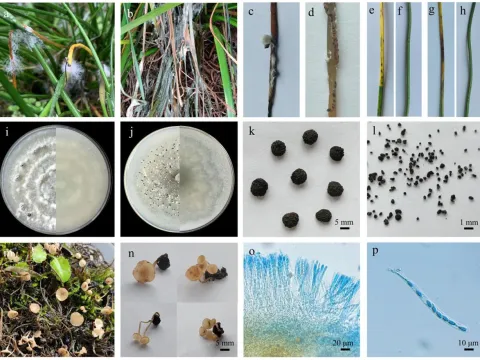
A primary symptom of infection is the appearance of distinct spots on either the upper or lower surfaces of the leaves. These spots can vary in shape, though they are often circular.
The color of the affected tissue typically turns dark brown or black, resulting from cell death in areas colonized by the fungal mycelium.
Upon close inspection, sporulation of the fungus may be visible on the surface of the spots, appearing as a fine dusting or tiny, clustered dots.
In advanced stages, infected leaves may begin to yellow, undergo deformation, and drop prematurely, which disrupts the plant's photosynthetic capacity.
Symptoms can manifest on both young and mature foliage, depending on the severity of the inoculum pressure within the crop environment.
The development of the fungus is favored by high relative humidity and moderate temperatures, typical of tropical plantations.
The presence of free moisture (such as dew or rain) on leaf surfaces is a critical requirement for the germination of fungal spores.
Dense planting schemes with poor air circulation create an ideal microclimate for the rapid spread of spores between neighboring plants.
Infection is often disseminated by wind currents, rain splashing, or insects that come into contact with diseased leaf tissues.
Prolonged periods of fog or consistent rainfall can significantly accelerate the development of epiphytotics within infected areas.
The damage caused by the disease is primarily due to the significant reduction of the plant's functional photosynthetic leaf area.
Premature leaf drop leads to a general weakening of the plant, reducing its ability to withstand other environmental stress factors.
Affected crops exhibit noticeably slower growth rates and reduced development, which is particularly critical during intensive vegetative stages.
Severe outbreaks can lead to substantial reductions in overall yield and a decline in the market quality of the harvested produce.
Early-season leaf loss can deplete stored energy reserves in the roots, negatively impacting the productivity of the following growing season.
Prevention starts with good agricultural practices, including maintaining optimal plant density to ensure adequate air circulation and canopy drying.
An essential management step is regular sanitary pruning, as well as the collection and disposal of fallen leaf litter, which often serves as a reservoir for the pathogen.
The application of broad-spectrum fungicides can effectively suppress fungal spread when the first symptoms of the disease are observed.
Copper-based treatments are often effective in reducing the risk of primary infection in environments with high moisture levels.
Breeding and planting resistant cultivars remains the most sustainable and long-term strategy for managing the Ulea pathogen.