
Typhula quisquiliaris
Typhula quisquiliaris
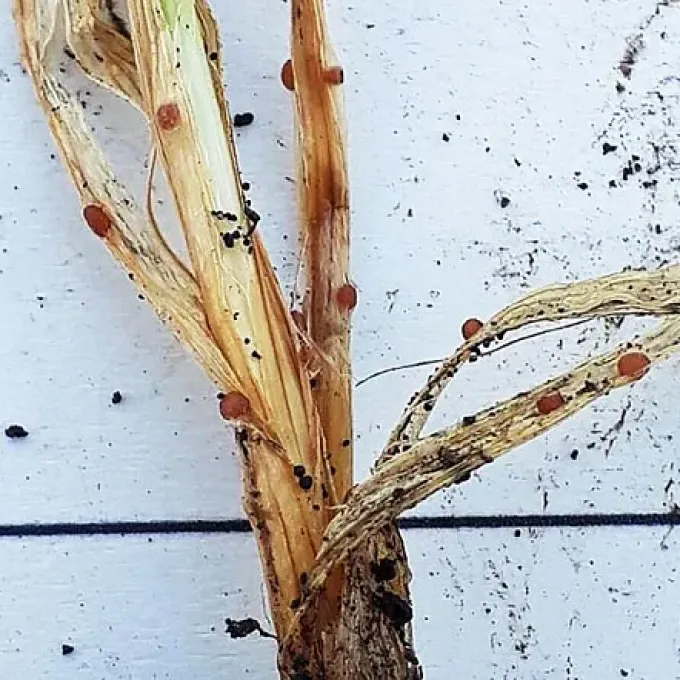
Description
Symptoms
Initial symptoms are often subtle, manifesting as a delicate, white-to-gray mycelial mat that develops on the surface of leaves or stems in contact with the soil.
The formation of small, granular sclerotia is a hallmark of this disease; these bodies appear as dark, debris-like particles embedded within the mycelial growth on the host.
Affected tissues typically undergo rapid softening and necrosis as the fungus secretes enzymes that break down plant cell walls, leading to the collapse of the structure.
In later stages, the leaves or stems may appear bleached or water-soaked, eventually turning brittle and necrotic as the infection progresses through the plant canopy.
Observations under magnification reveal a dense network of hyphae that can spread rapidly during high humidity, enveloping the plant tissue and obstructing nutrient transport.
Pathogen
The disease is caused by the fungus Typhula quisquiliaris, a member of the Basidiomycota phylum. It functions primarily as a soil-borne saprotroph, but under favorable moisture conditions, it becomes pathogenic.
The pathogen survives in the soil and on organic debris in the form of sclerotia—small, compact, and resilient structures that allow the fungus to endure harsh weather conditions.
When the environment provides sufficient moisture and specific temperature conditions, these sclerotia germinate to produce basidia and spores, which are then dispersed by wind and splashing water.
This fungus exhibits significant metabolic flexibility, enabling it to decompose complex organic matter as well as infect the living tissues of susceptible plant species.
The lifecycle is closely tied to the availability of a suitable host and a moist environment, making the accumulation of plant litter a key risk factor for local outbreaks.
Conditions for development
The development of Typhula quisquiliaris is strictly governed by moisture levels; waterlogged soils and high humidity are prerequisites for an epidemic spread.
The fungus thrives in cool, damp conditions, with optimal activity often observed during late autumn or early spring when temperatures range between 0 and 15 degrees Celsius.
High densities of crop residues remaining on the soil surface provide the initial substrate for the fungus to multiply before spreading to live plant tissues.
Poor soil aeration and dense planting patterns exacerbate the disease by maintaining a stable micro-climate with the high humidity required for hyphal growth.
Regions with prolonged periods of leaf wetness and minimal evaporation are significantly more susceptible to outbreaks caused by this specific basidiomycete.
Why it matters
The primary impact of the disease is the destruction of plant structural integrity, which inhibits photosynthesis and weakens the plant's overall growth potential.
In seedling crops, severe infestations can lead to significant stand reduction and, in extreme cases, total crop failure in localized low-lying areas of the field.
The presence of the fungus weakens the host plant, rendering it more susceptible to secondary infections by other opportunistic bacteria and fungi.
For ornamental plants, the infection destroys their aesthetic value, causing unsightly necrotic lesions and premature wilting that requires extensive remediation.
The persistent nature of the sclerotia in the soil means that once established, the pathogen can influence agricultural productivity for several consecutive seasons.
Protection
Effective management begins with strict field hygiene, particularly the removal or deep incorporation of crop debris to eliminate the primary food source for the fungus.
Implementing a diverse crop rotation cycle interrupts the pathogen's lifecycle, as it prevents the buildup of specialized inoculum in the soil over time.
Improving field drainage is critical to reducing soil moisture content, thereby creating an environment that is hostile to fungal growth and spore germination.
Application of fungicides targeting basidiomycetes can be beneficial in high-risk zones, especially when applied during periods of peak vulnerability in the spring.
- Deep plowing to bury sclerotia at depth.
- Balanced nutrient management to strengthen plant cell walls.
- Use of disease-resistant varieties if available.
- Constant monitoring for early mycelial development.
Discussion
No discussions yet — be the first.