
Typhula blight
Typhula incarnata
The causative agent of this disease is the fungus Typhula incarnata, a member of the Basidiomycetes class. This pathogen is remarkably adapted to cold environments, remaining biologically active even near the freezing point of water.
What the section contains
Typhula blight
The fungus survives the summer months and unfavorable conditions in the soil by forming sclerotia. These dense, dark-brown survival structures are the primary inoculum source, enabling the pathogen to persist in agricultural fields for extended periods.
During the cooler months, the fungus targets the root systems, crowns, and lower leaf sheaths of cereal crops. The mycelium penetrates the plant tissues, causing decay and preventing the plants from resuming healthy growth in the early spring.
The development of the disease is strictly dependent on moisture levels and temperature profiles. Sclerotia germination is triggered by sustained wet conditions and low temperatures, which are characteristic of late autumn and winter seasons.
The disease is commonly referred to as a type of snow mold because the infection spreads rapidly under prolonged snow cover. The snow acts as an insulator, maintaining the optimal temperature range required for the fungal mycelium to colonize the crop.
The first diagnostic signs of Typhula blight usually appear immediately after the snow melts. Affected areas of the field show patchy growth, with plants appearing stunted, bleached, or straw-colored, eventually turning necrotic.
A characteristic symptom is the presence of a grayish-white, cottony mycelial growth on the base of the stems and leaf sheaths. As the disease progresses, this mycelium becomes denser and may develop pinkish or yellowish hues.
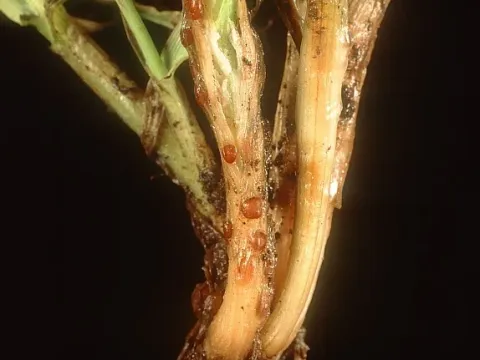
A definitive identifier of this pathogen is the formation of sclerotia on the necrotic plant tissues. These structures, often described as small, round, or elongated dark bodies, are clearly visible to the naked eye upon close inspection of the crown area.
Plants affected by the blight often have their crowns destroyed, making them unable to regenerate in the spring. This leads to severe thinning of the stand and the formation of bare patches across the field.
Unlike other snow molds, Typhula blight often creates very distinct, localized damage patterns. The necrotic tissue at the base of the plant is usually soft and easily detached from the root system due to the systemic action of the fungus.
The development of Typhula blight is heavily favored by prolonged, mild autumns that prevent winter cereals from hardening properly. Plants entering winter in a succulent or overgrown state are significantly more susceptible to infection.
A thick, persistent snow cover that falls on unfrozen soil provides the perfect environment for the disease. It creates a stable microclimate of high humidity and temperatures between 0 and 5 degrees Celsius, which fuels mycelial expansion.
Excessive soil moisture is another critical driver. Poorly drained fields or regions with heavy autumn rainfall provide the high humidity levels necessary for the aggressive germination of sclerotia and subsequent colonization of host plants.
Dense crop stands create a stagnant microclimate at the soil level, trapping humidity and promoting fungal spread. High planting densities combined with excessive nitrogen application in autumn often exacerbate the severity of the infection.
The presence of crop debris from previous cereal seasons acts as a host and food source for the pathogen. Fields with minimal tillage or high levels of surface residues are more prone to elevated infection rates compared to cleaner environments.
Typhula blight causes significant economic losses by killing plants during the winter, resulting in poor stand establishment in the spring. This reduction in crop density often requires expensive reseeding of affected fields.
Even if plants survive the initial infection, their vigor is severely compromised. This leads to uneven development, increased vulnerability to secondary pests, and a general decline in potential grain yield and quality.
The destruction of the crown and root tissue prevents the plants from reaching their full physiological potential during the growing season. This impacts tillering and final kernel weight, ultimately reducing total farm output.
- Significant reduction in plant stand density.
- High costs associated with potential reseeding.
- Decreased grain quality and overall yield potential.
- Increased susceptibility to secondary pathogens.
The primary management strategy is a robust crop rotation program that avoids planting winter cereals in close succession on the same ground, which helps reduce the accumulation of sclerotia in the soil.
Deep plowing or incorporating crop residues into the soil is an effective mechanical measure. By burying the debris, the inoculum is removed from the surface, accelerating the decomposition process and reducing the risk of infection.
Selection of resistant or tolerant varieties is a cornerstone of integrated management. Utilizing genetic resistance provides a cost-effective way to mitigate the risk of Typhula blight in high-pressure environments.
Seed treatment with systemic fungicides is essential to provide early protection for germinating crops. This chemical barrier helps prevent the pathogen from colonizing the crown during the critical autumn establishment phase.
Proper nitrogen management in the autumn is crucial to prevent excessive growth, which makes plants more prone to damage. Balancing nutrients, particularly increasing potassium levels, can improve winter hardiness and plant resilience against fungal infections.