
Typhula blight
Typhula gyrans
The causative agent of Typhula blight is the basidiomycete fungus Typhula gyrans (and related species like Typhula incarnata and Typhula ishikariensis). It is a psychrophilic pathogen that survives in the soil as sclerotia, which are dormant, hardened fungal structures.
What the section contains
Typhula blight
This disease is classified as a type of snow mold, specifically adapted to thrive in cold, moist environments beneath a persistent snow cover. The fungus is capable of active growth at temperatures near freezing point.
The fungus spreads via mycelium that colonizes the soil surface and plant tissues during the winter months. Sclerotia allow the pathogen to remain viable in the soil for extended periods, even in the absence of a host plant.
The life cycle is tightly synchronized with the dormant period of winter cereals. As snow melts in spring, the sclerotia may produce small fruiting bodies to release spores, facilitating further dissemination of the disease.
Its high adaptability to low temperatures makes it a persistent threat in regions with long, cold winters where the soil remains unfrozen under a deep snow blanket.
The first signs of the disease are typically observed immediately after the snow melts in early spring. A thick, white or grayish-white cottony mat of fungal mycelium covers the leaves of winter cereals.
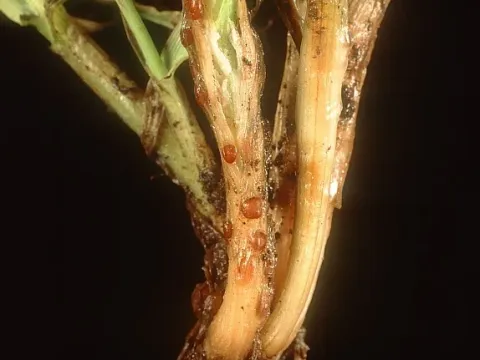
The infected plant tissues turn brown, become soft, and eventually decay. A diagnostic feature is the presence of small, round to oval sclerotia, ranging from dark brown to black, embedded in the leaf tissue or scattered on the surface.
Affected fields exhibit sparse, patchy areas where crops appear stunted or dead. In severe cases, the crown and root nodes are completely destroyed, leading to the death of the entire plant.
The fungus often develops in circular patches, which may coalesce to cover larger areas of the field. Under high humidity, the mycelial mat can cover the entire aerial portion of the winter cereal plants.
A distinct, faint musty odor associated with the fungal growth is often noticeable when inspecting affected patches immediately after the winter dormancy period ends.
The most favorable condition for Typhula blight is a prolonged winter with a heavy, persistent snow cover. This creates a stable, moist microclimate with temperatures hovering around 0°C, which is ideal for fungal development.
Infection is significantly more severe when snow covers unfrozen soil, as this allows the mycelium to spread rapidly between plants. The fungus effectively utilizes this period to parasitize the weakened winter crops.
Regions with fluctuating winter temperatures, specifically those with intermittent thawing and refreezing, may see an increase in the disease as the physiological stress on the plants reduces their resistance.
Excessive nitrogen fertilization in the autumn promotes lush, succulent growth that is highly susceptible to infection. This dense canopy also traps more moisture, aiding the proliferation of the fungal mycelium.
Soil acidity can also play a role, with some reports suggesting that pathogens of this group may exhibit more aggressive colonization patterns in acidic soil environments.
Typhula blight is a significant threat to winter cereal production, including wheat, rye, and barley. It can cause substantial stand thinning, which directly reduces the plant population and total biomass.
The primary damage occurs at the crown of the plant, which is the vital point for spring regrowth. When this area is destroyed, the plant cannot recover, leading to gaps in the field that require expensive reseeding.
Plants that survive but have been colonized by the fungus often show reduced vigor, stunted growth, and a compromised root system, all of which limit the grain filling and overall yield potential.
Economic losses are compounded by the need for additional inputs, including potential fungicide applications and the risk of entire field failure, necessitating significant labor and time investments.
Furthermore, the disease can affect grain quality by causing uneven ripening, leading to decreased marketability and potential rejection of harvested grain due to health standards or aesthetic defects.
The foundation of effective control is crop rotation, ideally avoiding winter cereals in the same field for at least 2-3 years. This helps in depleting the reservoir of sclerotia in the soil.
Proper soil preparation, including deep plowing and thorough incorporation of crop residues, is crucial to speed up decomposition and destroy the sclerotia present in the stubble.
Selecting disease-resistant or tolerant cultivars is a primary management strategy. Additionally, balanced fall fertilization (focusing on potassium and phosphorus) improves plant winter-hardiness and disease resilience.
Seed treatment with high-quality fungicides is essential to protect seedlings during the early establishment phase and to minimize early-season infection pressure.
In high-risk areas, a preventative fungicide application in late autumn, just before the first permanent snow cover, can significantly suppress mycelial growth and protect the crop throughout the winter.