
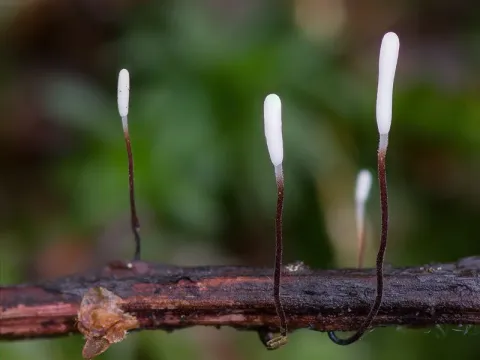
Typhula blight
Typhula erythropus
The disease is caused by the fungus Typhula erythropus, a basidiomycete that persists in the environment primarily through sclerotia. These sclerotia are survival structures that allow the pathogen to survive for extended periods in the soil or on crop residues.
What the section contains
Typhula blight
The life cycle begins when sclerotia germinate under cool, moist conditions to produce small, reddish-stalked fruiting bodies. These produce basidiospores that are dispersed by wind or water, leading to the infection of susceptible cereal crops.
The fungus is characterized by its ability to thrive at low temperatures, making it a significant threat during the late autumn and winter seasons. It acts as both a saprophyte and a facultative parasite, easily shifting to pathogenic growth on weakened hosts.
Once established, the fungus develops a dense mycelium that colonizes the plant tissues. The production of cell-wall degrading enzymes allows the pathogen to penetrate the epidermis and spread rapidly within the host tissues.
The durability of sclerotia is a key biological feature, as they can remain viable in the soil even after several years of non-host crops. This persistence makes long-term field management essential for limiting the disease incidence.
Initial symptoms are often observed on the lower leaves and the crown area of the plants. The foliage may turn yellow and eventually wither as the fungus disrupts the plant's vascular integrity.
A distinctive sign of Typhula erythropus is the presence of white, cottony mycelium covering the base of the stems, especially after the snow melts. Over time, this mycelium develops small, reddish-brown sclerotia.
Affected stems become soft, brown, and necrotic at the base, leading to a loss of structural support. Plants often show signs of stunted growth or complete death, creating patchy stands across the field.
In cases of severe infestation, the entire crown region may be consumed by the fungal growth, causing the plant to be easily pulled from the soil. This root and stem rot is a hallmark of the blight.
The progression of the disease is most noticeable in the early spring, as the damaged tissues fail to recover and the plant dies due to the inability to transport nutrients and water from the roots to the leaves.
Disease development is highly dependent on cool and moist conditions. Optimal temperatures for the growth of Typhula erythropus range between 0°C and 10°C, making it a classic cool-season pathogen.
High humidity at the soil surface is essential for the germination of sclerotia. Environments with poor drainage or stagnant air flow are particularly prone to high levels of infection.
The accumulation of plant residues on the soil surface serves as a primary substrate for the fungus. Fields under no-till or minimum-till practices without proper residue management often experience higher disease pressure.
Thick, dense crop stands prevent proper air circulation, creating a humid microclimate that favors fungal spread. Proper seeding density is crucial for maintaining a healthy and ventilated crop canopy.
Mild, wet autumns followed by winters with frequent temperature fluctuations provide the pathogen with prolonged periods of activity. Such climatic patterns significantly increase the likelihood of severe outbreaks.
The primary economic impact of Typhula blight is the reduction in crop stand density, which often necessitates reseeding of damaged fields. This results in significant loss of time, resources, and potential yields.
Plants that survive the infection are typically weakened, leading to uneven maturity and reduced grain quality. The overall crop yield potential is severely compromised in affected areas.
The fungus has a broad host range among cereals, including wheat, rye, and barley. This complicates the planning of crop rotations for producers who rely on these major cereal crops.
Beyond the direct impact on yield, the disease exposes plants to secondary infections. The damaged tissues are easily colonized by other opportunistic pathogens, further weakening the crop's health.
Management costs are significantly increased due to the need for preventative fungicide applications and the potential labor and seed expenses associated with field restoration in the spring.
Strategic crop rotation is the cornerstone of disease prevention. Avoiding the continuous planting of susceptible cereals on the same field for multiple years is essential to break the pathogen's life cycle.
Deep tillage can be an effective cultural practice, as it buries surface residues and sclerotia to depths where the fungus is less likely to survive and germinate, promoting its degradation by soil micro-organisms.
The use of high-quality, fungicide-treated seeds helps protect young seedlings from early infection. This initial defense is critical for establishing a robust plant stand before winter dormancy.
Optimizing the sowing date is vital; planting too early or too late can expose young plants to conditions where the pathogen is highly active. Ensuring plants are well-established but not overly lush before winter is key.
In high-risk areas, the application of systemic fungicides during the autumn period can suppress fungal growth. This proactive measure is often necessary to prevent significant blight development during the winter months.