
Typhula blight
Typhicola
Typhula blight is caused by fungi of the genus Typhula, primarily Typhula incarnata and Typhula ishikariensis. These pathogens are key agents of what is commonly known as snow mold.
What the section contains
Typhula blight
The fungus survives in the soil through sclerotia — hardened masses of mycelium that serve as long-term survival structures. These sclerotia can remain viable in the soil for several years.
The life cycle restarts in the spring or late winter when temperatures rise slightly above freezing. Sclerotia germinate, producing either fruiting bodies or vegetative mycelium that infects the host plants.
Spread is facilitated by soil movement, water runoff, and contact between infected and healthy tissue. The pathogen is highly active in cold, wet conditions where other microbial competition is low.
Biological specialization of the genus allows it to colonize winter cereals effectively during the dormant period when the host's natural defenses are significantly reduced.
Symptoms become visible immediately after the snow melts. Large, irregular patches of dead or dying plants appear across the field, often described as a "patchy" appearance.
A distinctive sign is the presence of a white to grayish or pinkish cottony mycelial mat covering the leaves and stems of affected plants. This mat is most visible under high humidity conditions.
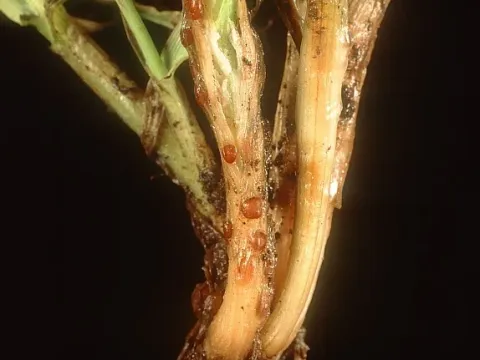
Small, spherical or lens-shaped sclerotia develop on the infected plant tissues. Initially pale or tan, they mature into dark brown or black structures, which are critical for identification.
Infected tissues become soft, watery, and eventually rot completely. The decay process is rapid, leaving the affected plants shredded or disintegrated after the snow cover is gone.
Surviving plants in the peripheral areas of the infection sites often appear stunted, chlorotic, and struggle to recover during the early spring growth phase.
The development of Typhula blight is heavily dependent on the presence of persistent snow cover over unfrozen soil, which insulates the fungus from extreme cold.
High soil moisture levels in late autumn and high humidity during the winter months under the snow are essential for the rapid colonization and spread of the pathogen.
Fields with dense plant stands, which trap moisture and limit airflow at the crown level, are significantly more susceptible to severe infection outbreaks.
Delayed autumn growth or conversely, excessive lush growth due to nitrogen over-application, can increase susceptibility to the fungus during the winter months.
The disease is most prevalent in regions with long, cold winters where the soil does not freeze deeply, allowing the fungus to maintain activity throughout the dormant period.
The primary damage caused by Typhula blight is the reduction of plant stand density, which directly impacts the yield potential of the winter cereal crop.
In severe years, total crop failure in affected areas is possible, necessitating expensive spring reseeding and resulting in major economic losses.
Even where crops survive, the disease significantly impairs plant vigor, delaying maturity and reducing the final grain quality and yield components.
The areas destroyed by the blight are often quickly colonized by opportunistic weeds, which further complicates crop management and increases competition for nutrients.
Repeated outbreaks lead to an accumulation of sclerotia in the soil, effectively increasing the disease pressure for future plantings in that specific field.
Effective management relies on an integrated approach, combining cultural practices with targeted chemical applications to minimize infection risks.
- Utilizing disease-resistant or tolerant crop varieties.
- Implementing crop rotation with non-host species for at least two to three years.
- Managing seeding rates to prevent overcrowding and improve field aeration.
- Applying balanced fertilization, focusing on potassium to improve cold hardiness.
- Treating seeds with effective broad-spectrum fungicides before planting.
Autumn application of systemic fungicides can be a critical intervention in areas or seasons where climatic conditions heavily favor the development of the pathogen.
If infection is detected early in spring, light harrowing can help aerate the soil and reduce humidity at the plant crown, which may help limit further spread of the fungal mats.