
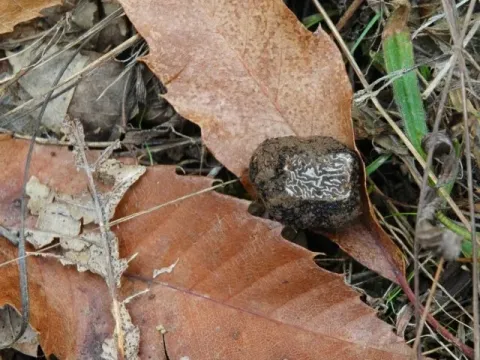
Winter truffle
Tuber brumale
The causal agent is the fungus Tuber brumale, a member of the Ascomycota division. It is a mycorrhizal fungus that establishes symbiotic relationships with the roots of woody species, forming ectomycorrhiza.
What the section contains
Winter truffle
Unlike true pathogens that cause necrosis, Tuber brumale acts as a facultative partner that can compete with the host plant for water and nutrients under certain conditions.
Reproduction occurs via the development of ascomata — fruiting bodies forming within the soil. Spore dispersal is facilitated by soil moisture, water runoff, and small subterranean animals.
The fungus's life cycle is synchronized with the host plant's seasonal rhythm, with peak activity occurring during periods of moderate temperature and high soil humidity.
While often classified as a beneficial symbiont, in intensive horticultural settings, it may be regarded as a factor reducing plant vigor due to intense competition for root space.
The primary symptom is the formation of brûlé (burn) zones, where vegetation growth around the host tree is significantly inhibited or absent.
Near the root system, dark fruiting bodies with a rough, wart-like surface are found buried in the soil profile.
Roots of the host plant often show modified mycorrhizal architecture, which becomes denser and may impede efficient water and mineral uptake.
Host plant foliage may exhibit signs of premature chlorosis or reduced photosynthetic rates during periods of water stress compared to non-affected plants.
The soil within the infected zone typically develops a pungent fungal odor, which becomes particularly noticeable following heavy rainfall during the autumn months.
Optimal development occurs in calcareous soils with a neutral to slightly alkaline reaction (pH 7.5–8.5).
The fungus thrives in well-drained soil environments where waterlogging is absent, but consistent subterranean humidity is maintained throughout the season.
Fruiting body formation requires a specific temperature cycle, typically characterized by warm summers followed by cool autumn transitions.
The presence of suitable host species, primarily within the Quercus or Corylus genera, is essential for the establishment of the mycelial network.
High-density plantings or lack of crop rotation creates a cumulative effect, allowing the fungus to dominate the soil microflora within the rooting zone.
The main harm manifests as the suppression of fine root development in young plants, leading to stunted growth and reduced overall plant vitality.
The fungus produces secondary metabolites that have an allelopathic effect, making the rhizosphere toxic to various competing herbaceous plants.
Economic impact is seen in reduced crop productivity, especially in forest nurseries where a balanced mycorrhizal network is vital for seedling survival.
Alterations to the soil's microbial composition by the fungus can potentially displace beneficial organisms responsible for nutrient cycling.
In highly specific agro-environmental settings, heavy infestation by Tuber brumale can complicate the certification process for commercial sapling production.
Prevention relies on monitoring soil pH levels and avoiding excessive liming on sites prone to mycelial accumulation.
Implementing proper crop rotation and avoiding planting sensitive species in historically infected plots is critical for long-term management.
Fungicide application is generally ineffective because the mycelium resides deep in the soil and is protected by the mycorrhizal structure.
Improving soil aeration and managing drainage helps prevent the water accumulation that favors fungal proliferation.
- Inoculating soil with beneficial microbial agents to restore ecological balance.
- Regular inspections of tree bases for characteristic brûlé symptoms.
- Sanitary maintenance of the soil surface to minimize the accumulation of fungal spores and organic debris.