
Witches broom of birch
Taphrina betulina
Description
Symptoms
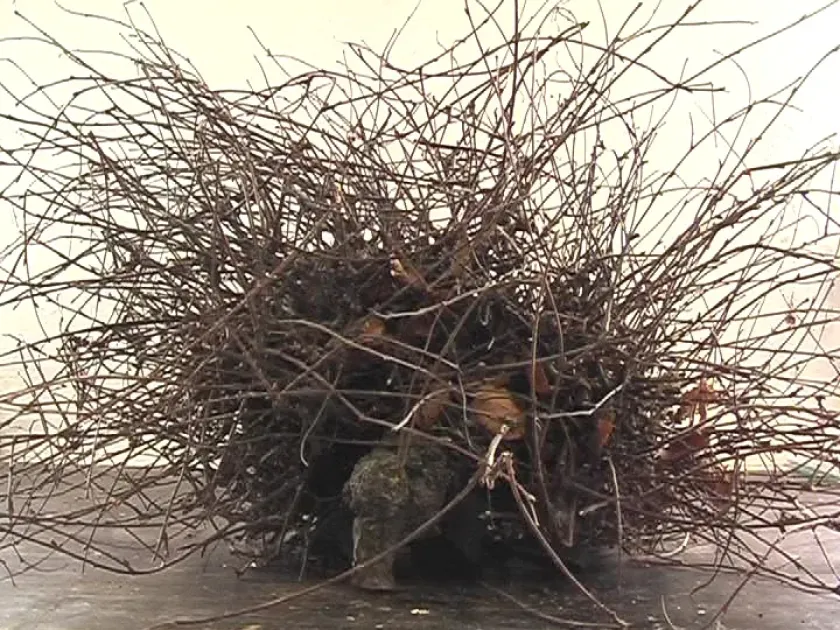
The primary symptom of this infection is the appearance of dense, bushy clusters of thin, stunted shoots that look like a broom. These shoots emerge from a single node and exhibit abnormal growth patterns with very short internodes.
During the growing season, leaves on the affected shoots may appear yellowish or reddish, often becoming brittle and curled. A whitish-gray layer of fungal spores usually covers the undersides of these symptomatic leaves.
In autumn, leaves on the witches' brooms remain on the branches significantly longer than those on healthy twigs. These dense clusters persist throughout the winter, making them highly visible against the bare canopy.
As the infection progresses, these brooms can grow to substantial sizes, measuring up to a meter or more in diameter. This exerts a heavy physical burden on the host branch, often causing it to bend or distort.
In mature trees, the presence of multiple witches' brooms significantly alters the architectural structure of the crown, leading to a loss of the tree's typical habit and vigor.
Pathogen
The causative agent is a parasitic fungus called Taphrina betulina. It is a host-specific pathogen that targets various species of birch, inducing pathological proliferation of plant tissue.
The fungus overwinters as mycelium located within the tissues of the infected shoots, specifically within the buds and bark. When the sap begins to flow in spring, the fungus activates and stimulates the tree's meristematic cells.
Dispersal occurs via ascospores which are spread by wind, rain, and insects during the spring growth phase. Upon landing on healthy developing buds, these spores germinate and initiate new points of infection.
This pathogen acts as a biotroph, hijacking the tree's nutritional resources to support the growth of the deformed broom clusters. It thrives by manipulating the hormonal balance of the host plant.
The fungus is highly specialized, meaning its life cycle is synchronized with the growth cycles of birch trees, ensuring the pathogen can persist in the environment for decades.
Conditions for development
High humidity and cool, damp weather during the spring bud-burst period are ideal conditions for the development and spread of the fungus. Rain provides the necessary moisture for spores to germinate on host surfaces.
Dense forest stands or poorly managed ornamental plantings with limited airflow are more susceptible to outbreaks. Poor air circulation allows for prolonged periods of moisture on twigs, increasing infection rates.
Trees experiencing physiological stress, such as drought or nutritional deficiencies, show a lower threshold for infection. Healthy, well-fertilized trees often demonstrate better resistance to colonization.
Mechanical damage to buds or bark can provide easier entry points for the fungal spores. Once the fungus enters, it establishes systemic colonization within that branch, making it difficult to eradicate.
Repeated exposure to cool, misty conditions during the critical early growth stage creates a high-risk environment for the rapid expansion of the disease within a grove.
Why it matters
The primary impact of the disease is the progressive exhaustion of the host tree. Because the brooms act as a "nutrient sink," they divert energy from the rest of the canopy, leading to reduced overall growth.
As the infection worsens, large brooms can cause the supporting branches to become fragile and prone to breakage during high winds or heavy snowfall, which can result in safety hazards.
Over time, significant crown colonization leads to decline and "dieback," where the tree gradually loses its vitality. This makes the birch more susceptible to secondary pests and pathogens.
In urban landscapes, the aesthetic impact is severe, as affected trees lose their ornamental value. Often, such trees are eventually removed as they become unsightly and potentially dangerous.
Ecological impacts include the weakening of birch populations in mixed forests, which may eventually shift the forest composition toward other, more resistant tree species.
Protection
The most effective management practice is the systematic pruning and removal of affected branches. Cuts should be made at least 15-20 cm below the visible broom to ensure the removal of any latent fungal mycelium.
All pruned material must be destroyed, preferably by burning, to prevent further spore dispersal. Leaving diseased branches on the ground allows the fungus to continue its reproductive cycle.
Preventive fungicide applications (using copper-based products) applied early in the spring before bud-break can reduce the success rate of spore germination and help protect healthy parts of the tree.
Enhancing tree health through proper fertilization and watering helps the tree maintain a robust immune response. A strong, vigorous birch is better equipped to limit the spread of the fungal colonization.
- Routine monitoring for new broom growth.
- Sanitation pruning during the dormant season.
- Disinfecting pruning tools between trees.
- Selecting resistant birch varieties for new plantings.
Discussion
No discussions yet — be the first.