
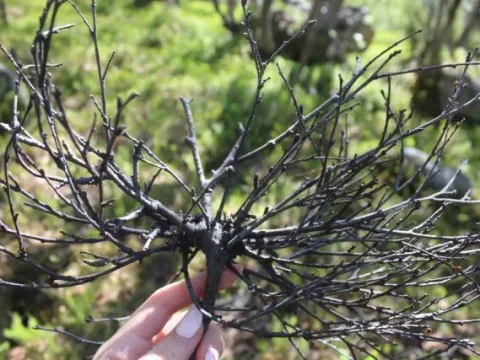
Witches' broom
Undetermined
The primary symptom is the proliferation of thin, shortened, and stunted shoots growing from a single point, creating a dense, broom-like appearance.
What the section contains
Witches' broom
Leaves on these abnormal branches are often smaller than normal, may show chlorosis (yellowing), and have a distorted leaf structure due to impaired metabolism.
Flowering is significantly reduced or inhibited; when blooms do occur, they are often misshapen, sterile, and incapable of producing viable fruits or seeds.
During winter, these "brooms" remain highly visible as they retain a dense cluster of twigs against the silhouette of the bare, healthy branches.
In perennial species like cherries or rhododendrons, the affected branches often suffer from progressive dieback, leading to overall plant deformity.
The disease is most commonly caused by phytoplasmas, specialized parasitic bacteria that inhabit the phloem tissue of the host plant.
In some cases, fungal pathogens such as Taphrina species or various rust fungi are responsible for triggering the characteristic dense, abnormal cell proliferation.
Certain viral infections can also cause witches' broom symptoms by disrupting the plant's hormonal balance and interfering with normal developmental pathways.
Insects with piercing-sucking mouthparts, including leafhoppers, aphids, and psyllids, act as the primary vectors that transmit the pathogen between hosts.
This condition is classified as a systemic disease because the pathogen spreads throughout the plant's vascular system, disrupting nutrient distribution.
Warm, humid conditions generally favor the activity of insect vectors, which facilitates the rapid spread of the pathogen during the growing season.
The presence of nearby wild reservoirs—infected woody plants or weeds—provides a constant source of inoculum for the disease to jump to healthy crops.
Mechanical injuries caused by improper pruning practices, especially when tools are not sterilized, provide entry points for the transmission of pathogens.
Plants with weakened immune systems due to nutrient deficiencies, environmental stress, or lack of proper maintenance are significantly more susceptible to infection.
High insect population density in the garden or field significantly increases the probability of cross-infection between different susceptible species.
The disease drastically reduces crop yields, as affected branches are often sterile and consume energy that should go toward normal development and fruit production.
Chronic infection results in the progressive exhaustion of the plant, as the pathological growth acts as a significant sink for carbohydrates and minerals.
Infected plants exhibit reduced hardiness, making them more vulnerable to frost, drought, and subsequent attacks by secondary pathogens and pests.
Given its wide host range, including potatoes, beans, and various fruit trees, witches' broom poses a significant economic threat to agricultural systems.
In ornamental plants like rhododendrons, the loss of aesthetic value is often the main concern, as the plant structure becomes unsightly and irreparable.
Radical sanitary pruning is the most effective control method: affected branches must be removed well into healthy wood and destroyed by burning.
Sterilizing pruning tools between cuts using alcohol or bleach solutions is mandatory to prevent the mechanical transmission of the pathogen to healthy tissues.
Implementing an integrated pest management (IPM) program to control insect vectors is crucial for limiting the spread of the disease within the garden.
Prioritize the use of certified disease-free planting material and maintain strict quarantine measures when introducing new plants into a collection.
- Monitor plants regularly for early detection of broom symptoms.
- Remove and destroy severely infected entire plants.
- Control weed populations that act as alternate hosts.
- Maintain optimal plant health through balanced fertilization and care.