
Torulosis
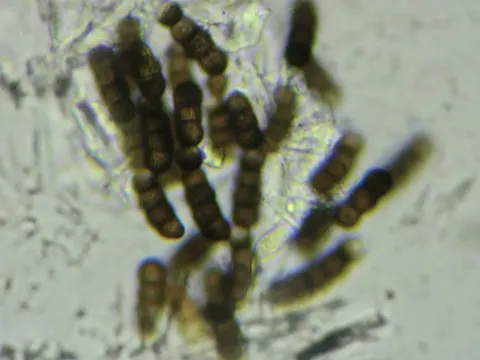
Torula herbarum
The causative agent of this disease is the imperfect fungus Torula herbarum, which belongs to the class of hyphomycetes. This microorganism is widely distributed as a saprotroph that grows on dead organic matter.
What the section contains
Torulosis
The fungus is capable of transitioning to facultative parasitism, infecting weakened tissues of agricultural and ornamental crops. Its biology is closely linked to the availability of organic substrates where it actively forms conidial chains.
The conidiophores are olive-brown and septate. Conidia are produced in acropetal sequences, creating characteristic chains that easily detach and scatter under mechanical impact or air currents.
The pathogen demonstrates high survivability in soil and on plant debris, maintaining infectious capacity for long periods. Its spread is primarily facilitated by wind and water splashes during rainfall.
As a generalist, Torula herbarum can infect a wide range of plant hosts, making it a common component of the mycobiota in various agricultural ecosystems worldwide.
The external symptoms of torulosis are characterized by the appearance of a specific dark, almost black, velvety coating on the surface of affected plant organs, representing a mass of spores.
Symptoms are most commonly observed on wilting, damaged, or senescing tissues such as stems, leaves, and fruits. In cases of severe infection, fruits and seeds show distinct blackening and eventual decay.
In high humidity conditions, the fungal colony becomes denser. The affected plant tissue exhibits necrotic spots of irregular shape, which expand and coalesce over time as the disease progresses.
Stem infections lead to epidermal darkening, which interferes with normal physiological processes like photosynthesis and transpiration. The plant appears stunted and loses turgor prematurely.
Microscopic analysis is essential for diagnosis, revealing the characteristic dark olive-colored chains of conidia, which form branched, long-chain structures typical for this specific fungal species.
The development of the disease is directly dependent on environmental conditions, particularly air humidity. Optimal conditions for active sporulation occur when relative humidity remains between 80% and 95%.
Temperatures ranging from 20°C to 25°C are most favorable for the colonization of plant tissues. However, Torula herbarum exhibits significant plasticity and can survive in a wide temperature range.
High planting density, which restricts air circulation and creates a localized microclimate with elevated moisture levels, significantly contributes to the rapid transition from saprotrophic to parasitic growth.
Plant stress caused by nutrient deficiency, drought, or prior pest damage creates entry points for the infection. The fungus easily colonizes tissues that have been weakened by primary abiotic or biotic factors.
Prolonged rainy periods during the maturation stage of crops increase the risk of massive infection on fruits and grains, which leads to significant losses in both quantity and product quality.
The primary economic harm of torulosis is the degradation of product marketability. Infected vegetables, fruits, and grains lose their physical quality and become unsuitable for long-term storage.
The disease causes premature senescence of the foliage, which reduces overall photosynthetic efficiency, ultimately resulting in reduced yields and lower nutritional value of the harvested material.
Infected plants show decreased resistance to other pathogens, making torulosis a frequent secondary infection that complicates the management of primary diseases within the field.
Contamination of produce with fungal conidia poses challenges during post-harvest processing. Additionally, the presence of mold may be associated with the accumulation of mycotoxins in certain conditions.
In nursery settings, torulosis can cause seedling mortality by infecting weakened specimens, leading to thinning of stands and financial losses due to the need for replanting or excessive maintenance.
The primary preventive measure is the thorough removal and destruction of crop residues after the growing season, as they serve as the main reservoir for the infection to persist.
Implementing crop rotation helps break the cycle of pathogen accumulation in the soil, preventing the build-up of the fungus during seasons when non-susceptible crops are grown.
Optimizing mineral nutrition, particularly avoiding excessive nitrogen fertilization, enhances the plant's natural resistance to fungal colonization and keeps the host tissues more resilient.
Prophylactic application of fungicides during periods favorable for fungal development can effectively suppress spore spread and prevent the initial establishment of the disease on the crop.
- Use of certified, disease-free planting material.
- Regular weeding to reduce potential alternative hosts.
- Increasing plant spacing to improve ventilation.
- Maintaining optimal moisture levels in storage facilities.