
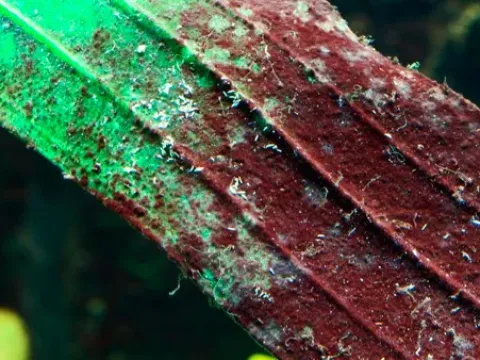
Thalassiosirales algae
Thalassiosirales
It is crucial to define that Thalassiosirales is not a plant disease pathogen, but an order of diatom algae. These are unicellular photosynthetic organisms with a characteristic silica cell wall.
What the section contains
Thalassiosirales algae
In agronomy, they are not infectious agents for field crops. However, they are frequently encountered as unwanted aquatic contaminants in hydroponic and aquaponic systems.
Their biological structure differs fundamentally from fungi, bacteria, or viruses that cause traditional plant diseases. They do not invade plant tissues but colonize surfaces.
These organisms thrive in aquatic environments where light, nitrogen, and phosphorus are abundant, often turning into an operational challenge rather than a biological one.
Therefore, classifying them as a "disease" is a common misunderstanding in controlled-environment agriculture regarding the maintenance of nutrient solutions.
The primary factor for the proliferation of these algae is exposure of the nutrient solution to light, which allows for active photosynthesis and cell division.
Excessive accumulation of dissolved mineral fertilizers, particularly nitrogen and phosphorus compounds, acts as a stimulant for rapid algal growth.
Optimal greenhouse temperatures, which are necessary for crop growth, also happen to be ideal for the biological activity of diatoms within the water.
Inadequate circulation and stagnation within the nutrient delivery lines provide stable sites for biofilm formation and colony expansion.
Failure to sanitize system components between crop cycles ensures that spores remain present, ready to re-emerge when environmental conditions improve.
The main harm caused by these algae is the physical clogging of irrigation drippers, which disrupts the uniform supply of water and nutrients to the crops.
Dense algal films on the substrate surface restrict oxygen exchange, potentially leading to root hypoxia and reduced nutrient uptake efficiency.
Competition for minerals occurs when algae strip essential nutrients from the solution, depriving the cultivated plants of necessary resources for development.
The accumulation of dead algae contributes to the build-up of organic debris, which can promote the growth of harmful anaerobic bacteria and fungi.
Algal mats create moist, nutrient-rich environments that attract pests such as fungus gnats, which are common in indoor and greenhouse environments.
The most effective strategy is the total exclusion of light from all parts of the hydroponic system, including reservoirs, pipes, and channels.
The implementation of ultraviolet (UV) sterilization units is highly recommended to neutralize algal cells before they can colonize the irrigation system.
Regular sanitation of irrigation equipment using safe, plant-compatible disinfectants is necessary to keep the system free from biofilm accumulation.
Optimizing fertilizer concentrations to match plant uptake rates helps prevent the nutrient surplus that often triggers algal blooms.
Mechanical filtration systems should be installed to periodically capture organic particulates and cells, ensuring the solution remains clear and healthy.