
The sickener
Russula emetica
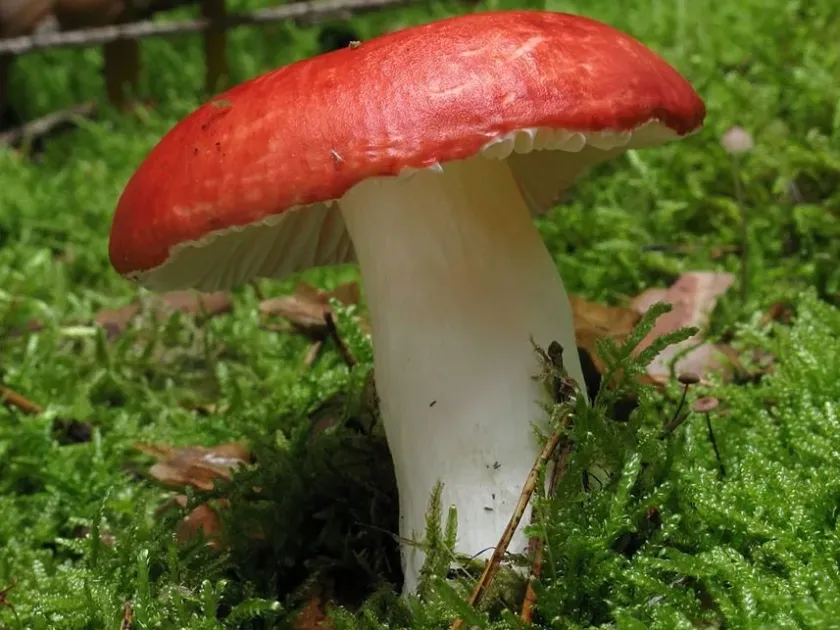
Description
Pathogen
The sickener (Russula emetica) is a basidiomycete fungus belonging to the Russulaceae family. It is crucial to clarify that this organism is not a plant disease or a pathogen affecting crops.
This fungus acts as a mycorrhizal symbiont, establishing a mutually beneficial relationship with the roots of various forest trees. Unlike pathogenic fungi, it supports the host plant by improving nutrient uptake.
Biologically, the fungus contains specific organic compounds that cause severe irritation to the human gastrointestinal tract, hence its common name. These compounds serve as a chemical defense mechanism for the fungus.
Its lifecycle depends entirely on the presence of woody hosts in a forest environment. The mycelium forms an ectomycorrhizal network, connecting the fungus to the tree roots.
From an agricultural standpoint, Russula emetica is completely harmless. It does not possess the mechanisms to attack, colonize, or degrade agricultural crop tissues.
Conditions for development
The development of fruit bodies is highly dependent on moist conditions, typically found in coniferous and mixed woodlands. It thrives in acidic soils enriched with organic humus.
Optimal growth occurs in shaded areas with high humidity and consistent precipitation throughout the summer and autumn months.
The presence of symbiotic trees is a biological necessity. The fungus relies on tree root exudates for carbohydrates, which it cannot synthesize on its own.
Environmental stability is key to its survival. Extreme drought or soil desiccation effectively halts the emergence of mushrooms, though the mycelium remains underground.
The fungus is ecologically adapted to thriving in mature forest systems, where it plays a role in the natural decomposition and nutrient cycling processes of the woodland floor.
Why it matters
This fungus does not pose any threat to agricultural productivity. It is not involved in any root rot, leaf spot, or vascular wilting diseases that concern farmers or gardeners.
The primary concern regarding this species is its toxicity to humans and mammals if consumed. It causes significant gastrointestinal distress, but this is a toxicological issue, not a phytopathological one.
Russula emetica does not compete with cultivated crops for nutrients. Its biological niche is strictly confined to the symbiotic root zones of forest tree species.
No protective or control measures are required, as the presence of this fungus in nearby forest patches is a positive indicator of natural soil and root health.
It acts as a decomposer and a partner in the forest ecosystem, causing no damage to forest nurseries, shelterbelts, or adjacent agricultural fields.
Discussion
No discussions yet — be the first.