
The Blusher
Amanita rubescens
Description
Symptoms
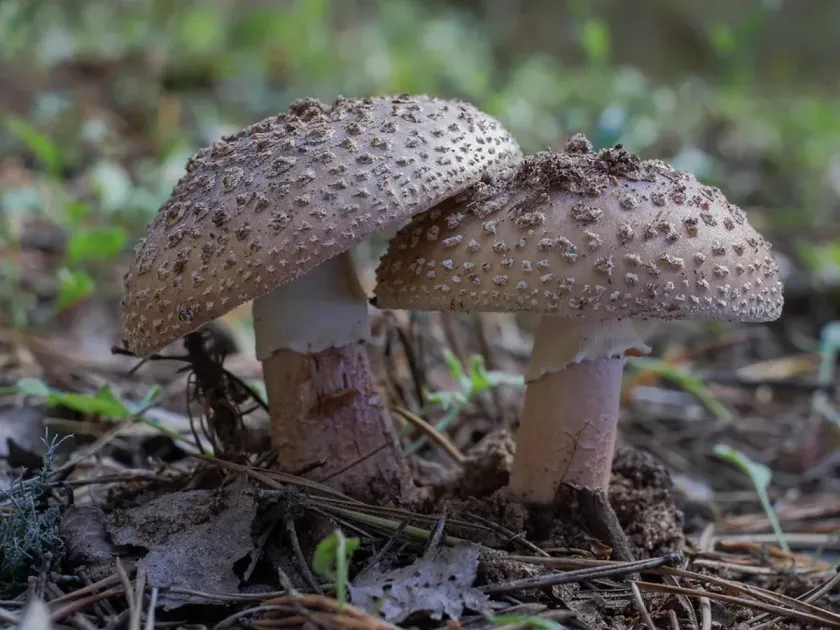
The primary diagnostic sign is a cap ranging from 6 to 15 cm in diameter, exhibiting a reddish-brown or grayish-pink color. The surface is often adorned with patches of veil remnants.
The most distinctive feature is the characteristic "blushing" of the flesh, which turns a pinkish-red hue when bruised or cut, due to the oxidation of its internal tissues.
The stem is cylindrical with a bulbous base. It features a persistent, striated ring located just below the cap, which is a classic morphological marker of the species.
The gills are free from the stem and white in color, often showing small reddish spots that develop as the mushroom matures or after minor damage.
- pinkish-red color change upon bruising;
- distinctively striated ring on the stipe;
- bulbous base of the stem.
Pathogen
The Blusher (scientific name: Amanita rubescens) is a basidiomycete fungus belonging to the Amanitaceae family. In agronomy, it is not classified as a plant pathogen.
This fungus acts as an ectomycorrhizal partner to forest trees. It does not cause plant diseases, but instead enhances the nutrient and water absorption capabilities of the host plant roots.
The mycelium establishes a symbiotic relationship with trees, such as pine or oak, by wrapping around the fine root tips. This interaction is beneficial to forest health and soil stability.
It is not responsible for any necrotic lesions, vascular wilt, or systemic decay in crops. Its presence is generally indicative of a balanced forest ecosystem.
Since Amanita rubescens is a symbiont and not an infectious agent, there are no control programs or chemical management strategies targeting this fungus in agricultural practice.
Conditions for development
The Blusher favors acidic soils found in coniferous, deciduous, and mixed forests. It establishes stable mycorrhizal connections with a variety of tree hosts.
The peak fruiting period occurs from early summer through autumn, requiring sufficient humidity and temperatures between 15°C and 22°C for optimal development.
Spores are dispersed by wind and currents. The spore print is white, a standard characteristic for members of the Amanita genus.
High soil moisture and a thick layer of leaf litter provide the necessary environment for the underground mycelial network to flourish and produce fruiting bodies.
In forest-edge habitats, the fungus remains dormant during dry spells but does not negatively impact the surrounding agricultural fields.
Why it matters
There is no economic harm or agricultural damage associated with Amanita rubescens. It does not possess any pathogenic properties that affect plant vitality.
While some mushrooms can be toxic, the "harm" associated with The Blusher is limited to human consumption without proper heat treatment, as raw specimens contain heat-labile toxins.
Its role in the ecosystem is ecological and beneficial, contributing to the health of woodland areas rather than threatening them.
As it is not a parasite, no prevention or protective measures are needed to manage its population in garden or farm settings.
Agronomically, this species is considered benign and irrelevant to plant disease management programs.
Discussion
No discussions yet — be the first.