
Thecaphora
Thecaphora
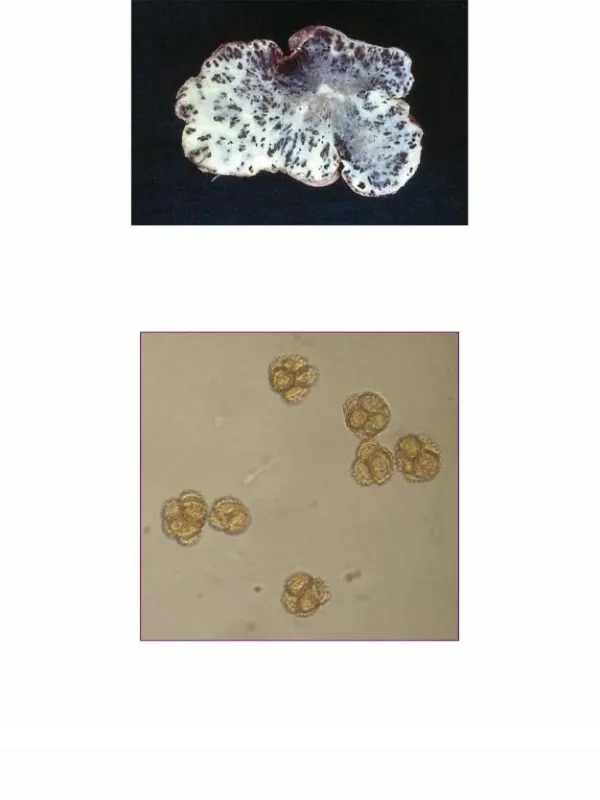
Description
Symptoms
Symptoms of Thecaphora infection typically appear as the host plant approaches maturity. The most prominent sign is the abnormal deformation and swelling of seed pods or fruit structures.
As the disease progresses, the internal contents of the fruit are entirely replaced by a dusty, dark-colored mass of fungal spores. When these pods are broken, a cloud of spores is released into the air.
Affected plants often show reduced vigor, stunted growth, and failure of flower buds to open properly. In many cases, the entire reproductive structure of the plant becomes compromised and loses its typical morphological form.
The presence of necrotic or abnormally colored pods is a diagnostic indicator in the field. Growers might notice that infected plants reach maturity faster or exhibit atypical senescence compared to healthy ones.
Because the disease affects the internal structure of the seed, the external appearance of the plant can remain misleadingly healthy until the moment the spores are released.
Pathogen
The disease is caused by fungi of the genus Thecaphora, which belong to the smut fungi group. These pathogens are highly specialized, typically attacking the generative organs and reproductive structures of their host plants.
The life cycle involves the production of teliospores, which are extremely resilient to harsh environmental conditions. These spores can persist in the soil or on plant debris for several years, acting as a permanent source of infection.
Transmission primarily occurs through wind-dispersed spores and contaminated seeds. Once the spores land on a receptive host during the flowering stage, they initiate the infection process by penetrating the young tissues.
The fungus develops internally, colonizing the plant's ovaries and other reproductive parts. This internal colonization remains hidden from the grower until the final stages of fruit development.
The biological success of the pathogen depends on synchronizing its growth with the host's flowering phase, ensuring that the spores are ready to spread exactly when the host plant is most vulnerable.
Conditions for development
High humidity and moisture during the flowering period are essential for the development and germination of spores. Frequent rain or heavy morning dew creates the ideal microenvironment for the fungus.
Moderate temperatures generally favor the spread of Thecaphora, while extreme heat or drought may temporarily slow down the fungal activity but rarely eradicate the pathogen from the soil.
Dense planting configurations limit airflow and maintain higher humidity levels within the canopy, which significantly increases the rate of secondary infection among neighboring plants.
The concentration of spores in the soil is a primary factor in disease prevalence. Soils that have hosted the disease in previous seasons remain hazardous for susceptible crops unless proper crop rotation is implemented.
Agricultural practices that involve the use of untreated seeds from previously infected fields serve as the most common pathway for introducing the disease into new areas.
Why it matters
The primary economic harm caused by Thecaphora is the direct loss of seed yield and quality. Infected seeds are rendered non-viable, making the crop useless for both market sale and future planting.
Heavy infestations can lead to substantial reductions in harvest volume, threatening the profitability of the affected agricultural operations. The damage is often irreversible once the spores have formed.
The pathogen causes long-term contamination of the soil, which creates an ongoing management challenge. Growers may be forced to avoid cultivating susceptible species on infected fields for several years.
The spread of spores across fields and through machinery leads to the contamination of otherwise healthy harvests, increasing the risk of wider regional outbreaks.
Furthermore, the cost of implementing stringent control measures, including deep plowing, chemical treatments, and cleaning of harvesting equipment, adds a significant financial burden to the producer.
Protection
The most effective strategy for managing Thecaphora is the strict implementation of crop rotation. Rotating away from susceptible hosts for at least 3–4 years helps reduce the spore load in the soil naturally.
Using certified, pathogen-free, and chemically treated seeds is a critical preventative step. Fungicidal seed dressings are essential to protect the seedling from early-stage infections.
Post-harvest sanitation is vital; crop residues should be removed and destroyed by burning or deep burial. This minimizes the volume of overwintering inoculum in the field.
During the growing season, if the disease is detected, prompt removal and destruction of infected plants can help prevent further spore dispersal to the rest of the crop.
- Selecting resistant varieties where available.
- Optimizing row spacing to improve canopy ventilation.
- Sanitizing farm machinery after working in suspected infected areas.
- Applying systemic fungicides at the onset of flowering if environmental conditions favor infection.
Discussion
No discussions yet — be the first.