
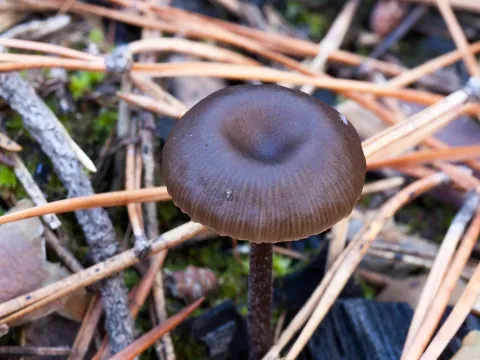
Tephrocybe anthracophila
Tephrocybe anthracophila
Tephrocybe anthracophila is a specialized carbophilous fungus belonging to the Lyophyllaceae family. It is not a plant pathogen in the traditional sense, meaning it does not attack living tissues of agricultural crops. Instead, it acts as a saprotroph that thrives in unique environmental niches.
What the section contains
Tephrocybe anthracophila
This fungus is biologically adapted to process organic matter in substrates that have been subjected to intense heat. Its mycelium colonizes the remnants of wood ash and scorched soil, where high pH levels prevent most other soil microorganisms from flourishing.
While the fungus itself does not cause disease in plants, its presence is a diagnostic indicator for the agriculturalist. It signals that the soil in that specific area has been thermally altered and likely contains high concentrations of alkaline ash residues.
The morphology of the fungus consists of a cap ranging from 1 to 4 cm in diameter, which shifts from gray to a deep, coal-like black. The gills are crowded and attached to the stem, which is a key diagnostic feature for field identification.
The extensive mycelial network of this species is highly resistant to the specific chemical conditions found in fire-affected soils. This allows it to dominate the area, successfully outcompeting native soil flora in the nutrient-rich, ash-laden topsoil.
The primary prerequisite for the growth of Tephrocybe anthracophila is the presence of wood ash resulting from biomass burning. This fungus requires a substrate that has been treated with high temperatures to trigger the germination of its spores.
High moisture levels in the soil and atmosphere are essential for the production of fruit bodies. The fungus typically exhibits the most significant growth during late summer and autumn, triggered by high rainfall periods following fire events.
The chemical reaction of the substrate is critical; the fungus prefers strongly alkaline environments created by concentrated ash. On acidic or untreated soils, the species is unable to compete, which explains its localized appearance on fire pits.
Spores are dispersed through wind currents, allowing the fungus to colonize new sites rapidly once a suitable substrate is identified. The spores can remain dormant in the soil for extended periods until a fire event creates the necessary environment.
Temperature fluctuations also play a role, but the species is remarkably hardy. It thrives in temperate climates, focusing its reproductive cycle when moisture is abundant, ensuring the survival of the species across varying environmental cycles.
Tephrocybe anthracophila does not pose a direct threat to crop yield or health, as it is not parasitic. However, the presence of the fungus indicates an area of soil degradation that can interfere with agricultural productivity.
The main issue lies in the alteration of the soil microbial balance. The growth of the mycelium can suppress the beneficial microbes required for nitrogen fixation and phosphorus cycling, leading to uneven development of crops planted directly over old burn sites.
Increased concentrations of potassium from the wood ash, combined with the presence of the fungus, can create localized conditions that are harmful to sensitive crop species. This may manifest as stunted growth or reduced germination rates in the immediate vicinity of the fungal patches.
The structural integrity of the topsoil can be compromised once the mycelium dies and decays, leaving small voids. These voids can promote rapid moisture loss, which negatively affects seedling emergence during the crucial early stages of crop development.
Agronomically, patches dominated by this fungus are viewed as areas requiring special attention. Before these zones can reach their full productive potential, the ash residue must be managed, and the soil microbiology needs to be restored.
Management of Tephrocybe anthracophila is focused on cultural practices and waste management. The most effective preventative measure is to stop the practice of burning plant residues directly on the field, which creates the optimal niche for the fungus.
If colonization has already occurred, the recommended intervention is deep cultivation of the affected area. Incorporating organic matter, such as peat or well-rotted manure, helps to neutralize the high pH caused by the ash and restores soil structure.
The use of cover crops or green manure is highly effective in restoring natural soil fertility. These crops promote a healthy microbial community, which will naturally outcompete the carbon-loving fungi and integrate the ash nutrients back into the soil ecosystem.
Biological soil amendments can accelerate the decomposition of ash residues, effectively stripping the fungus of its primary food source. This strategy ensures a quicker recovery of the land for agricultural use.
Ultimately, the key to control is the strict management of fire use on agricultural lands. By eliminating the source of concentrated ash, the environmental conditions required for Tephrocybe anthracophila to thrive are eliminated naturally.