
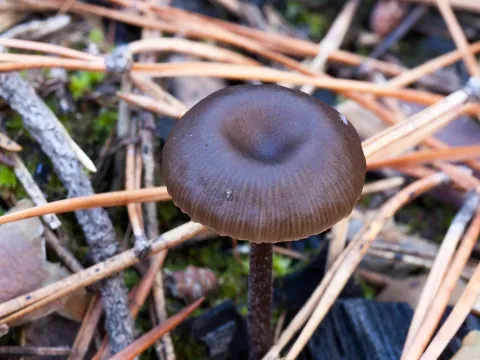
Tephrocybe ambusta
Tephrocybe ambusta
Tephrocybe ambusta is a species of fungus belonging to the Lyophyllaceae family. It is crucial to understand that this organism is not a plant pathogen and does not cause diseases in crops or agricultural plants.
What the section contains
Tephrocybe ambusta
As a carbonicolous (carbon-loving) saprotroph, its biological role is the decomposition of organic matter in habitats that have experienced intense heat or fire. It exists entirely on dead organic debris.
This fungus is not an agricultural threat. It lacks the enzymatic pathways required to parasitize living plant tissues, meaning it poses no risk to fields, greenhouses, or orchards.
Scientific classification defines it as a basidiomycete. Its mycelium is highly specialized to thrive in environments where other common soil fungi would perish due to extreme chemical changes caused by burning.
In agronomy, this species is considered a biological indicator of soil chemistry change. It marks the presence of ash and charcoal rather than any infection or disease pressure on the surrounding plants.
The primary environmental condition for the growth of Tephrocybe ambusta is the presence of burnt organic material. It is most frequently found in old fire pits, forest burn sites, or areas where brush has been burned.
The species requires a specific soil pH and nutrient profile associated with woody ash. This unique substrate allows it to colonize areas where competition from other soil microflora is significantly reduced.
Moisture levels play a critical role in the emergence of its fruiting bodies. While the mycelium can survive in dry conditions, high soil and air humidity are necessary for the reproductive stage to manifest.
Spore dispersal is facilitated by wind. Once the spores land on a suitable, burnt environment, they can germinate if the environmental conditions—specifically temperature and moisture—are within their range.
Temperature range for fruiting is typically cool to temperate. This species is better adapted to the climatic conditions of the northern hemisphere, often appearing in late summer and autumn seasons.
The appearance of Tephrocybe ambusta is marked by small, smoky-gray or brownish-gray mushrooms. The cap typically measures 1–4 cm in diameter and is often thin-fleshed.
The gills are adnate, relatively distant from each other, and range in color from pale gray to grayish-brown. The stem is usually fibrous and may become hollow as the fruit body matures.
The flesh is soft and lacks a distinct odor or taste. Visually, the mushroom can appear hygrophanous, meaning its color changes noticeably depending on the level of hydration.
These mushrooms typically grow in clusters or dense groups directly from the charcoal-enriched soil. This clumping habit is a distinct identifying feature for field observations.
Under a microscope, the spores are observed to be smooth, colorless, and ovoid. These biological characteristics are essential for distinguishing this species from other fungi that might colonize forest soils.