
Sunburn
Sunburn spp.
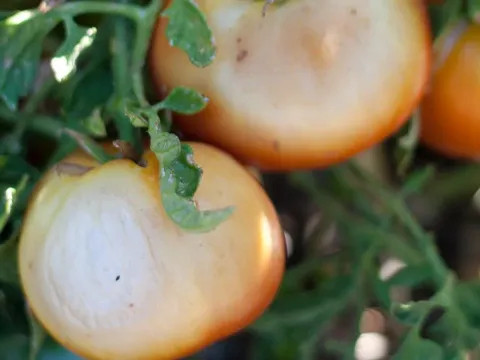
The primary sign of sunburn is the development of irregularly shaped spots that differ in color from the healthy tissue of the leaf or fruit.
What the section contains
Sunburn
In early stages, affected areas take on a white, cream, or light brown appearance, eventually progressing into tissue necrosis.
In crops like soybeans, damage is often localized on the upper side of the leaves or on the pods directly exposed to intense solar radiation.
Damaged tissues become dry and brittle, eventually collapsing and exposing internal layers, which further accelerates moisture loss from the plant.
In severe cases, mass defoliation and fruit drop are observed, which significantly reduces the vegetative mass and overall yield potential of the crop.
Sunburn is classified as a physiological disorder caused by abiotic factors rather than infectious agents like fungi, bacteria, or viruses.
The main mechanism of damage is the excessive exposure to ultraviolet radiation combined with high-intensity infrared solar energy.
The destruction of plant tissue is linked to irreversible damage to the photosynthetic apparatus within cells due to extreme surface temperatures.
Disruption of the plant's water balance under intense heat causes a loss of turgor pressure and protein denaturation, leading to cell death.
Because the disorder is not infectious, it does not spread from plant to plant, although entire fields can be affected simultaneously under harsh conditions.
The development of sunburn is triggered by a combination of high-intensity direct sunlight and low moisture levels in the soil or air.
Plants are most vulnerable when they are suddenly exposed to direct sunlight after periods of cloudy weather or dense canopy shading.
High air temperatures coupled with low wind speeds prevent efficient cooling of the leaf surface through transpiration.
Soil moisture deficits limit the plant's ability to thermoregulate its tissues, making it unable to cope with the scorching heat.
- Sudden temperature spikes.
- Leaf canopy damage by pests.
- Inappropriate planting density for soybeans.
The primary impact is a significant reduction in the photosynthetic surface area, which slows down the growth and development of the plants.
For soybeans, sunburn leads to reduced seed quality, shriveled grains, and lower thousand-kernel weight, directly affecting harvest marketability.
Sunburned areas often serve as entry points for opportunistic secondary pathogens, including various fungal and bacterial infections.
The loss of yield due to premature leaf and fruit drop results in direct economic losses for agricultural producers.
Repeated stress lowers the overall resilience of the crop to other diseases and environmental challenges throughout the growing season.
To minimize risks, it is essential to follow optimal seeding rates to create a balanced crop structure that provides adequate self-shading.
Effective management includes maintaining proper soil moisture levels through regular and timely irrigation practices.
The application of anti-stress products based on amino acids and biostimulants helps plants better cope with extreme temperature fluctuations.
Control of insect pests is necessary, as their feeding damage compromises the leaf epidermis, increasing sensitivity to sunlight.
In high-risk environments, adjusting agricultural practices to strengthen plant immunity through balanced macro- and micronutrient fertilization is recommended.