
Sunflower anthracnose
Colletotrichum ochracea
Description
Symptoms
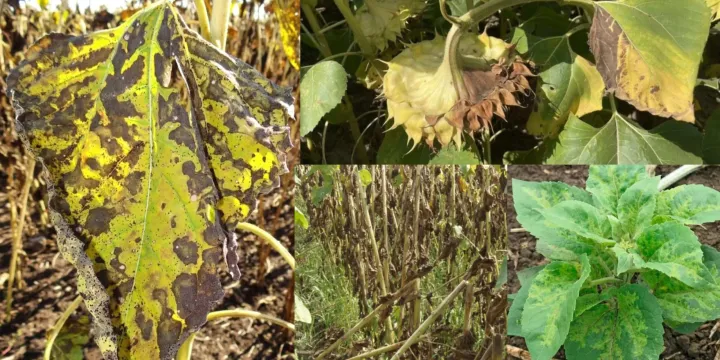
Early symptoms appear as dark, angular or circular spots on cotyledons, leaves, and stems. As the infection progresses, these lesions expand and may merge, covering large areas of the plant.
Stem lesions often develop into deep, dark cankers that weaken the plant structure, frequently resulting in stalk breakage and lodging before harvest. Small black dots, the acervuli, appear in the lesion centers.
Head infection presents as brown discoloration on the back of the sunflower head. The tissue softens and begins to decay, eventually leading to premature drying and poor seed fill.
Seeds within infected heads often become shriveled, stunted, and possess low oil content. Premature leaf senescence is common, significantly reducing the plant's capacity for photosynthesis.
- Dark necrotic spots on leaves and stems.
- Deep stem cankers causing stalk breakage.
- Decay and browning of sunflower heads.
- Reduced seed quality and weight.
- Presence of black acervuli on infected tissues.
Pathogen
The causative agent of sunflower anthracnose is the fungus Colletotrichum ochracea (often referred to as Colletotrichum helianthi). This pathogen survives in soil debris and can also be seed-borne.
The fungus produces mycelium, conidiophores, and conidia, which serve as the primary inoculum for spreading the disease throughout the field during the growing season. It remains viable in the soil for several years.
Environmental conditions play a crucial role in its lifecycle. High humidity and rainfall stimulate the production of spores, which are then dispersed by splashing water and wind gusts to healthy plant parts.
This disease is classified as a localized fungal infection that causes tissue necrosis. The pathogen secretes cell-wall-degrading enzymes that break down plant tissue, leading to rapid lesion formation.
The infection cycle can repeat multiple times throughout the season if favorable conditions persist, making the pathogen particularly difficult to manage in warm, humid climates.
Conditions for development
Anthracnose development is highly dependent on high moisture levels and prolonged rain. The optimal temperature for fungal growth ranges between +22°C and +26°C, though it thrives under most humid conditions.
Dense planting patterns reduce airflow within the crop canopy, creating a stagnant microclimate that traps humidity and promotes rapid infection spread.
Mechanical damage from hail, insects, or field operations provides entry points for the pathogen. Once the physical barrier of the cuticle is breached, the fungus colonizes the internal tissues rapidly.
High nitrogen levels can lead to excessive, lush growth which is more susceptible to colonization. A balanced nutrient program is essential to maintain structural integrity of the plants.
Improper crop rotation, where sunflowers are planted back-to-back in the same field, leads to the accumulation of inoculum in the soil, increasing disease pressure for subsequent seasons.
Why it matters
Sunflower anthracnose can cause significant yield losses, often ranging from 30% to 50% depending on the severity of the infection. Reduced seed weight and oil percentage directly affect profitability.
Stalk breakage caused by stem cankers leads to harvesting difficulties, often resulting in high grain losses on the field. Lodged plants are impossible for standard combine harvesters to process effectively.
The disease weakens the host plant, making it more prone to secondary infections by opportunistic pathogens such as charcoal rot or white mold, further exacerbating the damage.
Infected crops yield poor-quality seed, which is unsuitable for future planting. This creates a cycle of infection that carries over to the next agricultural cycle if not properly managed.
The economic impact is further magnified by the need for expensive fungicide applications and the cleaning of contaminated batches of seed before processing or storage.
Protection
The most effective strategy is the use of resistant sunflower hybrids. Integrating genetic resistance is the foundation of any sustainable management program for this disease.
Strict adherence to a 6-8 year crop rotation cycle is necessary to allow for the natural degradation of the pathogen in the soil. Removing all crop debris after harvest reduces the overwintering population.
Seed treatment with systemic fungicides is crucial to protect seedlings from early-stage infections. Ensuring the use of certified, disease-free seed is the first line of defense.
Foliar fungicide applications during the 6-8 leaf stage and prior to flowering can control the spread of the fungus during peak risk periods of the growing season.
Effective weed control and pest management are vital, as they prevent mechanical damage and remove alternative hosts that might harbor the fungus during the winter months.
Discussion
No discussions yet — be the first.