
Sunflower Phomopsis
Diaporthe masirevicii
Description
Symptoms
The first symptoms appear as chlorotic lesions on the leaf margins, which eventually spread along the veins towards the petiole. The tissue turns brown and necrotic as the infection progresses.
Stem symptoms are characterized by large, grayish-brown or silvery spots that typically appear at the point where the leaf petiole attaches to the stem. These spots are often surrounded by a darker margin.
The internal stem tissue becomes fibrous, discolored, and degraded. As the pith is destroyed, the structural integrity of the sunflower stem is compromised, causing the plant to become brittle and prone to lodging.
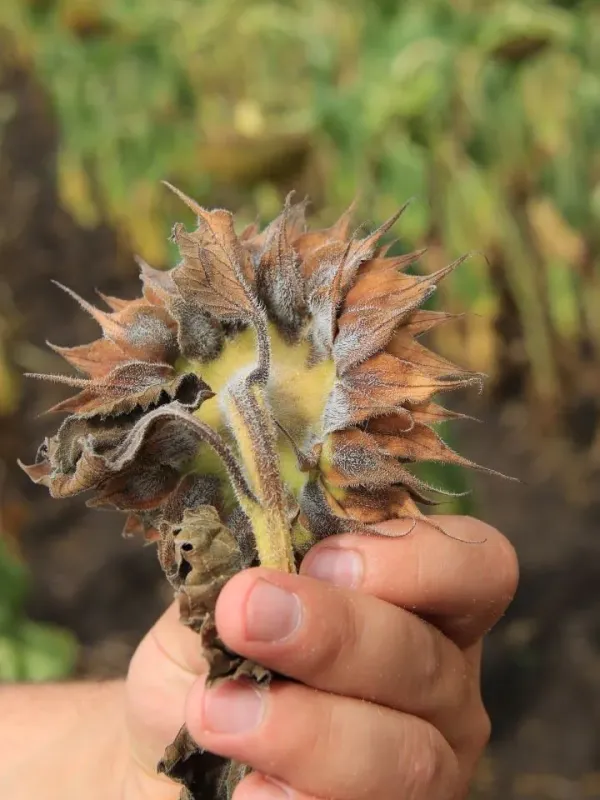
In cases of severe infection, the sunflower head may wither or fail to develop properly. Seeds in such heads are typically shriveled, light in weight, and may carry the pathogen on their surface.
- brown leaf spots along veins;
- gray-silver stem lesions;
- degraded pith and internal tissue;
- premature plant wilting;
- reduced seed yield and quality.
Pathogen
The disease is caused by the fungus Diaporthe masirevicii (formerly known as Phomopsis helianthi), an ascomycete pathogen. It survives primarily on infected crop debris and in the soil for several years.
The fungus produces both asexual (conidia) and sexual (ascospores) stages, which are dispersed by wind and rain splashes. This ability to travel long distances facilitates the rapid spread of the pathogen across agricultural landscapes.
Upon infection, the fungus invades the host tissue through stomata or wounds. It colonizes the xylem and phloem, producing toxins that disrupt the plant's physiological processes and cause tissue necrosis.
The pathogen is highly aggressive, especially under favorable climatic conditions. Its ability to remain dormant in plant residue makes it a persistent challenge for sunflower production in many regions.
Research indicates that the pathogen can adapt to various environmental stresses. By systematically destroying the internal structure of the stem, the fungus effectively cuts off the nutrient supply, leading to plant collapse.
Conditions for development
High humidity and moderate temperatures ranging between 20°C and 25°C are optimal for the development of Phomopsis. Frequent rainfall during the vegetative stages significantly boosts spore germination.
Dense plant stands create a microclimate that traps moisture within the canopy, preventing foliage from drying out. This environment is highly conducive to fungal growth and rapid secondary infections.
Periods of mist and heavy dew also contribute to the success of the pathogen. Under these conditions, the incubation period of the disease is drastically shortened, leading to widespread field outbreaks.
Monoculture or short crop rotation cycles allow the fungus to build up high levels of inoculum in the soil. This practice is the primary driver of major epidemics in commercial sunflower fields.
Mechanical injuries to the plants, often caused by insects or machinery, create entry points for fungal spores. Addressing these factors is crucial for minimizing the impact of the disease.
Why it matters
Sunflower Phomopsis is a major economic threat, capable of reducing yield by up to 60 percent. It significantly affects the quantity and quality of oil produced from the harvested seeds.
Lodging caused by the disease leads to significant harvest losses, as plants bent to the ground are difficult to gather with standard equipment. This increases operational costs and time for farmers.
The presence of the fungus in seeds can downgrade the crop, making it unsuitable for processing or export. It also reduces the overall oil content and nutritional value of the sunflower kernels.
Widespread outbreaks can devastate entire fields, leading to total economic failure for a crop season. The rapid onset of symptoms makes it difficult to implement late-stage rescue treatments.
The disease's longevity in the soil means that the effects of an outbreak can last for many years, impacting future planting decisions and requiring stricter management protocols.
Protection
The most effective strategy is a long-term crop rotation, ensuring a gap of at least 6 to 8 years between sunflower plantings. This breaks the pathogen's life cycle in the soil.
Using resistant or tolerant hybrids is a fundamental approach to management. Breeders focus on varieties that exhibit strong resistance to stem and leaf colonization by the fungus.
Fungicide application during the early growth stages (6–8 leaves) and pre-flowering is critical for suppressing the disease. It is essential to use systemic products that can penetrate plant tissues.
Deep plowing after harvest helps bury infected plant debris, accelerating its decomposition and limiting the survival of the pathogen. This reduces the primary inoculum available for the next season.
Integrated weed management is necessary as some weed species can act as alternative hosts for the fungus. Maintaining field hygiene is a vital component of any sunflower disease prevention program.
Discussion
No discussions yet — be the first.