
Sulphur webcap
Cortinarius sulphurinus
Description
Symptoms
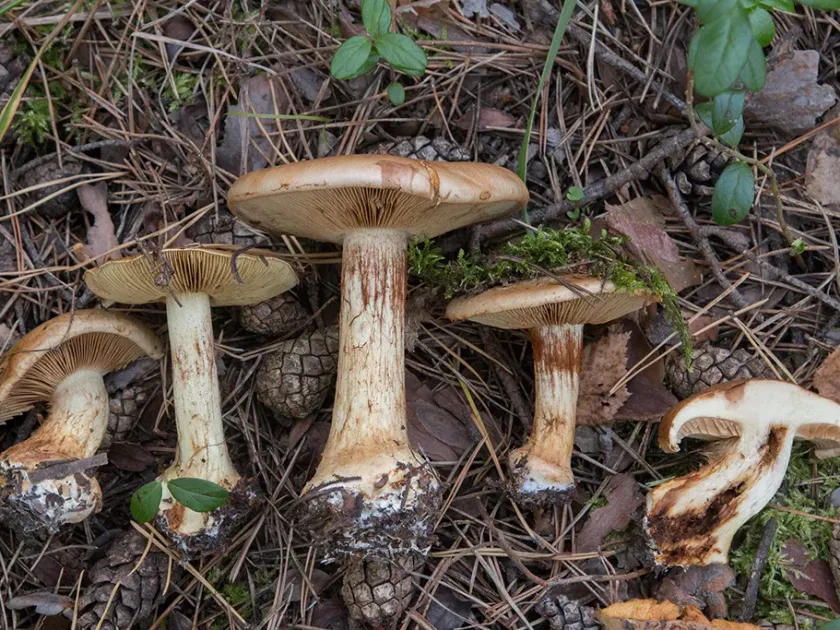
The primary way to identify this mushroom is by observing its fruiting bodies. The cap exhibits a distinct sulphur-yellow or greenish-yellow color, which is characteristic of the species.
The gills are also tinted with yellow tones in young specimens. A diagnostic feature is the presence of a cortina, a spider-web-like veil that covers the gills in young mushrooms.
The stem often features a bulbous base, which is a common morphological trait for many species within the Cortinarius genus.
When the flesh is sliced, it shows little to no color change, providing a useful characteristic for identification. The smell is usually faint or somewhat unpleasant.
These mushrooms typically grow in small clusters or solitary groups in mossy areas or leaf litter beneath forest canopy.
Pathogen
The sulphur webcap, scientifically known as Cortinarius sulphurinus, belongs to the Cortinariaceae family. It is crucial to note that this fungus is not a pathogen and does not cause diseases in agricultural or garden crops.
The fungus is a mycorrhizal species, living in a symbiotic relationship with forest trees. It establishes an underground connection with the roots, helping the trees absorb water and minerals from the soil.
Unlike parasitic fungi that attack tissues and cause rot, this species provides mutualistic benefits to its host plants within the forest environment.
The biological life cycle of Cortinarius sulphurinus centers on the production of fruit bodies, typically occurring during the autumn months in forest areas.
Therefore, classifying it as a plant disease is botanically and agronomically incorrect, as it is a natural component of a healthy forest soil ecosystem.
Conditions for development
The development of the sulphur webcap is highly dependent on environmental conditions, specifically moisture levels in the forest floor and seasonal temperature drops.
It prefers acidic soils commonly found in coniferous and mixed forests. High humidity is a critical requirement for the initiation of sporulation and fungal growth.
Mycorrhizal development requires the presence of healthy tree roots, as the fungus relies on the host tree for essential carbohydrates.
Stable forest ecosystems with minimal soil disruption provide the ideal habitat for this species to thrive for many seasons.
While the mushroom is sensitive to soil chemistry, it does not have specific soil-borne disease symptoms that would affect crops.
Why it matters
Cortinarius sulphurinus poses no risk to agricultural productivity. It does not infect plants, rot roots, or inhibit growth of any fruit, vegetable, or cereal crops.
The primary concern regarding this species is its toxicity to humans. It is considered inedible and potentially poisonous, and ingestion should be avoided at all costs.
It does not function as a pathogen in the garden or field, nor does it compete with crops for resources in a detrimental way.
No metabolic secretions from this fungus are known to be harmful to the soil health or to the development of surrounding cultivated flora.
The harm is limited strictly to accidental human or animal ingestion, highlighting the importance of proper mushroom identification.
Protection
Control measures are unnecessary for the sulphur webcap in an agricultural setting, as it is not a pest or a disease-causing agent.
If the mushrooms appear in residential areas near woodlands, they can be removed manually if desired, but this does not eliminate the underlying mycelium.
The only recommended preventive measure is public education regarding mushroom safety and the dangers of consuming wild, unidentified species.
Fungicides are completely ineffective and inappropriate for this species, as they would unnecessarily damage the biodiversity of the surrounding forest soil.
Management should focus on respecting natural ecological balance rather than attempting to eradicate this harmless forest dweller.
Discussion
No discussions yet — be the first.