
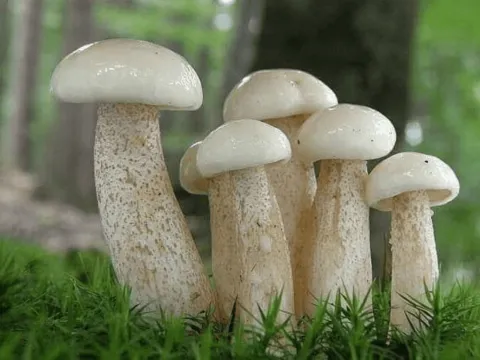
White Suillus
Suillus placidus
White Suillus (lat. Suillus placidus) is not a plant pathogen; it is a mycorrhizal fungus that forms symbiotic relationships with trees.
What the section contains
White Suillus
The fungus belongs to the Suillaceae family and is essential for the health of specific pine species, particularly five-needle pines.
There is no disease causation involved in the life cycle of this fungus, as it provides nutrients to the tree in exchange for carbohydrates.
This symbiotic connection is a fundamental ecological process that supports the survival of cedar and white pines in various climates.
From an agricultural and forestry perspective, it is considered a beneficial organism rather than a threat or a disease agent.
The fruiting bodies of Suillus placidus exhibit distinct morphological characteristics that aid in identification.
The cap is typically white to pale yellow, often developing subtle pinkish tones as it matures under varying light conditions.
The surface of the cap is characteristically slimy when wet, a common trait among species within the Suillus genus.
The pore surface underneath the cap is initially white, transitioning to a yellowish or olive hue, and may bruise slightly upon handling.
The stem is solid and white, often adorned with minute reddish or brownish glandular dots, lacking any visible ring or veil remnant.
The growth and fruiting of this fungus depend heavily on the presence of its host trees and specific environmental moisture levels.
It thrives in temperate forest environments, particularly in regions where five-needle pines are native and dominate the landscape.
Optimal conditions for development include moist, acidic soils and temperatures generally ranging from 12 to 18 degrees Celsius.
Fruiting typically occurs following periods of rainfall, which triggers the reproductive phase of the underground mycelial network.
Habitat stability and tree health are the primary factors ensuring the continued presence of this mycorrhizal partner in the forest.
This fungus poses no harm to agricultural crops, ornamental plants, or forestry health, as it is strictly a symbiotic species.
No protective measures are required against this organism, as it is a natural component of healthy pine forest ecosystems.
Reports of any negative impact on vegetation are non-existent, and the fungus does not possess any pathogenic properties.
Ecologically, its presence indicates a balanced ecosystem where the soil biology is capable of supporting complex symbiotic life.
It serves as a valuable indicator of forest health, and its absence could only signify degraded soil or missing host populations.