
Willow anthracnose
Colletotrichum salicis
Description
Symptoms
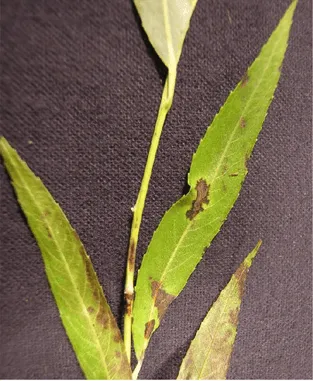
The primary symptom is the appearance of localized spots on leaves, shoots, and branches. Initially, these spots are light brown or grayish, later turning darker and developing a distinct border.
Small black dots, known as acervuli, are frequently visible on the lesions. These are masses of fungal spores that rupture the plant epidermis and serve as a definitive diagnostic sign of the infection.
Young shoots often exhibit characteristic curling, drying out, and dieback. Leaves affected by the fungus may yellow, become distorted, and drop prematurely, leading to significant foliage loss.
Infection on older branches manifests as necrotic lesions that may girdle the branch, resulting in the death of all distal parts. This can cause uneven crown development and thinning of the canopy.
During periods of high humidity, the lesions may be covered with a fungal mass consisting of spores, making the disease visible to the naked eye during close examination of the plant tissues.
Pathogen
The causal agent of this disease is the imperfect fungus Colletotrichum salicis, which belongs to the Colletotrichum genus. This pathogen is a specialized parasite that targets members of the Salix (willow) genus.
The disease is classified as anthracnose, causing localized tissue destruction. The infection spreads via conidia, which are asexual spores produced within specialized structures known as acervuli.
The life cycle of the fungus involves overwintering as mycelium within infected stems and fallen leaves. In the spring, when environmental conditions become favorable, the fungus produces spores that are dispersed to healthy tissues by rain splash or wind.
The fungus develops inside the bark and epidermal tissues, systematically breaking down cell structures and leading to necrosis. It can remain viable in plant debris for extended periods, serving as a permanent source of inoculum.
The aggression of this pathogen is highly dependent on environmental moisture, which is essential for spore germination and infection. Outbreaks are most common during periods of prolonged wet weather.
Conditions for development
The most critical factor for the spread of Colletotrichum salicis is excessive moisture in both the air and soil. Frequent rainfall and fog provide the humidity necessary for spore germination.
While temperature plays a role, moderate warmth combined with high humidity accelerates fungal development. This is particularly dangerous in nurseries where high plant density restricts airflow.
Crowded plantings and poor canopy ventilation create a stagnant microclimate that keeps foliage damp for longer periods. This moisture retention is highly conducive to successful fungal colonization.
Mechanical injuries to the bark or insect-related damage facilitate the entry of the fungus into the plant. Stressed or malnourished trees are significantly more susceptible to successful infection.
Failing to remove infected plant debris leads to the accumulation of the pathogen in the environment. This ensures that the fungus persists and reinfects new growth annually.
Why it matters
The damage caused by this disease is primarily aesthetic, which is a major concern for landscape gardening and ornamental plantings. Severe infection can lead to the total loss of the tree's ornamental value.
The pathogen disrupts physiological processes, reducing photosynthesis by destroying leaf tissue. This weakens the tree, making it more vulnerable to secondary infections and environmental stress.
Persistent branch dieback hinders normal growth and canopy formation. Young willow trees in nurseries may suffer extensive mortality if the infection remains unchecked during early development stages.
Reduced vigor makes trees less resilient to harsh winters. Affected trees are more likely to suffer from cold damage, which further increases necrotic damage in the following spring season.
For commercial growers, the disease reduces the quality of the wood and willow withes, as necrotic lesions make the material brittle and unsuitable for high-quality basketry or other industrial uses.
Protection
The primary control measure is the sanitation of the area, including the pruning and removal of all infected branches. It is essential to destroy the pruned material to prevent the spread of spores.
Regular cleanup of fallen leaves in the autumn is mandatory to limit the overwintering population of the fungus. This reduces the primary inoculum source for the following season.
Preventive spraying with copper-based fungicides or systemic chemical treatments is recommended during the early growth stages to protect healthy foliage from initial infection.
Planting density should be managed to ensure proper spacing, which allows for better air circulation and reduces humidity within the canopy. This natural ventilation is a key preventative strategy.
Balanced nutrition and optimal tree care are essential to boost natural immunity. Healthy, robust trees are significantly better equipped to resist and recover from Colletotrichum infections.
Discussion
No discussions yet — be the first.