
Willow crust fungus
Cytidia salicina
Description
Symptoms
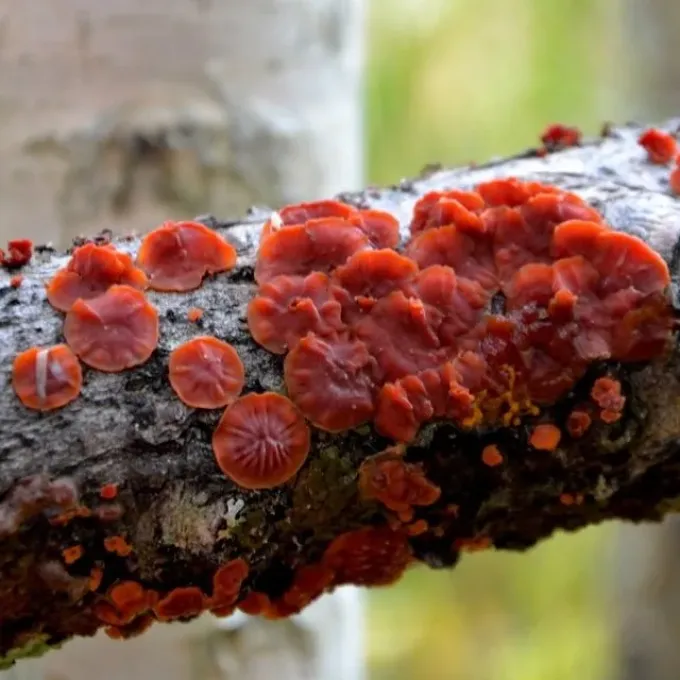
The most distinctive symptom of this disease is the appearance of disc-shaped or crust-like fruit bodies on the willow branches. These structures are typically bright red to orange in color.
In moist conditions, the fruit bodies appear soft and vibrant. During dry weather, they may shrivel and darken, but they often remain attached to the bark, ready to resume spore production when moisture returns.
Localized areas of the bark may show signs of cracking and peeling. Underneath these areas, the wood often darkens, indicating that the fungus is actively decomposing the tree's internal structures.
A noticeable symptom in the canopy is the premature wilting and yellowing of foliage on infected branches. As the infection progresses, the leaves become smaller, and the overall vigor of the branch declines.
In advanced cases, the infected branches become brittle and break easily. The presence of these fungal crusts is a clear indicator that the tree's health is severely compromised by the pathogen.
Pathogen
The fungus Cytidia salicina is a species of basidiomycete responsible for the development of the disease known as willow crust fungus. It is a specialized pathogen that predominantly infects trees of the Salix genus.
The pathogen colonizes the bark and the underlying sapwood of the host. It functions as both a parasite on living tissues and a saprotroph, continuing its development on dying or dead branches.
This fungus produces characteristic fruit bodies that appear on the surface of the bark. These structures serve as the primary source of basidiospores, which facilitate the spread of the disease to adjacent healthy trees.
Transmission occurs through airborne spores released from the fruit bodies during periods of high humidity. Furthermore, insects moving across the bark can physically transport spores to new infection sites.
Once introduced into a wound, the mycelium penetrates deeper into the wood structure. As it grows, it secretes enzymes that decompose woody tissues, leading to a gradual loss of the tree's structural integrity.
Conditions for development
High humidity and consistent rainfall are the primary environmental drivers for the development of Cytidia salicina. The fungus thrives in damp conditions, which are essential for spore germination and fruiting.
Willow trees planted in dense, poorly ventilated groves are at a significantly higher risk. The lack of air movement allows moisture to linger on the bark, creating an ideal incubation environment for the fungus.
Temperature plays a crucial role in the lifecycle of the pathogen. Mild, wet weather, common during spring and autumn, provides the optimal thermal window for active fungal growth and colonization.
Mechanical injuries are necessary for the initial infection. Any damage, whether from pruning, animal browsing, or weather-related fissures, creates the necessary entry point for fungal spores.
Stressed trees, particularly those suffering from poor nutrition or unsuitable planting sites, have reduced defensive capabilities, making them highly susceptible to successful colonization by the fungus.
Why it matters
The primary damage caused by willow crust fungus is the systemic weakening of branches, which can lead to significant dieback within the willow's crown. This reduces the aesthetic value of the tree.
By interfering with the tree's vascular system, the fungus disrupts the transport of water and nutrients. This results in physiological stress, causing the plant to prioritize survival over growth.
The disease acts as a source of infection within the garden or nursery. If left unmanaged, the fungus can spread to other willow trees, leading to a decline in the health of the entire collection.
Infected areas often become secondary sites for other opportunistic pathogens, such as rot-causing bacteria, which can accelerate the death of the tree.
Economic damage includes the costs associated with corrective pruning and the potential loss of high-value ornamental specimens that require extensive rehabilitation after infection.
Protection
Rigorous sanitation is the cornerstone of managing this disease. Infected branches must be pruned back to healthy wood, ensuring that all signs of fungal growth are removed from the tree.
Immediately after pruning, all exposed cuts should be treated with a protective wound sealant or a copper-based fungicide to prevent new spores from colonizing the fresh wood.
All pruned materials, including bark fragments and small twigs, must be disposed of correctly. Burning the debris is the most effective way to eliminate the inoculum source.
Applying preventative fungicides to the canopy during early spring can help reduce spore pressure. Consistent monitoring of the trees is necessary to catch early symptoms before the fungus spreads.
Maintaining tree vigor through proper irrigation and balanced fertilization helps the tree develop its own natural defenses against infection. Avoiding overcrowding by thinning the canopy will also improve airflow and reduce humidity levels.
Discussion
No discussions yet — be the first.