
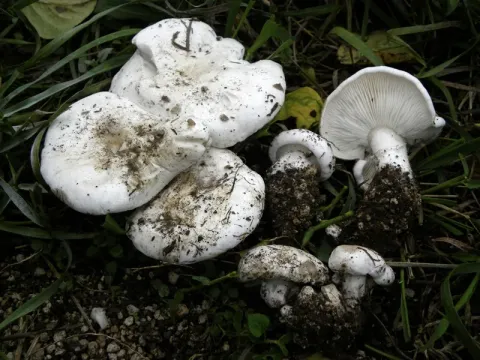
White-headed calocybe
Calocybe leucocephala
The causal agent is the fungus Calocybe leucocephala, a saprotrophic basidiomycete. Unlike parasitic fungi, it derives nutrients from decaying organic matter present in the soil and thatch layers.
What the section contains
White-headed calocybe
The mycelium grows extensively within the topsoil, forming dense mats that can alter the physical properties of the substrate. This network of fungal hyphae is responsible for the characteristic growth patterns observed in turf environments.
The biological cycle of this fungus is closely tied to the accumulation of organic material. It persists in the soil as mycelium and produces fruiting bodies (mushrooms) whenever environmental conditions meet its requirements for reproduction.
Spore dispersal occurs through wind, rain, and human or animal traffic. Once the spores colonize a suitable area, they initiate the formation of new fungal colonies, which can expand annually if the underlying conditions are not corrected.
In modern mycology, the taxonomy of Calocybe species is subject to change, yet its classification as a saprotrophic soil inhabitant remains consistent, highlighting its role in organic matter decomposition.
The most prominent sign is the appearance of white, small-capped mushrooms growing in clusters or distinct circular patterns. These rings often become visible after periods of sustained rainfall or high humidity.
Lawn discoloration is a common symptom, where the grass may appear darker or yellowish within or near the rings. This occurs due to the fungus affecting soil nutrient availability and water infiltration.
The soil surface in the affected area often becomes hydrophobic, meaning it repels water. This leads to dry patches in the grass, as moisture is unable to reach the root zone despite regular irrigation.
A whitish mycelial mat may be visible underneath the turf or on the soil surface, particularly when the soil is disturbed. This mat is a clear indication of an active, well-established fungal colony.
In cases of severe infestation, the turf density decreases, leading to bare spots and an uneven lawn surface that is difficult to manage and restore using standard maintenance practices.
Optimal development of this fungus occurs in moist soil conditions with air temperatures ranging between 15 and 22 degrees Celsius. These conditions are most prevalent during the spring and autumn growing seasons.
An abundance of uncomposted organic matter, such as lawn thatch, buried wood chips, or straw, serves as the primary substrate for the fungus, fueling its rapid expansion across a lawn.
Compacted soil with poor aeration and inadequate drainage is highly susceptible to colonization. Stagnant moisture levels in the upper soil profile provide the ideal environment for the mycelium to thrive.
Stable climate conditions allow the fungus to maintain activity over prolonged periods. Even in well-maintained lawns, localized soil moisture issues can trigger the development of these fungal rings.
Failure to perform regular cultural practices, specifically thatch removal and deep aeration, allows the mycelium to build up density, making the lawn more vulnerable to outbreaks.
The primary concern is the aesthetic damage to lawns, golf courses, and landscaping. The formation of fungal rings disrupts the visual uniformity of the grass, which can be difficult to correct.
The fungus creates a water-repellent layer, which can cause significant stress to grass roots. As a result, the turf may wilt or die, leading to unsightly patches that require remediation.
By decomposing organic matter, the fungus can alter the soil chemistry, occasionally suppressing the activity of beneficial soil microbes and hindering the uptake of essential nutrients by turfgrasses.
The mushrooms themselves pose a potential risk, particularly to curious pets or children. Removing the fruiting bodies promptly is recommended to prevent accidental ingestion or contact.
Restoration of heavily infested areas often requires mechanical intervention, including soil removal and reseeding, which increases the long-term maintenance costs for the turf area.
Regular lawn scarification and vertical mowing are essential to remove thatch and break up the mycelial mats. This improves airflow and allows water to penetrate the soil more effectively.
Improving soil aeration through core aeration is a critical preventative measure. Reducing soil compaction prevents the water-logging that the fungus requires to establish a strong presence.
Manage irrigation practices to avoid overwatering the surface. It is often more effective to water deeply and less frequently, allowing the soil surface to dry out between watering cycles.
Manual removal of fruiting bodies should be performed as soon as they appear. Disposing of these mushrooms properly prevents the further spread of spores across the lawn.
- Perform seasonal scarification;
- Improve site drainage;
- Maintain balanced soil pH and nutrition;
- Remove excess organic debris regularly.