
Willow cryptomycosis
Cryptomyces maximus
The causative agent of willow cryptomycosis is the specialized fungus Cryptomyces maximus, which belongs to the Ascomycota division. This pathogen acts as an obligate parasite on various Salix species.
What the section contains
Willow cryptomycosis
The life cycle of this fungus is closely integrated with the seasonal growth of the host tree. It typically infects the host through bark wounds or lenticels, allowing the mycelium to establish itself within the cambium and phloem layers.
During its development, the fungus creates fruiting bodies known as apothecia beneath the bark. These structures eventually rupture the epidermis to release spores, which marks a critical stage for disease diagnosis.
The biology of Cryptomyces maximus makes it a significant concern for both forestry nurseries and landscape management. The fungus can persist within the tree tissues for several years, weakening the host progressively.
Research indicates that this fungus is highly aggressive under specific climatic conditions, necessitating a proactive approach to monitoring the health of willow stands in both natural and urban environments.
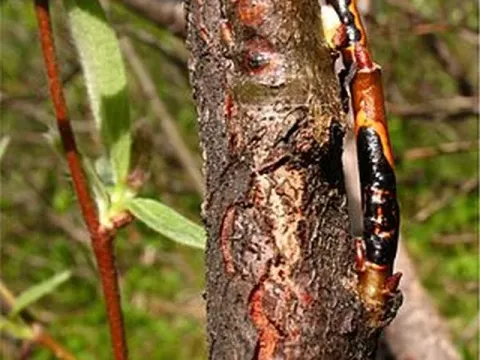
The primary symptom of infection is the emergence of transverse cracks on the bark of stems and branches. These cracks appear as distinct fissures, revealing the underlying tissue damage caused by the fungus.
Over time, black, disc-shaped apothecia appear within or around these cracks. Their dark, contrasting appearance against the natural color of the willow bark is a classic diagnostic feature of this fungal disease.
The bark surrounding the infection zones typically turns brown, loses its elasticity, and eventually dies. On older, more heavily infected branches, the bark may peel away in large, ragged patches, exposing the wood underneath.
Affected branches often exhibit stunted growth and abnormal curvature. In severe cases, the foliage on these branches yellows prematurely and drops, indicating a failure in the tree’s internal water and nutrient transport systems.
Closer inspection reveals that the infection disrupts the flow of sap, which effectively starves the portions of the branch distal to the infected site, causing those parts of the tree to wither and die back.
High humidity and frequent rainfall are the most critical factors for the rapid spread of willow cryptomycosis. These conditions provide the moisture necessary for fungal spores to germinate and infect bark tissues.
Poorly ventilated stands with high planting density are particularly susceptible. The lack of air circulation keeps the bark moist for longer periods, creating an ideal environment for the growth of Cryptomyces maximus.
Trees that are already stressed by environmental factors, such as winter frost damage or drought, show reduced immunity. Such trees become easy targets for primary infections as their defensive mechanisms are compromised.
Spore dispersal occurs primarily through wind currents and rain splashes. This mechanism allows the fungus to move from an infected tree to neighboring healthy individuals, leading to a steady spread throughout a population.
Temperatures between 15 and 22 degrees Celsius are optimal for fungal metabolism and spore production. Consequently, the spring and early summer months are typically when the disease is most active and visible.
Willow cryptomycosis poses a significant threat to aesthetic value in landscape design, as the necrotic branches and peeling bark detract from the tree's appearance and overall vitality.
The infection significantly depletes the tree's energy reserves, leaving it vulnerable to secondary invaders, including wood-boring insects and other fungi, which can accelerate the decline of the host tree.
In industrial willow plantations, the disease causes severe losses in timber quality. The presence of necrotized wood and bark damage renders the timber unsuitable for most structural or decorative applications.
Massive outbreaks in nurseries can result in the loss of entire batches of young saplings, causing significant economic setbacks. Control efforts are often labor-intensive and costly to implement on a large scale.
Furthermore, the loss of mature willow stands due to cryptomycosis can disrupt local ecosystems, particularly in riparian zones where these trees play a vital role in preventing soil erosion and supporting wildlife.
The most effective strategy for managing cryptomycosis is the prompt removal and destruction of all infected branches. This sanitation process reduces the local spore load and limits the further spread of the pathogen.
When pruning, it is essential to make cuts well into healthy wood to ensure that the entirety of the underlying mycelium is removed. All pruned material must be burned to prevent the fungus from surviving in debris.
Preventative applications of copper-based fungicides can be effective when sprayed during the bud-break phase and early vegetative growth, protecting healthy bark from initial spore penetration.
Maintaining optimal tree vigor is crucial. This includes proper spacing to ensure adequate air circulation, regular monitoring for signs of stress, and balanced fertilization to improve the tree's natural resistance.
Site selection should also be prioritized. Avoid planting in low-lying areas characterized by poor drainage and frequent fog, as these microclimates significantly increase the risk of fungal establishment and disease spread.