
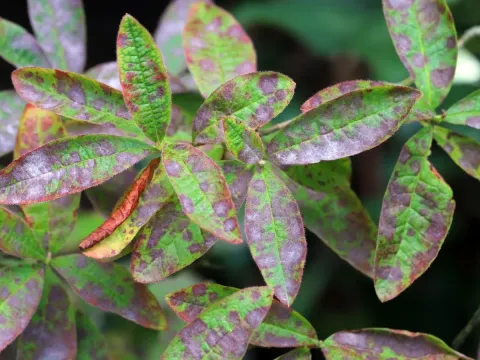
Azalea cercospora leaf spot
Sphaerulina azaleae
The disease is caused by the fungus Sphaerulina azaleae (formerly known as Cercospora handelii). This pathogen specifically infects members of the Ericaceae family, particularly azaleas and rhododendrons.
What the section contains
Azalea cercospora leaf spot
It is a fungal pathogen that thrives in moist environments and spreads through the production of conidia, which are disseminated by wind, splashing water, and human activities.
The fungus overwinters in infected plant debris, including fallen leaves, which serve as the primary source of infection for the next growing season.
By invading the leaf tissues, the mycelium disrupts the internal structures of the plant, leading to the development of necrotic lesions.
The pathogen is highly specialized and relies on the physiological stability of the host plant, often attacking weakened or stressed specimens more aggressively.
Symptoms typically manifest as small, chlorotic spots that eventually turn brown or dark reddish-brown with age.
These spots often develop a distinct dark border, separating the necrotic (dead) tissue from the healthy surrounding leaf area.
Under humid conditions, small greyish or olive-colored tufts may appear in the center of the spots on the undersides of leaves, representing the fungus's fruiting structures.
As the infection progresses, affected leaves may become chlorotic and drop prematurely, leading to significant defoliation of the shrub.
Unlike some other fungal infections, Cercospora usually affects older leaves first, making the damage highly visible on the lower and inner parts of the plant.
High humidity and temperatures ranging between 20°C and 25°C are the primary factors that trigger the development and spread of the disease.
Persistent moisture on the leaf surface, whether from rainfall, fog, or overhead irrigation, is essential for the germination of fungal spores.
Poor air circulation, often caused by overly dense planting or lack of proper pruning, creates a microclimate conducive to rapid fungal infection.
Greenhouse environments are particularly susceptible if ventilation is inadequate, allowing condensation to accumulate on leaves and walls.
Periods of prolonged cloudy and rainy weather provide the perfect opportunity for the infection to spread rapidly through an entire collection of plants.
The primary harm caused by this disease is the reduction of the plant's aesthetic value, which is critical for ornamental azaleas in landscaping or commercial nursery settings.
Continuous leaf loss weakens the overall vigor of the shrub, reducing its photosynthetic capacity and hindering the development of new shoots.
Severely infected plants often show reduced flower bud formation, leading to poor blooming performance in subsequent seasons.
If left unmanaged, the cumulative stress from the disease can lead to the decline of the shrub, making it more vulnerable to other secondary pests and pathogens.
Economic losses in nurseries can be substantial due to the need for rigorous sanitation, chemical treatments, and the potential discarding of diseased plant stock.
The most effective management strategy is strict sanitation, which involves the removal and destruction of all infected fallen leaves.
Proper irrigation practices, such as applying water directly to the soil to keep foliage dry, significantly reduce the risk of new infections.
Improving air circulation through regular pruning and ensuring adequate spacing between plants are essential cultural control practices.
Fungicidal applications, particularly those containing copper, mancozeb, or systemic triazoles, should be used preventatively during periods of favorable weather.
- Sanitation of infected debris
- Drip or ground-level irrigation
- Appropriate plant spacing
- Preventative fungicidal sprays
- Maintaining plant vigor through fertilization