
Azuki bean rust
Uromyces azukicola
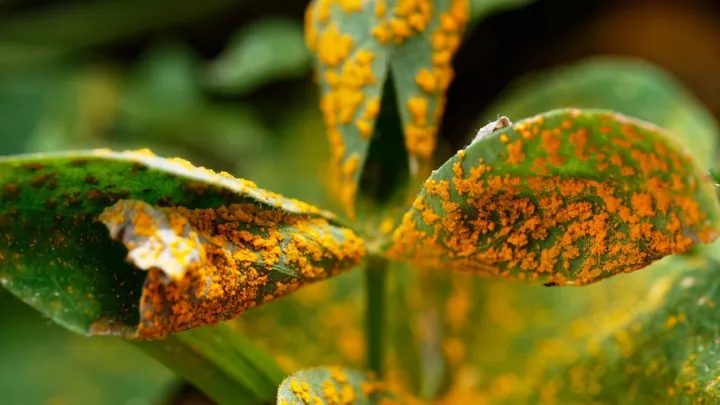
Description
Symptoms
The initial signs of azuki bean rust appear as small, chlorotic flecks on the foliage. These spots eventually develop into raised pustules containing a mass of rusty-brown spores.
Pustules are typically found on the undersides of leaves, but under severe infection, they may also appear on stems and pods. The characteristic brown dusting of spores is a definitive diagnostic feature.
As the season progresses, the pustules may transition into dark-brown or black, indicating the formation of teliospores. This shift usually coincides with the plant's late growth stages.
Severe infestations lead to premature yellowing and abscission of leaves. The loss of foliage disrupts photosynthesis, severely limiting the energy available for pod and seed development.
- Development of rusty-brown pustules.
- Chlorosis (yellowing) of leaf tissues.
- Premature leaf drop.
- Stunting of overall plant growth.
- Deformed and poorly filled pods.
Pathogen
The causal agent of this disease is Uromyces azukicola, an obligate parasitic fungus classified within the Basidiomycota phylum. It shows high specificity, primarily targeting the azuki bean (Vigna angularis).
The life cycle of the pathogen is complex, involving several stages of spore production. The fungus is capable of overwintering as dormant spores in crop residues or within the soil, ensuring its survival between growing seasons.
Infection begins when urediniospores land on the leaf surface. In the presence of moisture, these spores germinate and develop germ tubes that enter the host plant through stomata, facilitating colonization of the internal tissues.
Once inside, the fungus develops an extensive mycelial network that establishes haustoria. These structures penetrate the host cells to extract nutrients, which significantly drains the plant's resources.
The pathogen's ability to produce multiple generations of spores during a single growing season allows for rapid dissemination, especially in dense or susceptible crop populations.
Conditions for development
Azuki bean rust thrives in environments with high humidity and moderate temperatures. The ideal range for spore germination and rapid spread is typically between +18°C and +25°C.
Persistent moisture, such as prolonged dew, fog, or frequent rainfall, provides the essential film of water on plant surfaces required for the fungus to successfully infect the host.
Poor field management, including over-dense planting, limits air circulation and maintains higher canopy humidity. These conditions are conducive to rapid fungal growth and spore transmission.
Excessive use of overhead irrigation, especially when performed in the evening, keeps foliage wet overnight, creating a perfect environment for the rapid establishment of the pathogen.
The wind acts as the primary vector for spreading urediniospores across fields. Once an infection center is established, the disease can spread across large areas if environmental conditions remain favorable.
Why it matters
The primary economic impact of azuki bean rust is a substantial reduction in seed yield. Because the plant's photosynthetic capacity is compromised, seeds fail to fill properly, resulting in lower weights.
Premature leaf senescence forces the plant to shut down its growth cycle early, which significantly diminishes the quality of the harvested produce, including its nutritional value and appearance.
The disease weakens the host plant, making it more susceptible to secondary environmental stresses and other pathogens. This cumulative stress can lead to total crop failure in susceptible varieties.
Infected fields produce seeds of inferior quality, which are unsuitable for storage or as high-grade planting material. This results in direct financial losses for the producer.
Depending on the timing of the initial infection and the prevailing weather, yield losses due to this rust can range from 30% to over 50% in untreated commercial crops.
Protection
The most effective strategy for managing rust is the deployment of resistant or tolerant cultivars. Breeding programs focus on identifying genetic lines that can resist fungal penetration.
Strategic crop rotation is critical. By avoiding planting azuki beans in the same field for several consecutive years, growers can effectively reduce the inoculum load in the soil.
Sanitation practices are essential, including the removal or deep incorporation of crop debris post-harvest. This destroys the primary overwintering structures of the fungus.
Fungicide applications are recommended when early symptoms are detected. Using a combination of systemic and contact fungicides helps manage the spread of the pathogen during the growing season.
Implementing good agronomic practices, such as optimizing plant spacing to enhance airflow and controlling nearby weed reservoirs, helps maintain a healthy microclimate within the crop canopy.
Discussion
No discussions yet — be the first.