
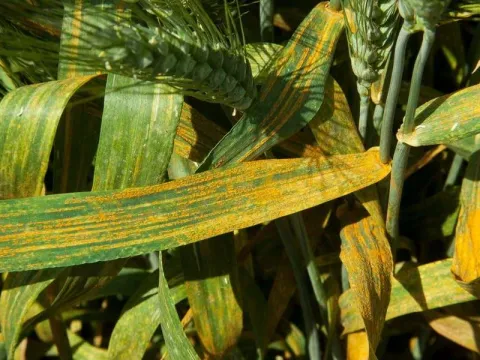
Wheat stripe rust
Soleella striiformis
The causal agent of this disease is the fungal pathogen Puccinia striiformis f. sp. tritici. It is an obligate biotroph, meaning it requires living host tissue to complete its life cycle and produce spores.
What the section contains
Wheat stripe rust
The fungus primarily targets wheat but can also affect barley, rye, and various wild grass species. The primary inoculum consists of urediniospores that are highly capable of surviving diverse environmental conditions.
In regions with mild winters, the fungus persists as mycelium on volunteer wheat plants or autumn-sown winter crops. In colder climates, spores can be wind-dispersed from distant regions to initiate new infections.
The pathogen colonizes the intercellular spaces of the leaves, absorbing nutrients from the host and eventually rupturing the epidermis to release clusters of new spores for further dispersal.
The rapid life cycle of Puccinia striiformis, which can complete within 7 to 14 days under ideal conditions, makes it one of the most destructive diseases in wheat-growing areas worldwide.
The hallmark symptom of stripe rust is the appearance of bright yellow-orange uredinia arranged in narrow, parallel rows along the leaf veins, creating a distinctive stripe-like pattern.
In addition to leaves, the infection can spread to leaf sheaths, stems, and glumes. Severe infections lead to extensive chlorosis and tissue necrosis, severely limiting the photosynthetic capacity of the plant.
As the disease progresses, the stripes may merge to cover a significant portion of the foliage, giving the plants a scorched appearance. The stripes are clearly defined and do not cross the leaf veins.
Towards the end of the season, as the plant matures, the fungus shifts from producing yellow urediniospores to producing black, teliospores, causing the pustules to turn dark brown or black.
Proper identification requires looking for the linear arrangement of pustules, which distinguishes stripe rust from leaf rust or stem rust, which typically have a more scattered pustule distribution.
Stripe rust development is heavily influenced by cool temperatures, with an optimal range between +10°C and +15°C, making it the most significant rust disease in cooler climates.
High relative humidity, frequent fog, or dew are critical for spore germination and infection. Conversely, high summer temperatures exceeding +25°C generally suppress the growth and spread of the pathogen.
Thick canopies and high nitrogen fertilization levels create a favorable microclimate, characterized by high humidity and shade, which accelerates the spread of the fungus within the field.
Wind is the primary vector for long-distance dissemination. Urediniospores can be carried across regional borders, leading to sudden and widespread outbreaks if susceptible wheat varieties are grown.
The disease is often first detected in early spring when temperatures are still cool, allowing it to establish a strong foothold before the crop reaches the booting or heading stages.
The impact of stripe rust is primarily due to the loss of functional photosynthetic leaf area, which severely reduces grain filling and overall crop productivity.
Infected plants typically produce shriveled, low-weight grains. The reduction in grain quality—specifically in terms of test weight and protein content—can lead to significant financial losses for farmers.
In severe epidemic years, stripe rust can cause yield losses ranging from 30% to 70%, particularly when the infection starts early and environmental conditions remain favorable for the pathogen.
Winter wheat crops infected in the autumn may suffer from reduced winter hardiness, as the disease exhausts the plant's carbohydrate reserves needed to survive the cold months.
Furthermore, weakened plants are more susceptible to secondary infections and opportunistic pests, leading to a synergistic decline in field performance and grain quality.
The most effective strategy for managing stripe rust is the cultivation of genetically resistant wheat varieties, which provide a foundation for sustainable disease management.
Integrated management includes cultural practices such as removing volunteer wheat, selecting appropriate planting dates, and maintaining balanced fertility to prevent dense, overly vegetative canopies.
Chemical control involving systemic fungicides, particularly those containing triazoles or strobilurins, is recommended when the disease threshold is reached or when a high risk of infection is predicted.
- Regular scouting and monitoring during the tillering and stem elongation stages.
- Strategic use of fungicides to protect the flag leaf from infection.
- Crop rotation to reduce the initial inoculum load in the soil or field.
- Integrating resistant cultivars with timely fungicide applications.
Proactive management based on regional epidemiological forecasts is essential for preventing the rapid progression of the disease and safeguarding the yield potential.