
White blister rust
Russula japonica
Description
Symptoms
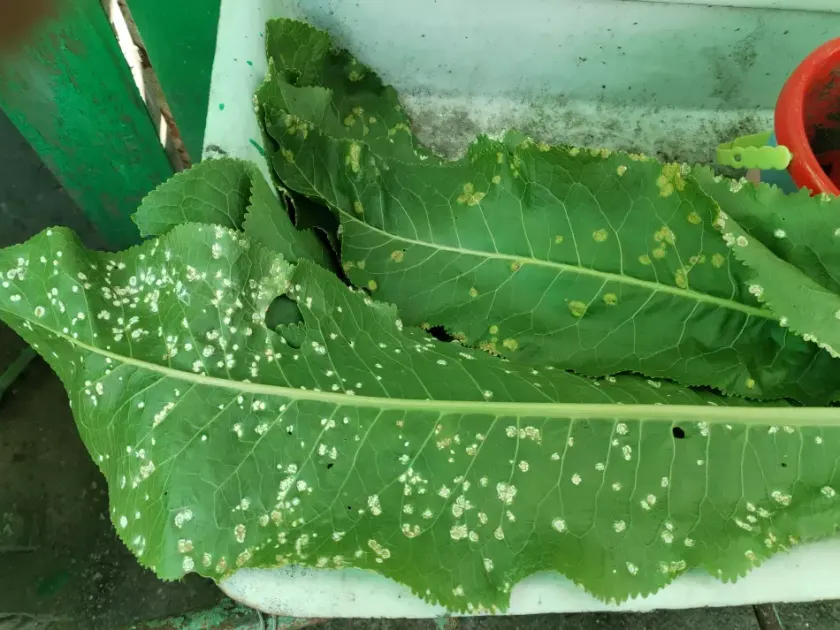
Initial symptoms include the appearance of small, yellow, chlorotic spots on the upper side of the leaves, which are often overlooked until the disease progresses further.
The most diagnostic feature is the formation of white, raised, blister-like pustules on the underside of the leaves, which eventually rupture to release a white, powdery mass of spores.
Severe infestations lead to significant tissue malformation, including the curling and distortion of leaves, stems, and flowering parts (inflorescences) of the affected crops.
In radishes and other root vegetables, the pathogen can cause stunted growth and misshapen roots, significantly reducing the marketability and quality of the produce.
Under favorable conditions, the infection can spread across the entire plant, leading to premature leaf senescence and death, which drastically reduces the photosynthetic capability of the crop.
Pathogen
The disease known as white blister rust or white rust is caused by the oomycete Albugo candida. Despite its name, it is not a true rust fungus but rather an oomycete closely related to downy mildews.
This pathogen survives in the soil and on crop residues in the form of thick-walled oospores, which are extremely resilient to harsh environmental conditions, allowing the infection to persist for years.
During the growing season, the pathogen produces sporangia that are dispersed by wind, splashing rain, and irrigation water, facilitating rapid spread throughout the field.
The infection begins when zoospores released from the sporangia land on the leaf surface, germinate, and penetrate the host tissue via stomata or epidermal ruptures.
Albugo candida is highly host-specific to the Brassicaceae family, affecting commercial crops like broccoli, cabbage, cauliflower, radishes, and numerous wild weed species that act as reservoirs.
Conditions for development
The development of white blister rust is strongly correlated with cool to moderate temperatures, typically ranging from 15 to 20 degrees Celsius, which are optimal for spore germination.
High humidity is critical for the pathogen's life cycle. Prolonged periods of leaf wetness from rain, heavy dew, or overhead irrigation are necessary for zoospore movement and infection.
Poor air circulation within dense plantings creates a microclimate with elevated humidity, which is ideal for the rapid proliferation and secondary spread of the fungal colonies.
Continuous cropping of Brassicaceae in the same field encourages a buildup of oospores in the soil, significantly increasing the probability of severe outbreaks in subsequent seasons.
The presence of susceptible weed hosts in or around the planting area provides an early source of inoculum that can trigger an epidemic as soon as environmental conditions become suitable.
Why it matters
The disease causes substantial economic losses by reducing both yield quantity and quality, rendering crops unsightly and often unmarketable for the retail sector.
Plants affected by Albugo candida show reduced vigor and growth, leading to smaller heads in cabbage and broccoli and stunted roots in radishes, affecting overall profitability.
Infection in seed production fields can be particularly devastating, as it can cause seed abortion and decrease the overall viability and germination rate of the harvested seeds.
The structural damage caused by the bursting blisters makes the plant tissues highly susceptible to secondary pathogens, such as soft rot bacteria, leading to total crop collapse in the field or during storage.
The costs associated with applying fungicides and monitoring for the disease add significant overhead to the production budget, reducing the overall margin of the farm.
Protection
Management begins with strict crop rotation, ensuring that a field is not planted with cruciferous crops for at least four years to allow the soil oospore population to decline.
Rigorous weed control is essential, as many common weeds in the Brassicaceae family can carry the pathogen and act as a bridge for the disease between crop cycles.
Improving air circulation through proper spacing and field sanitation is key to reducing the humidity levels that favor the pathogen's spread during the growing season.
Chemical control involving the application of registered fungicides, particularly those targeting oomycetes, should be applied at the first signs of the disease to prevent further spread.
- Utilize disease-free, certified seeds to prevent introducing the pathogen to new fields.
- Promptly remove and destroy infected plant debris at the end of the season.
- Select resistant or tolerant varieties if available in your local region.
- Apply balanced nutrition to maintain plant vigor, helping them resist initial infections.
Discussion
No discussions yet — be the first.