
White Elfin Saddle
Helvella crispa
Description
Symptoms
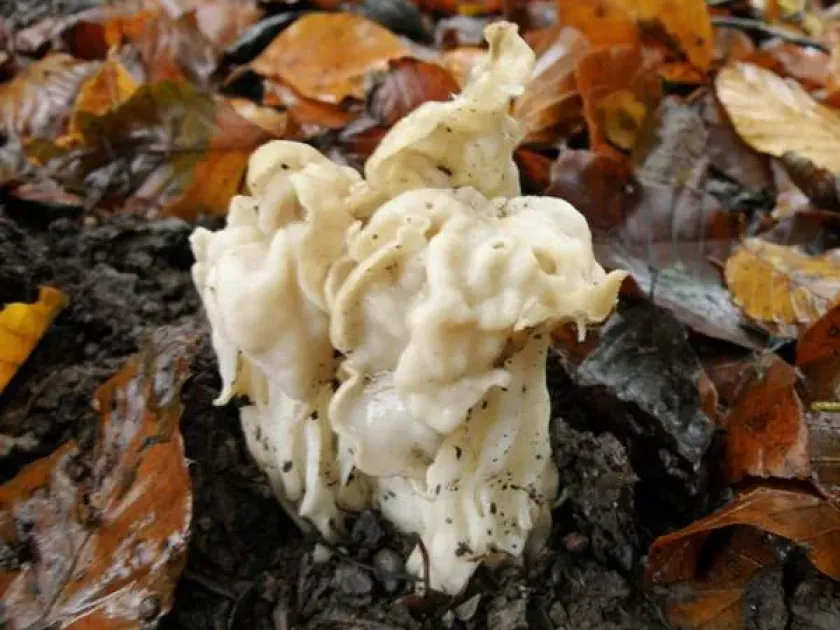
The White Elfin Saddle, or Helvella crispa, possesses a very unique and easily recognizable fruiting body structure.
Its cap is irregular, wavy, and often described as lobed or curled, resembling the texture of cauliflower or crumpled fabric.
The color of the cap ranges from creamy white to pale beige, often darkening slightly as the mushroom matures.
A distinctive feature is its stalk, which is deeply ribbed or pitted with longitudinal grooves and internal hollows.
Standing between 3 and 10 centimeters tall, these mushrooms appear scattered or in small groups on soil surfaces.
Pathogen
It is crucial to clarify that the White Elfin Saddle is not a plant pathogen and does not cause any diseases in garden crops.
This organism is classified as a saprotrophic fungus, which plays a natural role in decomposing organic matter within the soil.
It lacks the specialized biology required to infect or parasitize living plant tissues or roots of agricultural species.
The fungus functions entirely by breaking down decaying organic debris, such as leaf litter and dead wood, into humus.
Thus, it serves a beneficial ecological purpose by contributing to nutrient cycling rather than acting as a crop disease.
Conditions for development
The growth and development of the mycelium of Helvella crispa depend on a damp environment and a steady supply of organic matter.
These mushrooms typically emerge in late summer and throughout the autumn, thriving in cool and humid weather conditions.
Shaded areas within the garden, where moisture is retained for longer periods, are the preferred habitats for this species.
The fungus is frequently found in locations where there is a significant accumulation of woody debris or decaying vegetation.
Soil conditions with high organic content facilitate the establishment of the fungus, especially in regions with frequent rainfall.
Why it matters
The White Elfin Saddle causes no harm to agricultural, ornamental, or horticultural plant varieties.
It is not known to produce any toxins or enzymes that would damage plant root systems or inhibit healthy development.
There is no economic or agricultural threat posed by this fungus, as it does not compete with plants for resources.
The primary concern regarding this species is purely for human health if accidentally ingested, as it is potentially toxic raw.
Since it lives independently of living plants, its presence does not signify a disease outbreak or a need for chemical intervention.
Protection
No agricultural control measures, such as fungicides, are required or recommended for this non-pathogenic fungus.
If the appearance of the mushrooms is undesirable, simple manual removal of the fruiting bodies is the most effective solution.
Managing soil moisture levels and improving air circulation can naturally discourage the growth of fungal mycelia.
Reducing the amount of decaying wood or raw woody mulch on the soil surface can also limit the habitat for this species.
- Manual removal of fruiting bodies
- Improving soil drainage systems
- Limiting excessive wooden mulch use
- Ensuring proper spacing between plants
- Maintaining clean soil surfaces
Discussion
No discussions yet — be the first.