
Blueberry shoestring virus
Blueberry shoestring
The Blueberry shoestring virus (BSSV) is the causative agent of this plant disease. It is a specific viral pathogen belonging to the ilarvirus group that primarily affects members of the Ericaceae family.
What the section contains
Blueberry shoestring virus
Transmission in the field is primarily mediated by the blueberry aphid (Illinoia pepperi). This insect acts as a vector, picking up the virus from infected plants and transmitting it to healthy bushes during feeding.
The virus can also be introduced into new fields through infected propagation material. Cuttings or nursery stock derived from infected mother plants are significant sources of long-distance virus dispersal.
In addition to highbush blueberries, the virus is known to affect cranberries. Once a plant is infected, the virus becomes systemic, moving through the vascular system to colonize leaves, stems, and fruits throughout the plant.
As a systemic pathogen, BSSV persists in the perennial tissues of the host. This makes it impossible to eradicate the virus from an infected bush, necessitating the removal of the entire plant to prevent further spread.
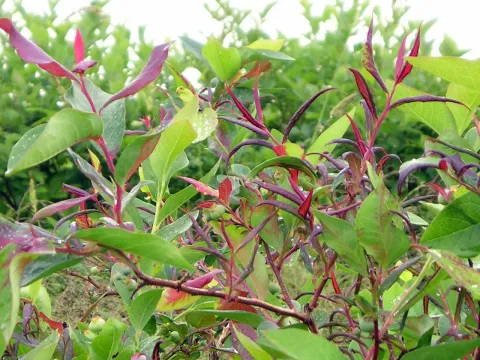
The most distinctive symptom of BSSV is the characteristic deformation of leaf blades. Leaves become narrow, elongated, and string-like, which is the defining clinical feature of this infection.
Young shoots often exhibit distinctive red or reddish-purple streaks. These streaks may form arc-shaped patterns or thin lines on the leaves, which become increasingly apparent as the infection progresses.
Infected bushes show significant stunting and reduced vegetative growth compared to healthy plants. The branches may appear twisted, giving the shrub a misshapen or disheveled appearance.
Fruit set on infected bushes is often negatively affected, with berries appearing small, misshapen, or prematurely colored, which severely degrades their market quality and reduces yields.
- Narrow, shoestring-like leaves.
- Reddish-purple streaks on stems.
- Severe stunted growth.
- Deformed and poor-quality berries.
- Significant reduction in fruit yield.
The spread of the virus is directly linked to the population density of its vector, the blueberry aphid. Higher aphid numbers correlate with a faster rate of viral transmission across the field.
Favorable conditions for aphid reproduction, such as warm and humid spring weather, facilitate widespread movement of the vector, leading to rapid infection of neighboring bushes.
Crowded planting schemes are highly conducive to the spread of BSSV. When canopy contact occurs between plants, the aphids can easily migrate from infected to healthy shrubs.
Wild blueberry or cranberry plants growing in the vicinity can serve as reservoirs for the virus. Insects may migrate from these wild sources to commercial plantings, introducing the infection.
Neglecting field sanitation allows the virus to persist in old infected plant debris and remaining plant parts, providing a constant inoculum source for the entire plantation.
BSSV poses a major economic threat to berry growers. Because infected plants cannot be cured, the presence of the virus leads to a total loss of commercial viability for those specific bushes.
The systemic nature of the disease progressively weakens the plant, reducing its winter hardiness and general vigor, which eventually leads to the premature decline and death of the shrub.
A widespread outbreak may force a grower to remove and destroy a significant portion of the crop, resulting in substantial financial losses and the potential need to replant the entire field.
The disease can compromise the quality of nursery stock, and distributing infected plants further propagates the virus, causing long-term damage to the regional berry industry.
Continuous monitoring and loss of yield represent ongoing management costs that significantly diminish the profitability of affected berry operations.
The primary management strategy for BSSV is the rigorous removal and destruction of symptomatic plants. Once a bush is identified as infected, it should be rogued out immediately.
Effective control of the aphid vector is essential to prevent secondary spread. Applying appropriate insecticides during the peak activity periods of the blueberry aphid is a critical preventive measure.
Growers must ensure they use only certified, virus-free planting stock sourced from reputable nurseries that employ strict indexing programs for viral pathogens.
Regular field scouting is vital for early detection. Identifying the first symptomatic bushes allows for prompt action, which helps minimize the size of the infection focus and protects the remaining crop.
Proper field hygiene, including weed control and maintaining adequate spacing between rows, helps disrupt the movement of vectors and reduces the overall risk of viral transmission.