
Blumeriella ceanothi
Blumeriella ceanothi
Description
Symptoms
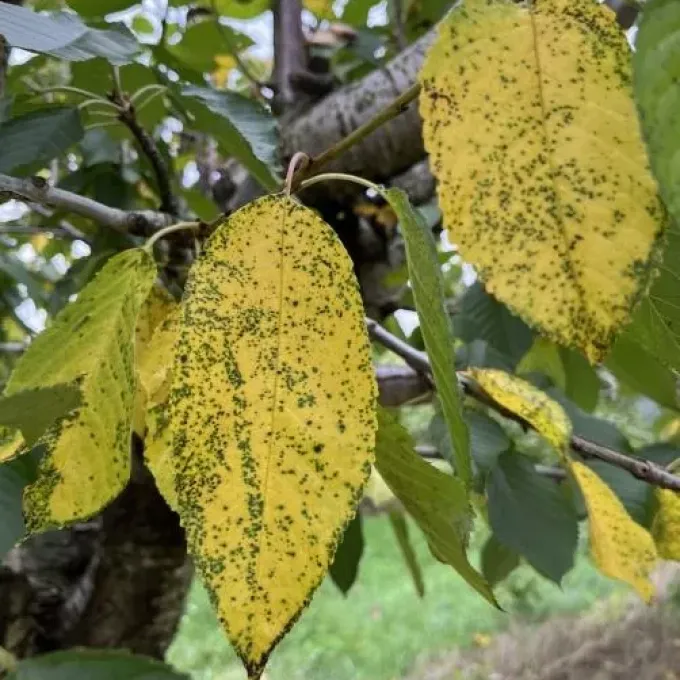
Initial symptoms present as small, scattered spots on the leaves, which gradually expand and darken as the disease progresses.
Affected spots often exhibit a yellow or chlorotic halo, marking the boundary between diseased and healthy tissue on the leaf surface.
Under humid conditions, the fungus produces fruiting bodies on the undersides of the leaves, visible as minute, dark specks.
Premature leaf drop is a hallmark of this infection, which can lead to significant defoliation during the peak growing season.
Necrotic lesions may also appear on young, tender shoots, potentially causing stunting or dieback of the stems if the infection is severe.
Pathogen
The causal agent of this disease is the fungus Blumeriella ceanothi, a specific pathogen affecting the genus Ceanothus.
This fungus belongs to the order Helotiales and is specialized to infect leaf tissues, causing characteristic necrotic spots.
The life cycle involves overwintering on fallen leaves and debris, where the fungus remains dormant until the arrival of warm spring temperatures.
Primary inoculum is released in the form of spores, which are spread by rain splashes and wind currents within the garden environment.
The fungal biology is strictly tied to its host, making it a persistent issue if sanitary measures are not implemented correctly.
Conditions for development
High humidity and moisture are the most critical factors driving the development and spread of Blumeriella ceanothi.
Mild temperatures typical of spring and early summer provide the ideal thermal window for spore germination and colony growth.
Overcrowded plantings that lack adequate airflow create a trapped, humid microclimate that significantly boosts disease transmission.
Prolonged wetness on leaf surfaces, caused by frequent rainfall or heavy dew, is essential for the fungus to successfully infect the plant.
Garden sites with poor drainage or stagnant air pockets are highly susceptible to becoming hotspots for the development of this fungal pathogen.
Why it matters
The primary impact of the disease is the loss of foliage, which drastically reduces the plant's capacity for essential photosynthesis.
Repeated defoliation over multiple seasons severely stresses the Ceanothus, leading to overall plant decline and loss of vigor.
Weakened plants are significantly more vulnerable to cold damage during winter, as they fail to accumulate sufficient energy reserves.
The aesthetic value of the shrub is compromised due to unsightly leaf spots, yellowing, and the thinning of the natural canopy.
Persistent infections open the door for secondary pathogens and pests to further exploit the weakened state of the plant.
Protection
Sanitation is the most effective management strategy; removing and destroying all fallen leaves during autumn eliminates the primary inoculum source.
Proper spacing and strategic pruning are recommended to improve light penetration and air circulation throughout the shrub's canopy.
Preventative fungicide applications, particularly those containing copper, can be used in early spring to protect new growth from infections.
- Removing heavily infected foliage during the season.
- Avoid overhead irrigation to keep foliage dry.
- Monitoring the plants during periods of high humidity.
Regular inspection and early intervention help to maintain the health of Ceanothus plantings and prevent the establishment of the disease.
Discussion
No discussions yet — be the first.