
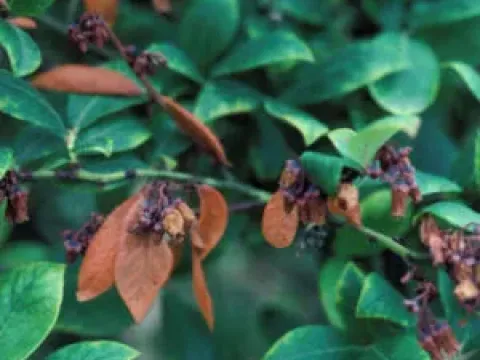
Blueberry shock virus
Blueberry shock
The causal agent of this disease is the Blueberry shock virus (BlShV), a member of the genus Ilarvirus within the Bromoviridae family. It is a single-stranded RNA virus that establishes systemic infection throughout the host plant.
What the section contains
Blueberry shock virus
The virus is primarily transmitted via infected pollen during the flowering season. Pollinating insects, such as bees, serve as the main vectors, carrying the virus from infected bushes to healthy ones within the plantation.
Transmission can also occur through infected nursery stock. Because asymptomatic plants can carry the virus, using non-certified propagation material is a significant risk factor for introducing the disease into new fields.
Besides various highbush blueberry cultivars, the virus is known to affect American cranberry (Vaccinium macrocarpon). Host susceptibility varies widely, and some cultivars may show more severe reactions than others.
Once a plant is infected, the virus remains within its tissues for its entire lifespan. Even after the initial shock phase passes and the plant appears to recover, it remains a permanent reservoir of the virus.
The most distinct symptom is the sudden wilting and necrosis of flowers and young shoots in early spring. This often happens right at the start of the blooming period and can be mistaken for frost injury.
Leaves on the affected parts of the bush may turn yellow, curl, or develop irregular spots. In severe cases, entire branches may die back, giving the plant a scorched appearance, which gave the disease its common name.
Affected plants fail to produce a fruit crop in the year of infection, as flowers drop prematurely. Shoot growth is significantly stunted, and the overall vigor of the plant is reduced during the initial season of infection.
In subsequent years, plants may recover and resume normal flowering and fruit set. However, despite the healthy visual appearance, the virus is still present, and the plants remain infectious to nearby healthy bushes.
Visual diagnosis is unreliable due to the temporary nature of the shock symptoms. Laboratory testing, such as RT-PCR or ELISA, is required to confirm the presence of the virus in both symptomatic and asymptomatic plants.
The economic impact of the Blueberry shock virus is primarily caused by the total loss of marketable yield in the year of initial infection. This represents a substantial financial burden for commercial growers.
The virus acts as a persistent threat because infected plants continue to shed virus-carrying pollen for years. This creates an ever-increasing risk of spread throughout the entire plantation if left unmanaged.
Infection weakens the overall health of the blueberry bushes, making them more susceptible to environmental stressors and other opportunistic pathogens. This reduces the lifespan and long-term productivity of the field.
The presence of the virus complicates the production of certified clean planting stock. Nurseries must implement rigorous testing protocols to ensure that no asymptomatic carriers are distributed to growers.
Because there is no cure or chemical treatment for infected plants, the only management option is the removal of the bushes. This necessitates additional labor and capital investment to replace infected sections of the field.
The primary control strategy is the prompt removal and destruction of symptomatic bushes. By eliminating the source of the virus, growers can slow down or prevent further transmission to adjacent plants.
Sourcing high-quality, virus-tested nursery stock is the most important preventive measure. Growers should only buy from reputable nurseries that employ strict plant health certification programs.
Regular monitoring and scouting during the critical spring bloom period are essential for early detection. Maintaining clear records of plantation health helps track the disease and manage potential hotspots.
Limiting the movement of equipment and workers from infected areas to healthy blocks is a key sanitation practice. Reducing mechanical movement decreases the risk of accidental spread across the farm.
While research into resistant blueberry cultivars is ongoing, management currently relies exclusively on cultural practices and phytosanitary measures. Consistent vigilance is required to protect the long-term viability of the crop.