
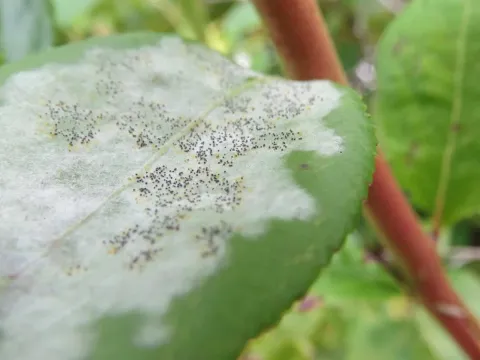
Blueberry powdery mildew
Podosphaera myrtillina
The causal agent of this disease is the ascomycete fungus Podosphaera myrtillina, an obligate parasite that specifically infects members of the Ericaceae family, including blueberries and bilberries.
What the section contains
Blueberry powdery mildew
The fungus reproduces asexually through conidia, which are wind-dispersed and capable of initiating new infections rapidly across a blueberry plantation during the growing season.
It colonizes the plant surface as an ectoparasite, utilizing specialized structures called haustoria to penetrate the host's epidermal cells to extract essential nutrients.
As the season progresses, the white mycelial mat thickens and develops small, black, spherical fruiting bodies known as chasmothecia (or cleistothecia), which serve as overseasoning structures.
The pathogen survives the winter in dormant mycelial form within infected buds or on fallen leaves and woody debris, releasing spores again as temperatures rise in the spring.
The hallmark symptom is the appearance of a dusty, white fungal growth that typically starts on the undersides of leaves before spreading to the upper surfaces and shoots.
Affected leaves often exhibit yellowing, curling, and crinkling, which gradually leads to premature necrosis and abscission, weakening the overall vigor of the blueberry plant.
Young, actively growing shoots may become stunted, distorted, or severely twisted, significantly impairing the architectural development of the shrub.
If the infection reaches the flowers and developing fruit, the berries often become covered in the white powdery substance, which may cause cracking, shriveling, and loss of flavor.
In later stages of the infection, the mycelial mat may turn greyish, and the presence of small, dark, pepper-like dots (fruiting bodies) becomes visible to the naked eye.
Blueberry powdery mildew thrives in environments with high relative humidity and moderate temperatures, typically between 18°C and 25°C (64°F–77°F).
Unlike many other fungal diseases, powdery mildew does not require free water or prolonged leaf wetness for spore germination, making it particularly troublesome in varying climates.
Dense canopy growth, lack of proper pruning, and poor air circulation within the planting rows create a favorable microclimate that accelerates the rapid spread of the disease.
Plants experiencing excessive vegetative growth due to heavy nitrogen fertilization are particularly prone to infection because of the abundance of succulent, vulnerable tissue.
Environmental stress, such as water scarcity or poor soil structure, can further predispose the bushes to opportunistic infections, including powdery mildew.
The primary impact of the disease is the reduction of the leaf surface area, which decreases photosynthetic efficiency and leads to a significant reduction in plant biomass and fruit production.
Early leaf drop forces the plant to expend stored energy reserves prematurely, leading to reduced cold hardiness and increased susceptibility to winter kill during colder months.
Fruit quality is severely compromised, rendering the produce unmarketable for fresh retail markets due to the white fungal layer and potential secondary decay.
Long-term infestation leads to the gradual decline of the plant, characterized by smaller leaf sizes, reduced shoot extension, and an overall decrease in yield potential over consecutive seasons.
Economic losses arise not only from reduced yield but also from the increased input costs associated with intensive fungicide programs needed to manage heavy outbreaks.
Integrated pest management starts with cultural practices, such as maintaining optimal plant spacing and ensuring thorough pruning to promote airflow and light penetration.
Sanitation is critical; removing and destroying infected leaves and woody debris at the end of the season reduces the primary inoculum load for the following year.
Fungicides from the triazole or strobilurin classes can provide effective suppression when applied early in the development of an outbreak.
Managing nutrient levels by avoiding excessive nitrogen applications helps produce sturdier growth that is naturally more resistant to fungal penetration.
- Use of disease-resistant blueberry cultivars where available.
- Timing protective sprays before the onset of the peak infection period.
- Application of biological fungicides based on beneficial microbes for organic management.