
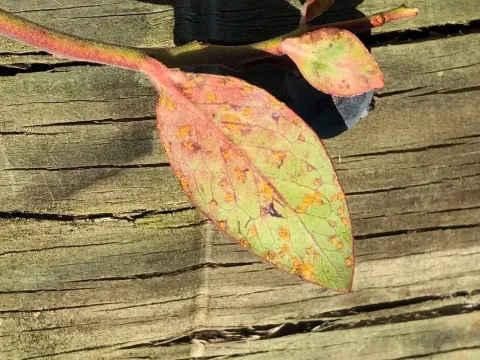
Blueberry rust
Pucciniastrum minimum
Blueberry rust is caused by the heteroecious fungal pathogen Pucciniastrum minimum. This fungus requires different host plants to complete its complex biological life cycle.
What the section contains
Blueberry rust
The primary host is often hemlock (Tsuga species), where the fungus overwinters, producing spores that infect blueberries during the warmer months.
The disease is classified as a fungal infection that targets the leaves and sometimes the young stems of the blueberry plant.
The biology of the pathogen relies heavily on wind dispersal of urediniospores, allowing it to spread across plantations efficiently.
The fungus is highly adaptive and can proliferate rapidly during the growing season whenever environmental conditions are favorable.
Initial symptoms include the appearance of small, yellow spots on the upper surface of the leaves, which gradually enlarge over time.
On the underside of the leaves, the pathogen develops bright orange or yellow pustules, which are characteristic clusters of spores.
Severe infestations lead to premature yellowing and heavy leaf drop, which can significantly stress the blueberry bushes during mid-summer.
Young shoots may occasionally show signs of distortion or stunted growth if the infection is particularly aggressive in the nursery stage.
- bright orange powdery pustules on leaf undersides;
- yellowish chlorotic spots on the upper leaf surface;
- premature leaf drop during the peak summer;
- reduced vigor and growth of the bush.
The development of blueberry rust is heavily dependent on high humidity and frequent rainfall, which are necessary for spore germination.
Optimal temperatures for the fungus typically range between +18 and +24 degrees Celsius, aligning with the prime growing season for blueberries.
Poor airflow within the canopy, often caused by overly dense planting, creates a humid microclimate that promotes rapid disease progression.
The proximity of infected hemlock trees serves as a major risk factor, providing a constant source of primary inoculum in the spring.
Failure to implement basic sanitation, such as clearing plant debris, allows the fungus to remain active and build up its population density.
The disease reduces the plant's photosynthetic capacity, which directly negatively impacts fruit quality and overall yield potential for the season.
Premature defoliation compromises the plant's ability to store energy for the winter, leading to decreased winter hardiness and frost damage.
Long-term infestation weakens the overall health of the plantation, making it more susceptible to secondary pests and various other pathogens.
For commercial growers, heavy leaf loss reduces the commercial grade of the bushes and can prevent the formation of next year's fruit buds.
Nursery stock suffering from rust is often unsaleable due to aesthetic damage and the risk of spreading the infection to new clean fields.
Sanitation is the first line of defense: raking and destroying fallen leaves is essential to remove the overwintering source of the fungus.
Maintaining a safe distance between blueberry plantations and hemlock trees is a critical preventive measure to break the disease cycle.
Proper pruning and spacing techniques ensure adequate air circulation, which helps keep the foliage dry and inhibits fungal growth.
Chemical control involving fungicides can be effective when applied at the first signs of pustule development during the growing season.
Optimizing plant nutrition is recommended; avoiding excessive nitrogen while ensuring balanced potassium helps improve natural plant resistance.