
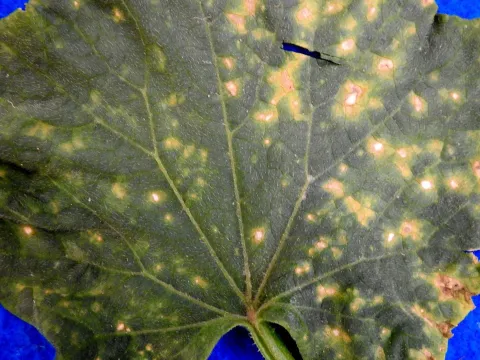
Septoria leaf spot of cucurbits
Septoria cucurbitacearum
The primary symptom of the disease is the appearance of round or angular spots on the leaves, which initially have a pale yellow or brown tint.
What the section contains
Septoria leaf spot of cucurbits
Over time, the center of the spot lightens, acquiring a whitish or grayish color, while a darker brown border remains along the edges.
Upon careful examination of the affected areas with a magnifying glass, you can see black dots, known as pycnidia, where the pathogen's spores mature.
The infection usually starts with the lower leaves, which gradually dry out and die, leading to premature exposure of the stem.
Under conditions of high humidity, the spots can merge, covering a significant area of the leaf blade, which leads to general growth inhibition of the plant.
The disease is caused by the imperfect fungus Septoria cucurbitacearum, which belongs to the class Coelomycetes.
The fungus survives in plant debris in the soil in the form of pycnidia or mycelium, remaining viable for an extended period of time.
Primary infection of crops occurs in the spring through conidia, which are spread by rain splashes, wind, or agricultural equipment.
During its life cycle, the pathogen reproduces actively through asexual means, forming numerous generations of spores within a single growing season.
The infection affects various types of cucurbits, including cucumbers, melons, watermelons, zucchinis, pumpkins, and many wild weed species of the Cucurbitaceae family.
Development of Septoria leaf spot is favored by moderately warm weather and high air humidity, especially during periods of prolonged rain or heavy dew.
The optimal temperature for spore germination and tissue infection ranges from +20°C to +25°C, with high humidity being a critical factor.
Dense planting creates a microclimate with insufficient ventilation, which significantly accelerates the spread of infection within the crop.
Imbalanced application of nitrogen fertilizers, which reduces the plant's resistance to pathogens, can also trigger disease outbreaks.
Overhead irrigation facilitates the movement of spores onto healthy leaves, making it easier for them to penetrate through stomata or mechanical damage.
The damage caused by Septoria is characterized by a sharp decrease in photosynthetic activity due to the death of a significant portion of the crop's foliage.
Severe infection leads to yield losses and deterioration of fruit marketability, as plant nutrition is disrupted during critical growth stages.
Under epiphytotic conditions, the disease can destroy up to 30-50% of the harvest, especially if symptoms appear at early stages of plant development.
Plants weakened by Septoria become more susceptible to other fungal and bacterial infections, complicating the overall phytosanitary status.
The loss of leaves leads to reduced sugar content in the fruits and delayed ripening, which is critical for growing melon crops.
A fundamental method of control is practicing crop rotation, with cucurbit crops returning to the same area no sooner than every 3-4 years.
It is necessary to carefully remove and destroy all plant debris after harvesting, as they serve as the primary reservoir for the infection.
Preventive treatments with copper-based fungicides (Bordeaux mixture and alternatives) help to prevent primary infection at the beginning of the season.
For treating established disease, modern systemic fungicides based on azoles or strobilurins are highly effective.
- Use of high-quality disease-free seeds
- Regular weeding of Cucurbitaceae family weeds
- Ensuring optimal planting density for airflow
- Cultivation of resistant hybrids and varieties