
Septoria leaf spot of elaeagnus
Septoria elaeagni
Description
Symptoms
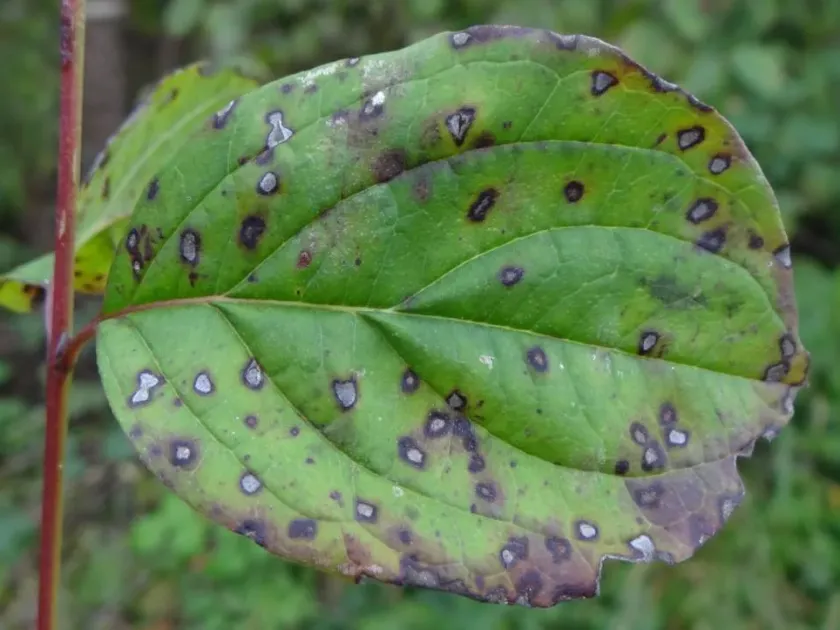
The initial signs of Septoria leaf spot appear as small, circular, or irregular brown spots on the leaves. These spots are often surrounded by a darker, more defined margin as they begin to expand.
As the disease progresses, the center of the spot frequently transitions to a grayish or bleached color. This symptom indicates that the fungus has begun the process of sporulation within the dead tissue.
A definitive diagnostic feature is the formation of numerous tiny black specks within the light-colored centers of the spots. These specks are the pycnidia, the fungal reproductive structures.
Heavy infections lead to widespread chlorosis and premature leaf drop. In severe cases, the fungus may cause necrotic lesions on young twigs, potentially leading to cracking of the bark and stunted growth.
- Small brown spots on leaves.
- Grayish centers within spots.
- Visible black pycnidia on lesion surfaces.
- Premature leaf senescence and abscission.
- Necrotic lesions on succulent young stems.
Pathogen
The causal agent of this disease is the fungus Septoria elaeagni, a deuteromycete that specializes in attacking plants of the Elaeagnus genus. It is a persistent parasite that targets leaf tissues.
The fungus overwinters primarily in infected fallen leaves and occasionally in bark crevices of affected twigs. During the spring, as temperatures rise and moisture becomes available, it produces pycnidia, which release conidia.
Infection is initiated when conidia land on healthy leaves. With sufficient moisture, these spores germinate and penetrate the leaf epidermis, establishing the fungal colony within the host plant tissue.
Wind, rain splash, and movement by insects facilitate the dispersal of spores throughout the plant canopy and to adjacent trees. The pathogen thrives as an internal parasite, causing gradual tissue necrosis.
While Septoria elaeagni is specifically associated with elaeagnus species, its life cycle is highly adapted to the phenology of its host, making it a significant concern in ornamental nursery production.
Conditions for development
High relative humidity and frequent rainfall are the primary environmental drivers for the development of Septoria leaf spot. The fungus requires prolonged leaf wetness for successful spore germination.
Optimal temperatures for the growth and spread of the pathogen typically range from 18 to 25 degrees Celsius. In these conditions, the latency period is significantly reduced, allowing for rapid disease cycles.
Poor air circulation within dense plantings encourages a humid microclimate, which is highly conducive to fungal outbreaks. This often happens in overcrowded nursery beds or landscape arrangements.
Plants under stress, whether due to nutrient deficiency, drought, or pest damage, are more susceptible to infection. Mechanical injuries on leaves provide easy entry points for the fungal mycelium.
Failure to implement basic sanitation practices, such as clearing debris, allows the inoculum level to build up over consecutive seasons, making it difficult to control without intervention.
Why it matters
The disease causes significant aesthetic damage, which is a major concern for ornamental use of elaeagnus in parks and gardens. The appearance of unsightly spots and leaf drop ruins the plant's ornamental value.
Extensive defoliation reduces the plant's photosynthetic capacity. This leads to reduced carbohydrate storage, which in turn affects the tree's vigor and its ability to withstand harsh winter conditions.
Damage to twigs and branches can lead to permanent disfigurement. In nurseries, severe Septoria infection often results in the rejection of plant batches for sale due to their unhealthy appearance.
Chronic infection weakens the tree over time, making it prone to secondary infections from other pathogens or opportunistic insect pests that further degrade the plant's health.
The trade and transport of nursery stock infected with Septoria elaeagni serve as a major pathway for the introduction and spread of the pathogen to previously healthy regions.
Protection
Sanitation is the most important control strategy. Removing and destroying fallen leaves is essential to eliminate the primary source of overwintering inoculum before the spring growth starts.
Pruning out infected branches helps reduce the pathogen load. It is crucial to sanitize pruning tools after each cut to avoid spreading the spores to healthy areas of the plant or to other trees.
Chemical control involving copper-based fungicides is effective when applied preventively or at the very first signs of infection, especially during seasons with persistent wet weather.
Systemic fungicides may be used to suppress fungal growth within the plant tissues. Regular application according to product labels is necessary for effective management of existing infections.
Cultural management, including ensuring proper spacing for airflow and balanced fertilization, promotes plant vigor and decreases the likelihood of severe Septoria leaf spot outbreaks.
Discussion
No discussions yet — be the first.