
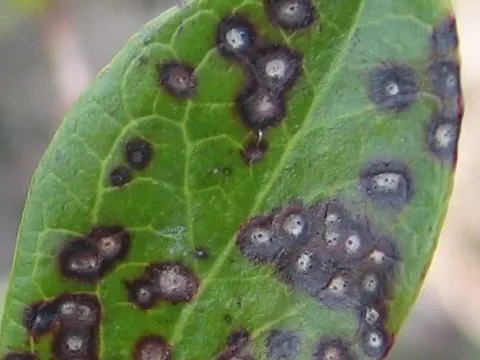
White spot septoria
Septoria albopunctata
The causative agent of this disease is the fungus Septoria albopunctata, which belongs to the Ascomycota division. It is a specialized pathogen that primarily targets the vegetative parts of graminaceous plants.
What the section contains
White spot septoria
The fungus survives in the soil within crop residues as mycelium and pycnidia. These structures allow the pathogen to endure adverse environmental conditions, including winter frosts.
During the growing season, moisture triggers the release of conidia from the pycnidia. These spores are disseminated to healthy tissues through rain splashes or wind currents.
Once settled on the plant surface, the spores germinate, and the fungal mycelium penetrates the leaf epidermis to begin the colonization of the host's internal tissues.
The life cycle of the pathogen is characterized by repeated cycles of asexual reproduction, which enables the rapid spread of the disease under favorable environmental conditions.
The primary symptom includes the formation of small, well-defined white or light-gray spots on the leaf blades. These spots are frequently surrounded by a yellowish chlorotic halo.
As the infection progresses, these spots may coalesce, leading to extensive tissue necrosis. The presence of numerous minute black dots, known as pycnidia, within these necrotic areas is a key diagnostic indicator.
The disease typically develops from the lower leaves upwards. Heavily infected leaves may dry out, wither, and prematurely fall, significantly reducing the plant's photosynthetic capacity.
In severe cases, stem infections may occur, which weakens the stalks and can lead to plant lodging, especially in high-density crop stands.
The overall appearance of the plant becomes stunted, and the loss of green tissue directly affects the plant's ability to maintain optimal growth rates during the vegetative stage.
High relative humidity, typically exceeding 80–90%, is the most critical environmental factor for the development and spread of White spot septoria.
The optimal temperature range for the germination of fungal spores and the development of mycelium within host tissues is between +18 and +25 degrees Celsius.
Crop density plays a significant role in disease propagation. Thickly sown stands hinder air circulation, maintaining a humid microclimate around the foliage that favors the fungus.
Frequent rainfall episodes during the growing season serve as a primary catalyst for the widespread dispersal of infectious conidia throughout the field.
Poor soil management and inadequate drainage can lead to localized humidity spikes, which act as focal points for the initial outbreaks of the disease.
The primary economic damage is caused by the significant reduction in the leaf surface area, which leads to a decrease in photosynthesis and overall plant vigor.
This suppression of metabolic activity results in poor grain filling and reduced yields. Farmers often observe a decrease in both the quantity and quality of the harvested crop.
The disease weakens the plants, making them less resilient to secondary infections or environmental stresses such as drought or frost during the winter period.
Premature maturation of infected crops often leads to harvesting difficulties and losses, as the stalks become brittle and susceptible to lodging before the harvest window.
Widespread infestations can reduce the total crop output by 15-30% depending on the infection pressure and the developmental stage at which the disease strikes.
Adhering to a robust crop rotation strategy, where host cereals are rotated with non-host crops, is essential for breaking the pathogen's life cycle in the field.
Deep plowing and efficient management of crop debris are effective methods to reduce the primary inoculum load present on the soil surface.
Selecting disease-resistant or tolerant cultivars is a cornerstone of an integrated pest management program, significantly reducing the need for chemical interventions.
When environmental conditions are conducive to disease development, the timely application of fungicides is recommended to protect the upper leaves and preserve yield potential.
- Regular monitoring of fields for early detection of initial infection spots.
- Maintaining optimal planting density to improve air circulation.
- Proper fertilization to ensure strong plant immune response.