
Description
Symptoms
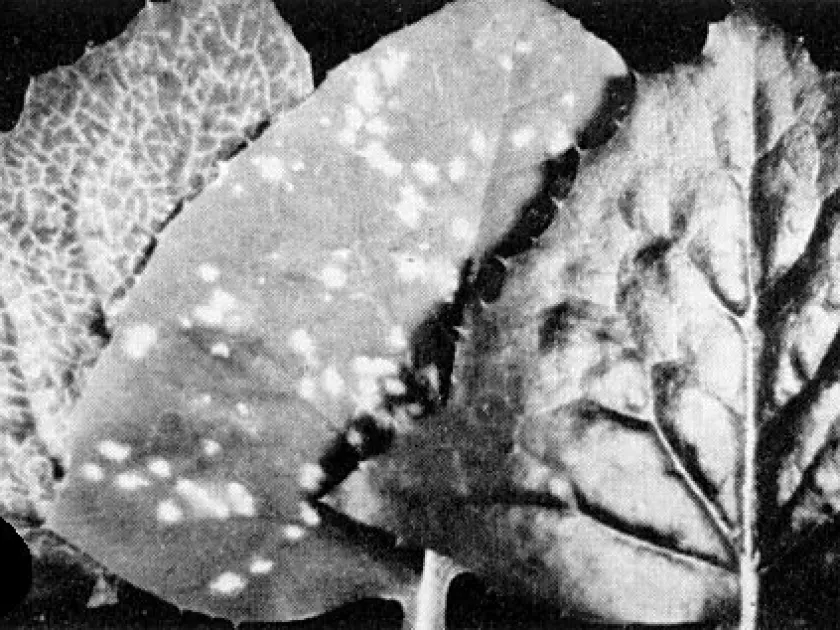
The primary symptom of the Sowthistle yellow vein disease is a distinct chlorosis, or yellowing, of the leaf veins in host plants like lettuce.
As the infection progresses, the yellowing spreads throughout the leaf blade, often causing significant curling, deformation, and stunted growth.
Plants affected by the virus frequently appear smaller than their healthy counterparts, failing to reach the size required for harvest.
The visual impact on the plant's foliage makes the lettuce unmarketable, as consumers and retailers require healthy, uniform green leaves.
Symptoms are usually distributed in patches across the field, reflecting the activity patterns of the insect vectors that transmit the virus.
Pathogen
The disease is caused by the Sowthistle yellow vein virus (SYVV), which is classified under the Rhabdoviridae family.
This virus is a phloem-limited pathogen, which explains why the characteristic yellowing is restricted to the conductive veins of the leaves.
The virus does not persist in the soil or in seeds, relying entirely on infected host plants to maintain its presence in the agricultural environment.
Weeds belonging to the Asteraceae family, particularly sowthistle, serve as the primary long-term reservoirs for the virus.
Transmission occurs exclusively through insect vectors, specifically aphid species that acquire the virus while feeding and transmit it to healthy plants.
Conditions for development
The spread of the virus is inextricably linked to the population dynamics of its aphid vectors in the surrounding area.
Mild and dry weather conditions are generally optimal for the rapid multiplication of aphids, leading to increased risk of infection in lettuce crops.
Proximity to unmanaged fields with high densities of weed reservoirs is a major risk factor for early-season outbreaks.
The migration of winged aphids during the active growth phase of lettuce often coincides with peak periods of viral transmission.
Poor sanitation and lack of weed control in buffer zones create a continuous source of inoculum that can quickly infect new lettuce plantings.
Why it matters
The main economic harm is the total loss of marketable yield, as affected plants do not meet quality standards for fresh produce.
In addition to direct losses, the virus suppresses the plant's immune system, making it more prone to colonization by opportunistic pathogens.
The inability to cure viral infections once established means that infected areas often must be abandoned or destroyed, leading to significant financial loss.
Farmers face the double burden of lost crop value and the continuous operational costs of managing aphid populations to prevent further spread.
As the disease impacts the aesthetic quality of the lettuce, even minor infections can render large quantities of product unsuitable for the premium market.
Protection
Management focuses heavily on the integrated control of aphid vectors using timely and effective insecticide applications.
Rigorous weed management, especially targeting sowthistle and other Asteraceae weeds, is essential to remove the virus's primary survival source.
Maintaining proper spatial isolation between new lettuce plantings and older, potentially infected sites helps mitigate the risk of cross-infection.
Covering young crops with floating row covers can physically exclude aphids and provide a strong barrier during the most vulnerable early growth stages.
- Regular scouting for aphid colonization.
- Removal of infected plants to reduce inoculum.
- Implementing crop rotation to break the disease cycle.
Pathogens and affected parts
Affects crops · 1
Discussion
No discussions yet — be the first.