
Soybean anthracnose
Colletotrichum americae-borealis
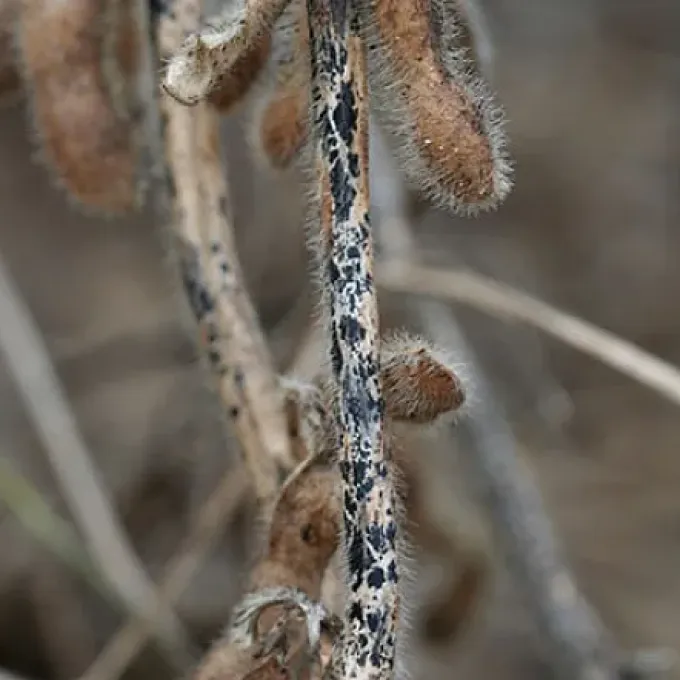
Description
Symptoms
Symptoms of anthracnose typically appear as irregular dark brown or black lesions on stems, petioles, and pods of the soybean plant.
Under humid conditions, small black pimple-like structures, known as acervuli, develop within the lesions; these often feature prominent dark setae that are visible under magnification.
Severe infection leads to top-dieback, where the growing point of the plant wilts, turns brown, and eventually collapses due to tissue necrosis.
Pod infection causes shriveling, discolored seeds, and a reduced number of seeds per pod, often resulting in premature pod shedding.
Seedling blight may occur, characterized by dark sunken lesions on the hypocotyl, which can lead to seedling death before or shortly after emergence.
Pathogen
The causative agent of the disease is the fungus Colletotrichum americae-borealis (part of the Colletotrichum truncatum species complex), which acts as a serious pathogen of soybean crops worldwide.
The fungus survives as mycelium or as dormant spores (acervuli) in infected plant debris, soil, and within or on the surface of soybean seeds.
Upon germination, the fungus produces conidia, which are asexual spores that spread via splashing rain and wind currents, facilitating secondary infection cycles during the season.
The pathogen is highly versatile in terms of temperature tolerance, allowing it to colonize various parts of the soybean plant from emergence through maturity.
Biological persistence is ensured by the pathogen's ability to infect other legume weed species, which serve as alternate hosts during the crop-free interval.
Conditions for development
Anthracnose development is highly favored by warm, humid weather conditions, particularly when temperatures range between 20°C and 28°C (68°F–82°F).
Prolonged periods of rainfall during the reproductive stages (R1 to R6) dramatically increase the risk of disease spread and severity across the field.
Reduced tillage practices or monocropping can exacerbate the disease by leaving significant amounts of infected crop residue on the soil surface.
Poor field ventilation, often caused by high planting densities, promotes prolonged leaf wetness, which is essential for the fungal spores to germinate and penetrate the host.
Plant injuries caused by hail, insect feeding, or cultivation equipment provide entry points that significantly increase the likelihood of successful fungal infection.
Why it matters
The disease causes substantial yield losses by reducing the plant's photosynthetic capacity, leading to lower seed weights and poor seed quality.
Infected seeds often have low germination rates and can carry the pathogen into the next season, causing reduced stand establishment in the following crop.
Pod lesions result in premature pod shattering, causing significant grain loss during mechanical harvesting operations in the field.
Defoliation induced by the disease reduces the plant's ability to fill pods, leading to poor seed set and an overall decline in yield potential.
When environmental conditions are highly favorable, anthracnose can cause total crop failure in susceptible soybean cultivars if left uncontrolled.
Protection
The primary management strategy is the use of high-quality, certified, and fungicide-treated seeds to minimize initial infection from the seed bank.
Implementing a crop rotation system with non-host crops (such as corn or small grains) for at least 2–3 years helps reduce the inoculum load in the soil.
Effective sanitation, including the destruction of crop residues and management of weed hosts, is crucial to limiting the pathogen's survival.
Foliar fungicide applications during the reproductive stages are recommended when weather conditions are conducive to disease development and symptoms appear early.
Selecting soybean varieties with documented resistance or tolerance to Colletotrichum species remains the most sustainable approach to long-term disease management.
Discussion
No discussions yet — be the first.