
Soybean anthracnose
Colletotrichum navitas
Description
Symptoms
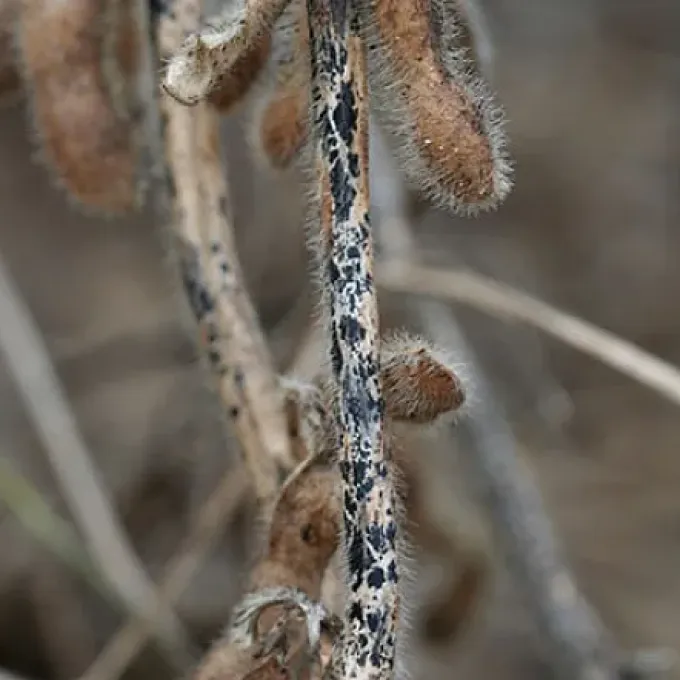
Symptoms appear as dark, sunken, irregular lesions on stems, petioles, and pods, often becoming dark brown or black as the infection progresses.
During periods of high humidity, small black specks known as acervuli appear on the lesions, often accompanied by small hair-like bristles.
Severe infections often lead to premature leaf drop, stunted development of pods, and a significant reduction in seed fill within the pods.
Seedlings may exhibit damping-off or dark lesions near the soil line, resulting in reduced emergence and thin, weak plant stands.
Advanced stages of the disease can cause systemic tissue death, leading to the lodging of plants and overall poor crop health.
Pathogen
The causal agent of this disease is the fungus Colletotrichum navitas, a significant pathogen affecting soybean crops worldwide.
This fungus survives as mycelium within crop residues, soil, and infected seeds, allowing it to persist between growing seasons.
The life cycle involves the production of conidia within structures called acervuli, which serve as the primary inoculum for spreading the disease.
Transmission occurs primarily through rain splashes and wind, moving spores from infected plant debris to healthy stems and pods.
The fungus colonizes host tissues, using specialized enzymes to degrade plant cell walls, which leads to the visible necrotic symptoms.
Conditions for development
The development of soybean anthracnose is highly dependent on warm temperatures and high humidity levels, particularly during the reproductive stage.
Frequent rainfall events create optimal conditions for the dispersal of fungal spores and the infection of new, healthy plant tissues.
High planting densities limit airflow within the crop canopy, creating a microclimate that remains humid and promotes fungal colonization.
Poor drainage and low-lying areas in fields often show higher disease pressure due to increased moisture retention.
Stress factors such as nutrient deficiencies, particularly potassium, can make plants more susceptible to infection by the pathogen.
Why it matters
The economic impact of soybean anthracnose is significant, primarily due to direct losses in grain yield and reduced grain quality.
Infected pods result in shriveled or discolored seeds, which are often rejected or heavily discounted during the commercial grading process.
Damage to the vascular tissue of the stem restricts nutrient transport, directly hindering pod filling and overall plant vigor.
Yield losses can reach substantial levels in favorable years for the disease, threatening the profitability of the entire soybean production cycle.
Contaminated seeds can introduce the pathogen into previously clean areas, complicating management efforts in subsequent seasons.
Protection
Effective management begins with the use of high-quality, certified, and fungicide-treated seeds to ensure a healthy start for the crop.
Practicing crop rotation is essential, as it helps break the pathogen's life cycle by removing its primary host for several years.
Deep plowing or tillage practices that bury infected crop residue accelerate the decomposition of the pathogen's survival structures.
Foliar fungicide applications, when applied during key development stages, are effective in suppressing disease development and protecting yield potential.
- Selection of soybean varieties with known resistance traits.
- Control of weeds that may serve as alternative hosts.
- Maintaining proper row spacing for better air circulation.
- Monitoring fields regularly during the wet summer months.
Discussion
No discussions yet — be the first.