
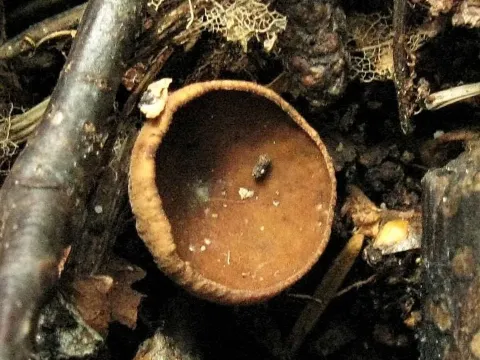
Rutstroemia conformata
Rutstroemia conformata
Rutstroemia conformata is an ascomycete fungus that acts as a specialized pathogen of alder trees. It belongs to the order Helotiales and is primarily responsible for the development of characteristic leaf spots on host species.
What the section contains
Rutstroemia conformata
The fungus maintains its lifecycle through the production of apothecia, which are small, cup-shaped fruiting bodies. These develop on decaying leaves that have overwintered on the forest floor, serving as the source of primary inoculum.
Infection occurs when spores (ascospores) are discharged from the apothecia during wet spring weather. These spores are carried by wind or rain splash onto young, susceptible alder leaves, initiating the disease cycle.
The mycelium of the fungus penetrates the leaf tissue, leading to localized cell death. The pathogen is highly host-specific, adapting its growth patterns to the developmental timing of the alder host.
Survival of the pathogen between seasons is ensured by the presence of mycelium or dormant structures within the leaf litter. This persistent survival mechanism allows the disease to reappear consistently in the same locations.
The primary symptom of the disease is the appearance of necrotic spots on the leaves. These spots are typically visible in late spring and early summer, soon after the foliage has fully developed.
Symptoms often manifest as irregular, discolored areas ranging from light brown to deep chocolate brown. A distinct margin often surrounds the infected areas, helping to distinguish it from other environmental stressors.
Under humid conditions, minute fruiting bodies of the fungus may emerge on the lower surface of the infected leaves. These appear as tiny, disc-like structures, which are diagnostic indicators of Rutstroemia conformata.
Infected leaves may undergo premature wilting, curling, and senescence. When the infection is severe, the affected leaves often drop prematurely, leading to early defoliation of the tree.
While localized spots do not always result in total leaf necrosis, the accumulation of multiple lesions across the leaf surface significantly compromises the overall integrity and photosynthetic potential of the foliage.
Environmental conditions play a critical role in the prevalence of this disease. High humidity and consistent rainfall throughout May and June provide the necessary environment for sporulation and subsequent infection.
Temperature significantly influences the development of the fungus. Moderate, cool-to-warm temperatures are ideal for the germination of spores, whereas extreme heat or dryness can inhibit the disease spread.
Dense forest stands or nurseries with poor air circulation are particularly prone to outbreaks. High humidity trapped within the canopy creates a conducive microclimate for the pathogen to thrive.
The presence of abundant leaf litter from the previous season is the most significant factor in disease progression. Since the fungus relies on overwintering material for reproduction, uncleaned sites are at higher risk.
The overall health status of the alder trees influences susceptibility. Trees that are already stressed due to drought, poor soil conditions, or other pathogens are more likely to suffer from severe infection.
The primary damage is caused by the reduction of the active photosynthetic surface area. This limits the energy production of the tree, which is essential for healthy annual growth and resilience.
Early leaf drop resulting from heavy infection hinders the tree's ability to store sufficient carbohydrates for the dormant winter period. This makes the trees more susceptible to winter frost damage.
In nurseries, the aesthetic and physical quality of seedlings is negatively affected. Prolonged infection can lead to stunted growth and, in some cases, the death of young plants unable to recover.
Economic losses in forestry are associated with reduced wood growth and the necessity for costly management practices. Repeated annual infection cycles can significantly weaken the vigor of an entire stand.
Additionally, weakened trees are more prone to secondary infestations by wood-boring insects and other opportunist pathogens, which may eventually lead to premature tree mortality.
The most effective cultural management strategy is the removal and destruction of fallen leaves in the autumn. By eliminating the leaf litter, the source of overwintering inoculum is removed.
Improving air circulation through canopy thinning and proper spacing in nurseries is crucial. These measures reduce the duration of leaf wetness and create an unfavorable environment for fungal growth.
Chemical control can be utilized in nursery or high-value landscapes. Fungicide applications, specifically those containing copper or systemic ingredients, are effective when applied at the onset of symptoms.
Maintaining tree vigor through proper nutrient management and adequate irrigation helps enhance the natural resistance of the trees to fungal pathogens.
Regular monitoring of stands during the spring months is recommended to detect initial signs of infection. Early detection allows for timely interventions, preventing the secondary spread of the disease.