
Ryegrass leaf spot
Pyrenophora lolii
Description
Symptoms
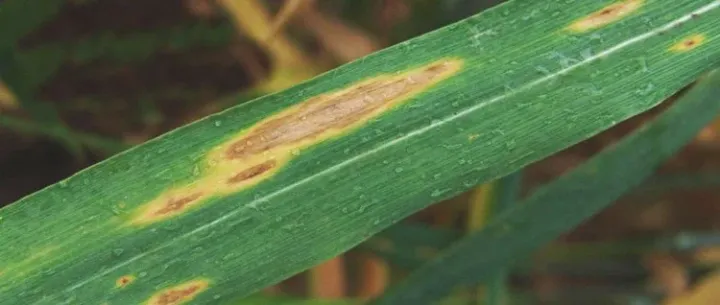
The first symptoms appear as small chlorotic spots, which over time turn brown or dark brown. As the infection progresses, these spots elongate along the leaf veins, often taking on a characteristic oval or spindle shape.
A yellowish halo is often visible around the necrotic areas, indicating the release of fungal toxins during its metabolism. In severe infections, individual spots coalesce, covering large portions of the leaf blade.
Small dark structures, representing the fungus's fruiting bodies or conidiophores, can be seen on the surface of dead tissue. Premature yellowing and drying of the lower leaves are common, significantly reducing the plant's photosynthetic capacity.
When the reproductive organs are infected, the fungus manifests as dark spots on the spikes and inflorescences. This leads to poorly developed seeds, reduced seed quality, and further spread of the pathogen.
Diagnostic identification can be challenging due to the disease's resemblance to other leaf spot pathogens; therefore, laboratory analysis of microscopic structures is often required. In the field, the disease is most noticeable following prolonged periods of rain.
Pathogen
The causal agent of this disease is the fungus Pyrenophora lolii, which belongs to the class Ascomycetes. In its life cycle, this pathogen is capable of forming both asexual (conidial) stages and sexual (ascospore) forms, which significantly enhances its survival in the environment.
The infection persists primarily on plant debris, dry stems, and seeds that were infected during the previous season. Conidia are dispersed by air currents and raindrops, ensuring both primary and secondary infection of healthy plants throughout the growing season.
The primary host of the fungus is ryegrass (Lolium species), although the pathogen can affect other related grass species. The specialization of this fungus allows it to adapt successfully to various environmental conditions in forage fields.
The pathogen's life cycle is closely linked to leaf surface wetness, which is essential for spore germination. The fungus mycelium penetrates the leaf tissue, growing within intercellular spaces and gradually leading to the destruction of chlorophyll-bearing parenchyma.
An important aspect of Pyrenophora lolii biology is the formation of pseudothecia on overwintered stems, creating a source of inoculum early in the spring. This makes the pathogen difficult to eradicate in established perennial grass stands.
Conditions for development
High humidity is the primary factor promoting the development of ryegrass leaf spot. Frequent rainfall, fog, and heavy dew create ideal conditions for conidial germination and fungal penetration into plant tissues.
The optimal temperature range for the pathogen's development is moderate, typical of spring and autumn seasons. When temperature fluctuations occur alongside high humidity, the disease can reach epiphytotic levels very rapidly.
Dense ryegrass stands with poor aeration are more prone to the disease. In such microclimates, moisture remains on the foliage for extended periods, which is critical for the infection cycle of the fungus.
Inadequate mineral nutrition, particularly nitrogen deficiency, can lower the overall resistance of the grass stand. Plants stressed by unfavorable environmental factors are much more easily infected and lose productivity faster.
Poor crop rotation and the retention of crop residues in the field create a heavy inoculum load. Under these conditions, the risk of recurring infection year after year increases significantly.
Why it matters
The main impact of ryegrass leaf spot is a significant reduction in green mass yield. Infected leaves die quickly, leading to a loss in the nutritional value of hay and forage mixtures intended for livestock.
The disease negatively affects the tillering capacity of the grass, resulting in thinned stands. In the long term, this reduces the economic lifespan of seeded meadows and pastures.
Infection of the reproductive organs causes a reduction in ryegrass seed yields. Infected seeds not only exhibit poor germination rates but also serve as the primary vehicle for spreading the disease to new locations.
Photosynthetic disruption slows root development, lowering the plants' ability to overwinter. The cold tolerance of infected stands is significantly lower than that of healthy crops.
Economic losses arise from the costs of reseeding, the reduction in high-quality forage production, and the degradation of seed stocks. In intensive livestock systems, this disease can cause serious fodder shortages.
Protection
Effective control begins with the use of ryegrass varieties resistant to Pyrenophora lolii. Breeding for immunity is the most economically viable method for long-term disease management.
Crucial agrotechnical practices include proper soil tillage to bury plant residues where the fungus overwinters. Deep plowing significantly reduces the primary inoculum levels in the spring.
Optimizing planting density ensures better aeration of the stand, preventing moisture accumulation on the leaves. Balanced fertilization should be maintained, avoiding excessive nitrogen that makes plant tissues more tender and susceptible.
To prevent the spread of infection through seeds, mandatory seed treatment with fungicides should be performed before planting. This helps eliminate surface infection and protects seedlings during early growth stages.
- Timely mowing to remove infected foliage.
- Crop rotation with non-host species for Pyrenophora lolii.
- Application of fungicides when the risk of mass disease development is high.
- Regular monitoring of crop health during periods of wet weather.
Discussion
No discussions yet — be the first.