
Rye stinking smut
Tilletia pancicii
Description
Symptoms
Symptoms become visible only as the crop matures. Infected plants may appear slightly stunted, but the most distinctive signs are found in the heads (spikes) of the rye.
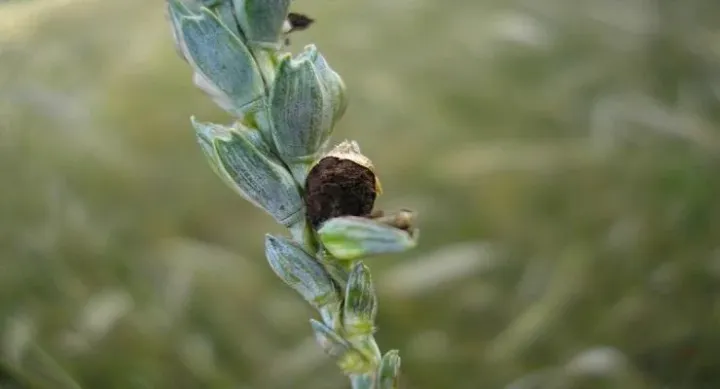
Instead of healthy grains, the spikelets contain "smut balls" or sori. These look like normal grains but are filled with a black, oily, and powdery mass of fungal spores.
Heads affected by stinking smut often have a loose structure with slightly spread glumes. When these sori are crushed, they release a characteristic foul, fishy odor caused by trimethylamine.
During harvesting, the fragile smut balls break open, releasing clouds of spores that contaminate the healthy grain and spread the disease across the field.
Contamination of the grain mass with these spores makes the entire harvest easily recognizable by its pungent smell and dark, dusty appearance.
Pathogen
The causative agent of this disease is the fungus Tilletia pancicii. It is an obligate parasite that specifically infects rye crops, spreading through contaminated seeds or soil-borne spores.
The disease cycle begins when teliospores of the fungus germinate along with the rye seed. The pathogen penetrates the coleoptile of the germinating seedling and colonizes the plant tissues systemically.
The fungus develops internally within the plant throughout the growing season without showing obvious external symptoms until the reproductive phase of the host begins.
During the heading stage, the mycelium invades the developing ovaries. The fungal development reaches its peak as it replaces the internal grain contents with a mass of dark, powdery spores.
These spores remain dormant in the soil or adhere to the seed surface, ensuring the fungus persists from one growing season to the next.
Conditions for development
The development of stinking smut is highly dependent on soil temperature during seed germination. The fungus thrives in cool soil conditions, typically ranging from +5 to +15 degrees Celsius.
Soil moisture plays a critical role in the germination of teliospores. Moderate moisture levels provide the ideal environment for the spores to infect the emerging seedlings.
Delayed germination, often caused by unfavorable weather conditions shortly after planting, extends the period during which the seedling is susceptible to the pathogen.
High spore density in the top layer of soil significantly increases the risk of infection. Continuous cropping of rye on the same land facilitates the buildup of the pathogen.
The depth of sowing also influences the outcome, as deeper planting may delay the emergence of seedlings, leaving them exposed to the pathogen for a longer duration.
Why it matters
The primary economic impact of rye stinking smut is a direct reduction in yield. The weight of infected heads is lost entirely because the grain is replaced by fungal spores.
Grain contaminated with smut spores is largely unsuitable for milling or baking. The presence of spores ruins the quality, color, and taste of flour and bread products.
The foul odor associated with the infection is difficult to remove and renders the grain unfit for human consumption, often leading to total rejection of the batch.
Widespread infection during harvest contaminates machinery, storage facilities, and transport vehicles, necessitating costly cleaning and disinfection procedures.
In cases of severe infestation, farmers may face significant financial losses due to quality downgrading and the potential spread of the disease to adjacent fields.
Protection
Using certified, disease-free seed is the first and most important line of defense against stinking smut, preventing the introduction of the pathogen into clean fields.
Seed treatment with systemic fungicides is highly effective in neutralizing spores on the seed surface and protecting the seedling during the vulnerable emergence phase.
Crop rotation practices, keeping rye out of the same field for at least 3-4 years, help reduce the spore load present in the soil and break the disease cycle.
Adjusting the planting schedule to avoid periods where soil temperatures are optimal for spore germination can significantly decrease the incidence of the disease.
Selecting and cultivating resistant or tolerant rye varieties is the most sustainable strategy for minimizing the long-term impact of Tilletia pancicii in agricultural production.
Discussion
No discussions yet — be the first.