
Rutstroemiaceae
Rutstroemiaceae
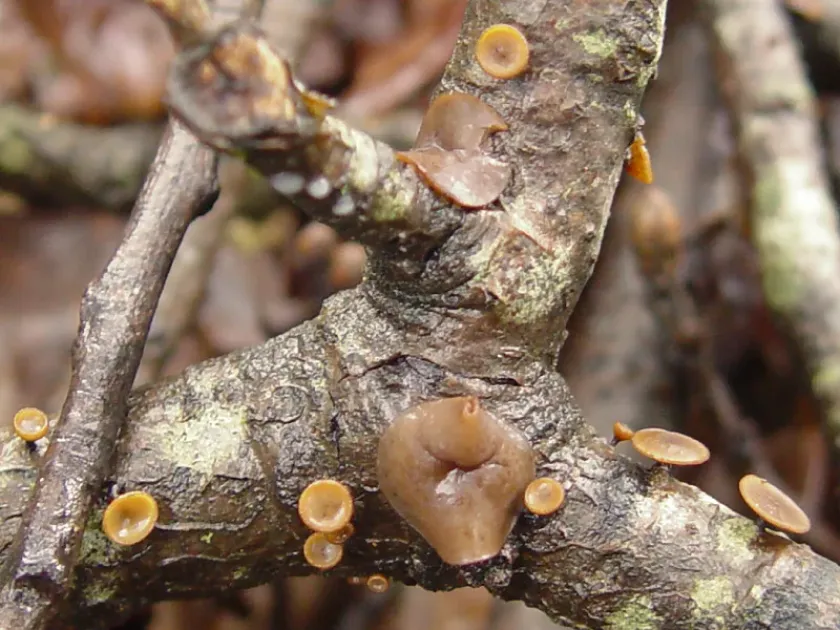
Description
Pathogen
Rutstroemiaceae is a family of ascomycete fungi within the order Helotiales. While many species are saprotrophic, some act as opportunistic pathogens that contribute to the decay of plant tissues, affecting both wild plants and various agricultural crops.
The pathogen reproduces via apothecia, which are small, cup-shaped or disc-like fruiting bodies that usually appear on dead or decaying organic matter. These structures release spores that can be carried by wind or rain to healthy plant tissues.
The disease process typically involves enzymatic degradation of the plant cell wall. The fungus secretes specific proteins that break down structural components, allowing the mycelium to penetrate and feed on the nutrient-rich contents of the host cells.
As a facultative parasite, the fungus primarily targets weakened or stressed plants. Once the infection is established, it can progress rapidly under suitable environmental conditions, leading to necrosis and eventually tissue collapse.
Biological persistence is a key feature of this family; the fungi can survive as mycelium or sclerotia-like structures within plant debris in the soil for extended periods, serving as a constant reservoir of inoculum for future seasons.
Conditions for development
The development of Rutstroemiaceae is highly dependent on humidity levels. Prolonged periods of moisture, frequent rain, or heavy dew provide the necessary surface wetness for spore germination and mycelial invasion.
Optimal temperatures for the growth and spread of these fungi typically range between 15°C and 22°C. Outside this range, the development of fruiting bodies slows down, although the fungus can remain dormant in the soil.
Poor field management, particularly leaving infected crop residues on the soil surface, significantly increases the risk of outbreaks. These residues serve as the primary site for the development of the fungal life cycle.
Lack of proper airflow within the crop canopy creates a microclimate characterized by high humidity. This environment is ideal for the rapid spread of the pathogen from infected leaves to healthy parts of the plant.
Environmental stress factors, such as nitrogen imbalances, mechanical damage to plants, or pest infestations, increase the susceptibility of the crop to infection by opportunistic Rutstroemiaceae species.
Why it matters
The primary harm caused by these pathogens is the reduction of total crop yield due to the destruction of plant tissues. This interferes with essential physiological functions such as photosynthesis and water transport.
Infection of the stems can weaken the plants, leading to lodging. This not only decreases yields but also significantly complicates the harvesting process, leading to further losses in the field.
Post-harvest losses are a major concern, as the rot can continue to spread in storage facilities. Infected produce often becomes unmarketable and may be subject to strict quality control rejection due to fungal contamination.
The presence of these fungi often triggers the production of mycotoxins or other secondary metabolites, which can compromise the quality and safety of the crop for food or feed consumption.
Economic damage is compounded by the costs of preventive fungicide applications, which are required when environmental conditions favor disease pressure, potentially impacting the overall profitability of the farming operation.
Protection
Integrated pest management is essential for controlling Rutstroemiaceae. The most effective practice is the thorough incorporation of crop residues into the soil via deep plowing, which promotes microbial decomposition and reduces inoculum levels.
Crop rotation is a critical preventive measure. By alternating with non-host species for several years, farmers can starve the pathogen and significantly lower the infection pressure in the field for future cycles.
Field monitoring is crucial for early detection. Timely application of fungicides, particularly those with systemic properties, can provide effective protection during periods of high humidity and disease risk.
- Selecting resistant varieties to improve crop immunity.
- Balancing fertilizer applications to avoid over-reliance on nitrogen.
- Implementing weed management to remove alternative hosts.
- Improving drainage to prevent localized water accumulation in the field.
Discussion
No discussions yet — be the first.