
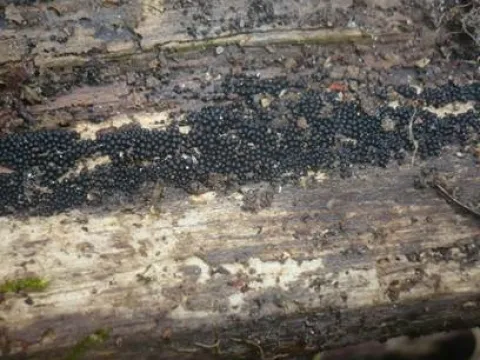
Ruzenia spermoides
Ruzenia spermoides
The disease is caused by the fungus Ruzenia spermoides (previously classified as Hypoxylon spermoides). This pathogen is primarily known for infecting seeds and developing on the reproductive organs of various host plants.
What the section contains
Ruzenia spermoides
The fungus functions as a latent pathogen, often residing within the tissues of the seed without showing immediate symptoms. Its survival strategy relies on the formation of perithecia, which act as protective structures for its spores during dormant periods.
As a member of the Xylariales order, Ruzenia spermoides thrives on organic matter. It produces ascospores that are released into the environment, facilitating the spread of the disease to healthy plants during the growing season.
Biological research indicates that the fungus has a complex life cycle, adapting its metabolic processes to the host's growth stages. It is highly efficient at colonizing senescent tissues as well as living, weakened plant organs.
The pathogen's resilience allows it to persist in crop debris left in the field after harvest. This makes the fungus a long-term threat to agricultural land if proper sanitation measures are not implemented between seasons.
The primary symptom of infection is the discoloration of the seeds. Infected seeds often appear dull, with grey or black patches indicating the presence of fungal mycelium and spore-bearing structures.
Seedlings derived from affected seeds exhibit stunted growth and yellowing of the leaves. In many cases, the root system shows necrosis, which severely limits the plant's ability to absorb water and essential nutrients.
On the reproductive parts, such as the heads or panicles, small, dark, granular spots appear. These are the developing reproductive bodies of the fungus, confirming an established infection that can impact yields significantly.
In storage conditions, seeds infected by Ruzenia spermoides tend to clump together. A noticeable mouldy smell and a thin, soot-like film on the surface of the grains are clear indicators of severe fungal colonization.
Diagnosis requires microscopic examination to distinguish this pathogen from other seed-borne fungi. Farmers should be aware of the "black grain" appearance, which is a hallmark sign in advanced stages of the disease.
The development and spread of Ruzenia spermoides are strongly correlated with high humidity levels. Excessive rainfall during the heading and grain-filling stages creates the perfect environment for spore germination.
Temperature plays a crucial role, with the optimal range for fungal growth being between 18°C and 25°C. Mild, humid weather conditions can trigger rapid pathogen proliferation across large areas.
Dense crop stands can exacerbate the problem by reducing airflow and maintaining a microclimate with high humidity. This creates a "trap" for moisture, allowing the fungus to spread easily from plant to plant.
Poor post-harvest handling, particularly when grains are stored with high moisture content, allows the fungus to continue growing in silos. Proper drying is essential to inhibit the pathogen's activity post-harvest.
Inadequate sanitation in the field, such as leaving infected straw or debris, ensures that the pathogen remains present for the next planting season, creating a cycle of infection that is difficult to break.
The most significant damage is the reduction in seed quality and germination rates. This results in poor stand density, which directly translates to lower overall yields and financial losses for farmers.
The pathogen can weaken the plant's defense mechanisms, making it susceptible to secondary infections by other fungi or bacteria. This cumulative stress further degrades the health and productivity of the crop.
Infected grains often contain harmful metabolites produced by the fungus. This renders the crop unfit for human consumption or livestock feed, leading to a total loss of commercial value for the harvested product.
Economic damage is further compounded by the costs of applying fungicides and the need for rigorous seed cleaning processes. In some cases, entire batches of grain must be discarded due to high contamination levels.
The long-term impact involves the persistence of the fungus in the soil, forcing farmers to choose less sensitive crops or invest in more intensive soil management and disease control strategies over several years.
The most effective strategy is the use of healthy, certified seeds that have been tested and found free of Ruzenia spermoides. Quality seeds are the foundation of a successful and disease-free crop.
Seed treatment with systemic fungicides is strongly recommended. Chemicals belonging to the triazole or strobilurin groups are effective in protecting the young embryo from the initial stage of fungal attack.
Implementing a proper crop rotation system is vital. By planting non-host crops, farmers can deprive the pathogen of its food source, gradually reducing the fungal population in the soil over time.
Good agricultural practices, such as optimizing plant density and controlling weeds, help improve air circulation in the field. This decreases the humidity levels that the fungus needs to thrive and spread.
After harvesting, prompt drying of the grain to a moisture content below 14% is critical. Keeping the storage environment dry and cool effectively stops the growth of the fungus and preserves the quality of the harvested grain.