
Rye stem smut
Tilletia secalis
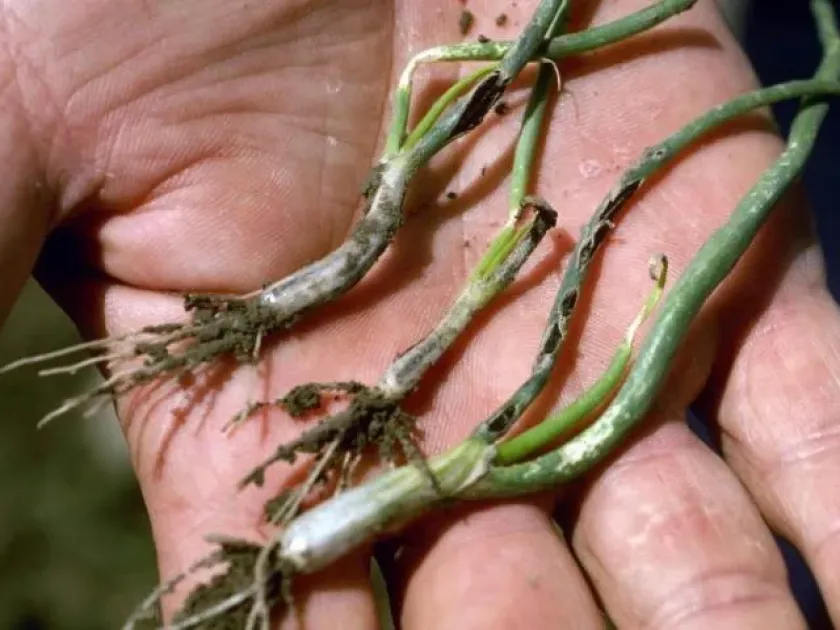
Description
Symptoms
Initial signs of the disease appear during the stem elongation phase, as infected plants begin to show stunted growth and morphological deformities.
Longitudinal streaks or galls appear along the stem and leaf sheaths, starting as pale discolorations before turning into characteristic black spore masses.
The plant epidermis over these lesions eventually bursts, releasing a cloud of black, powdery spores that are easily dispersed by wind and field machinery.
Heavily infected plants are often significantly shorter than healthy ones and exhibit an irregular, twisted, or distorted appearance in the field.
The ears of infected plants may fail to develop properly, resulting in sterile or severely deformed grain heads that are mostly filled with fungal spores.
Pathogen
The causal agent of this disease is the fungus Tilletia secalis, which belongs to the order of smut fungi. This is a highly specialized parasite that primarily affects rye crops.
The life cycle begins with the germination of teliospores, which can survive in the soil or adhere to the surface of seeds during the planting process.
Infection occurs exclusively at the seedling stage, specifically after germination but before the emergence of the first true leaves above the soil surface.
Once inside the host, the fungal mycelium grows systemically throughout the plant's tissues, including the stem, nodes, and the developing floral parts.
By the time the rye reaches maturity, the mycelium within the infected tissues transforms into a mass of black spores that eventually rupture the plant epidermis.
Conditions for development
The development of stem smut is favored by cool soil temperatures, generally ranging from 5 to 15 degrees Celsius during the emergence period.
High soil moisture levels at the time of sowing significantly increase the rate of spore germination and the success of fungal penetration into the seedlings.
Protracted cold spring weather conditions extend the period during which the rye seedlings remain susceptible to infection, leading to higher disease incidence.
Heavy or poorly drained soils contribute to slower seedling emergence, providing the pathogen with a wider window of opportunity to colonize the host.
High inoculum pressure from spores remaining in the soil from previous seasons is a key factor in the development of the disease in following years.
Why it matters
The economic impact of rye stem smut is primarily driven by direct yield losses due to the replacement of grain with non-viable fungal spores.
Infected plants suffer from systemic stress, as the parasite drains resources that would otherwise be used for grain development and biomass production.
The quality of the grain harvest is severely compromised, as contaminated grain is often unsuitable for human or animal consumption due to spore presence.
Cleaning and processing contaminated grain to remove smut spores is costly and often insufficient to restore the market value of the harvested produce.
Cumulative damage can result in significant area-wide losses if susceptible varieties are continuously planted in infested soil without proper management.
Protection
The most effective management strategy is the rigorous use of systemic fungicide seed treatments to eliminate inoculum carried on the seed surface.
Implementing a proper crop rotation cycle is essential to reduce the soil-borne spore load, preventing the parasite from finding a suitable host for several years.
Planting depth should be carefully managed to ensure rapid emergence, as faster seedling growth reduces the timeframe for potential fungal infection.
Choosing resistant or tolerant rye varieties is a cornerstone of sustainable disease management and reduces the reliance on chemical interventions.
- Regular monitoring and isolation of heavily infected areas.
- Using high-quality, certified, and disease-free seeds.
- Implementing deep tillage to bury spores below the active root zone.
- Effective field sanitation to remove infected plant debris and volunteers.
Discussion
No discussions yet — be the first.